Thales and Visionary Machines Join Forces to Advance Passive Counter-Drone Detection
If successful, the trial could pave the way for a new generation of passive C-UAS detection capabilities for defence forces and critical infrastructure operators facing increasingly sophisticated drone threats.
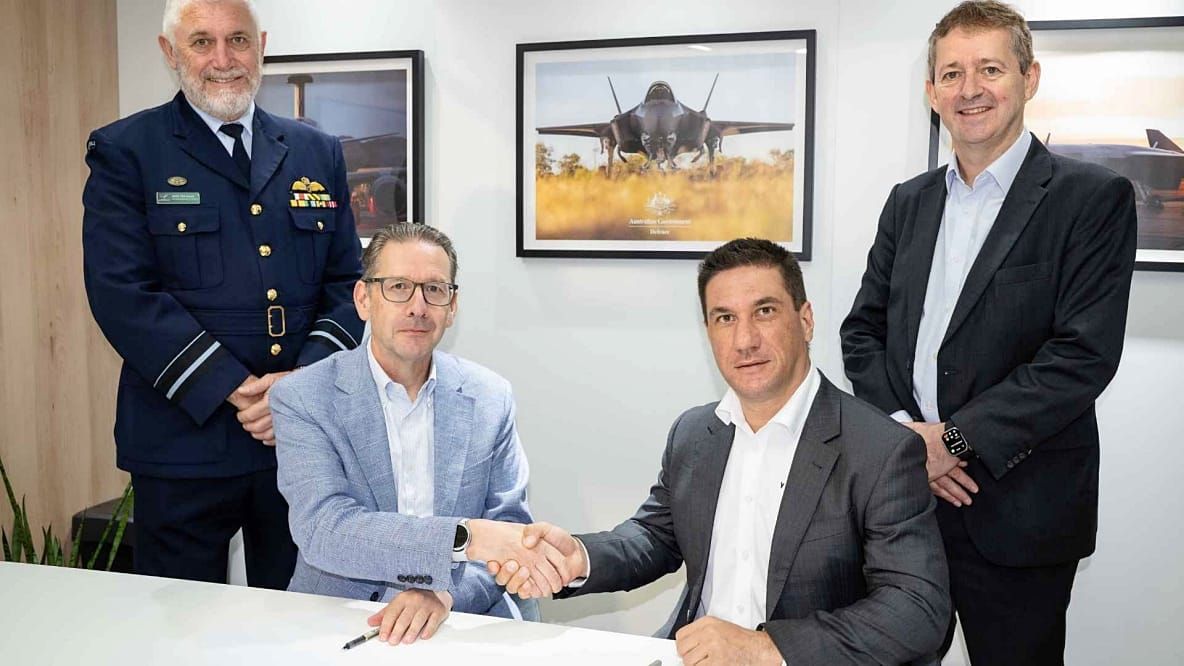
Visionary Machines and Thales have announced a collaboration to trial a combined counter-unmanned aircraft system (C-UAS) detection capability, bringing together Visionary Machines’ ability to passively detect, classify and range drones with Thales’ wide-area scanning hardware, to deliver a new standard in passive protection against evolving UAS threats.
Announced at the Farnborough International Airshow in the UK, the joint trial commencing in August will build on Visionary Machines’ Pandion Sentinel technology and explore the potential of combining technologies to deliver accurate, long-range, wide-area detection while remaining completely passive, paving the way for a new generation of C-UAS capabilities.
Pandion Sentinel is a passive optical platform that detects, tracks and classifies radio frequency-operated drones, autonomous drones and “dark drones”, without emitting a signal, making it electronically silent and undetectable unlike conventional sensor systems. The platform is hardware agnostic, allowing it to integrate with complementary technologies, such as Thales’ hardware, to expand surveillance coverage while remaining electronically silent.
Visionary Machines Chief Executive Officer, Sonny Foster, said the collaboration represents an exciting opportunity to advance passive drone detection and unlock new applications for Pandion Sentinel.
“By combining our software with Thales’ wide-area scanning hardware, we have the opportunity to push the boundaries of passive drone detection. Together, we’re exploring how we can extend surveillance across much larger areas while maintaining a completely passive profile, giving operators earlier and more reliable warning of airborne threats.”
“For soldiers on the battlefield and personnel protecting critical infrastructure, the combination of wide area scanning with high-confidence, low false alarm detection has the potential to deliver a genuine step forward in situational awareness, addressing a critical protection gap as drone threats continue to evolve in sophistication and scale.”
If successful, the trial could pave the way for a new generation of passive C-UAS detection capabilities for defence forces and critical infrastructure operators facing increasingly sophisticated drone threats.
This collaboration is another great example of the Thales Global Supply Chain Program that matches Australian SME and Thales capabilities to develop new and innovative systems that benefit our militaries.
The work is at the exploratory stage, and a trial is planned for August to assess the technology’s performance against a variety of UAV threats.
For Thales, the advantage of working with VM is that its software delivers reliable long-range detection with very low false-alarm rates and provides accurate target ranging — similar to active radar — to determine the distance to a threat.
Further details on the trial and its outcomes will be provided in the coming months.
Sources: Visionary Machines; Thales