China's VTOL Jet Drone Makes Every Warship an Aircraft Carrier
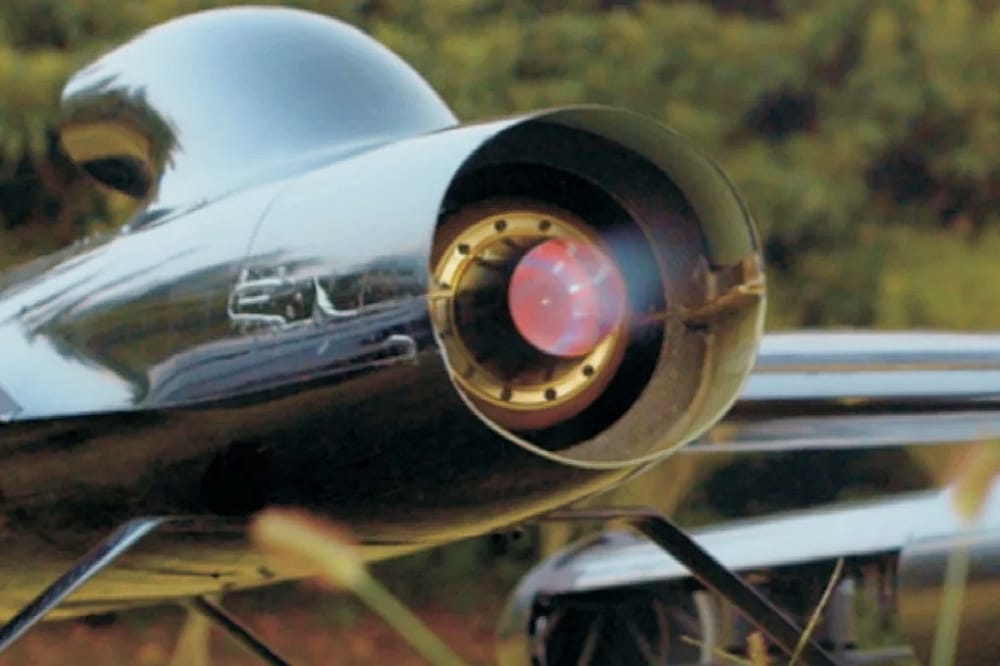
In an aviation tech breakthrough that could change naval warfare, Chinese aerospace engineers have unveiled what could be the world’s first high-speed vertical take-off and landing (VTOL) drone powered by a jet engine.
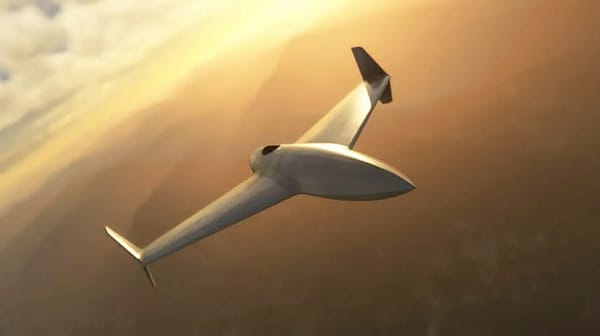
The sleek, runway-independent uncrewed aircraft can be launched from the decks of ordinary warships – even in rough seas – and transition seamlessly into a fast, long-range cruise flight.
The drone, representing a radical departure from conventional drone designs, was developed by a 10-year effort led by associate professors Wang Yaokun and Qiu Yuting with Beihang University, a top aviation research institute in Beijing targeted by US sanctions.
This unnamed drone is reportedly a sleek design that is runway independent, unlike most drones launched at sea that require carrier decks to launch.
The drone was created over ten years under the direction of associate professors Wang Yaokun and Qiu Yuting at Beihang University, a prestigious aviation research center in Beijing that was sanctioned due to its involvement in the development of military rocket systems and Unmanned Aerial Systems (UAVs), according to the US Department of Justice.
“We’ve compared it to other mainstream VTOL drones at present. It is far superior in terms of speed,”
wrote the project team in a peer-reviewed paper published in the Chinese-language journal Aero Weaponry on July 15. The researchers said that, unlike the US Air Force XQ-58A, which requires long runways or aircraft carriers for take-off and landing, this new Chinese platform combines vertical lift ability with jet-powered high-speed flight in a single, aerodynamically refined airframe.
The drone is a significant divergence from traditional drone designs and has the potential to turn any Chinese amphibious ship, frigate, or destroyer into a mini aircraft carrier.
According to publicly accessible information on Beihang University’s website, this VTOL drone project started in 2015 and went through several revisions until reaching a stable configuration in 2019. It was specifically designed to meet the Chinese navy’s need for aircraft for “non-carrier vessels,” according to a 2019 article cited by the report. The emphasis was also on the importance of “multi-drone coordination, high-speed reconnaissance, and vertical take-off and landing from destroyer decks.”
A 10-Year Effort To Make The Chinese VTOL
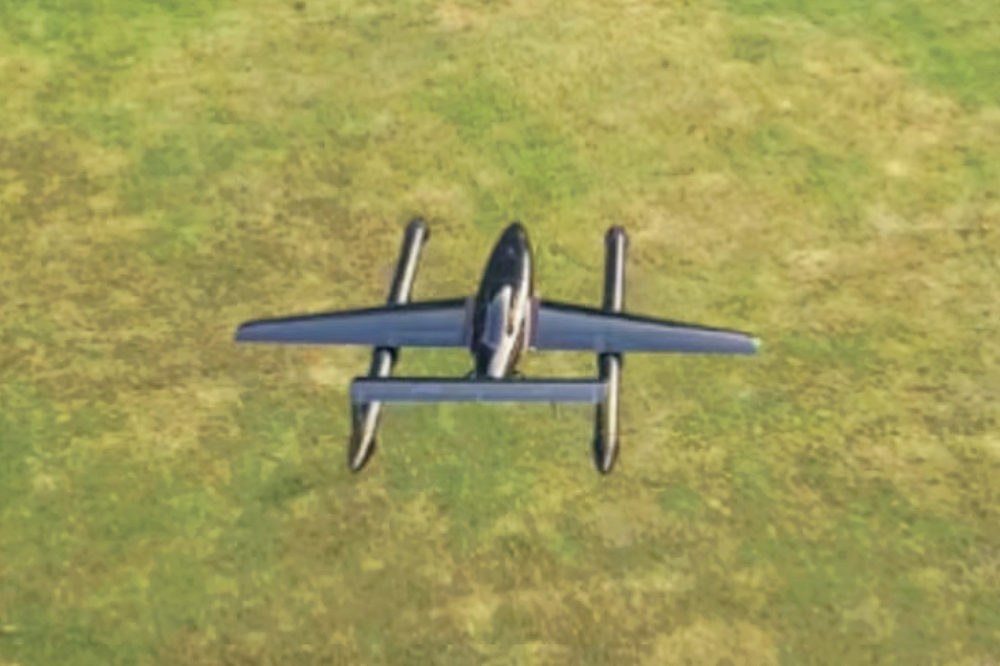
The drone employs a dual-system strategy: a small turbojet engine drives high-speed cruising, while small rotors positioned at the bottom generate lift during takeoff and landing, as per details mentioned in the journal. The design is unique because it incorporates a proprietary retractable fairing system, an aerodynamic cover that encloses the idle rotors when they are turned off following the switch to forward.
The drone can take off from a cramped warship deck like a helicopter because its rotors are free to rotate during vertical ascent. The wings produce enough lift to maintain flight as speed rises, while the rotors progressively spin downward.
The fairings then slide close over the rotor hubs, preventing airflow and lowering parasitic drag by up to 60%, according to computer fluid dynamics calculations confirmed in wind tunnel experiments. The outcome of this is a teardrop-shaped fuselage that is incredibly clean and almost identical to a pure jet drone in cruise mode, allowing for effective high-speed flight while maintaining complete VTOL capability. “It can lift off and land vertically under extreme conditions,” according to Qiu and her colleagues.
The team created novel advanced composites, such as T-700-grade carbon fiber reinforced with modified resin matrices, that can be mass-produced using readily available resources at a cheap cost to handle the demanding requirements of high-speed flying and frequent vertical landings.
Strong and lightweight, the airframe’s enhanced fatigue resistance is essential for carrier-like operations on rolling decks. Importantly, the design incorporates thermal shielding in regions that are subjected to the small turbojet’s exhaust, enabling localized temperatures to surpass 700 degrees Celsius (1,292 degrees Fahrenheit) without compromising the structure.
The propulsion system needs advanced control algorithms. For example, an electric rotor system allows for precise hover and landing control, while a small turbojet delivers sustained thrust for high-speed cruising.
The complicated transition from rotary to fixed-wing flight was smoothly and steadily managed by control algorithms, as demonstrated by flight tests, states the paper.
According to the researchers, a small drone that weighed only 45 kilograms in total easily reached 230 kilometers/hour during a test flight.
However, the design does have certain compromises. For one, even though the rotor system is enclosed, it becomes a deadweight during high-speed cruising, taking up space and adding mass that lowers fuel efficiency and payload capacity.
Similarly, the turbojet and its fuel lines remain inert throughout vertical flight, adding to the structural load. This means that the drone’s endurance and range are probably inferior to those of vehicles powered solely by jets, such as the Global Hawk or XQ-58A.
Its modest payload makes it more appropriate for electronic warfare, pinpoint strikes using small weapons, or reconnaissance than big ordnance.
Sources: China Morning Post; Eurasian Times