Anduril and Archer Unveil Jointly-Developed Dual-Use Autonomous VTOL Platform
Anduril and Archer rolled out Thunder, around the biennial Farnborough International Airshow in the United Kingdom. A mockup, which Anduril says reflects a “mature” outer mould-line of the design, will be on display at the show.
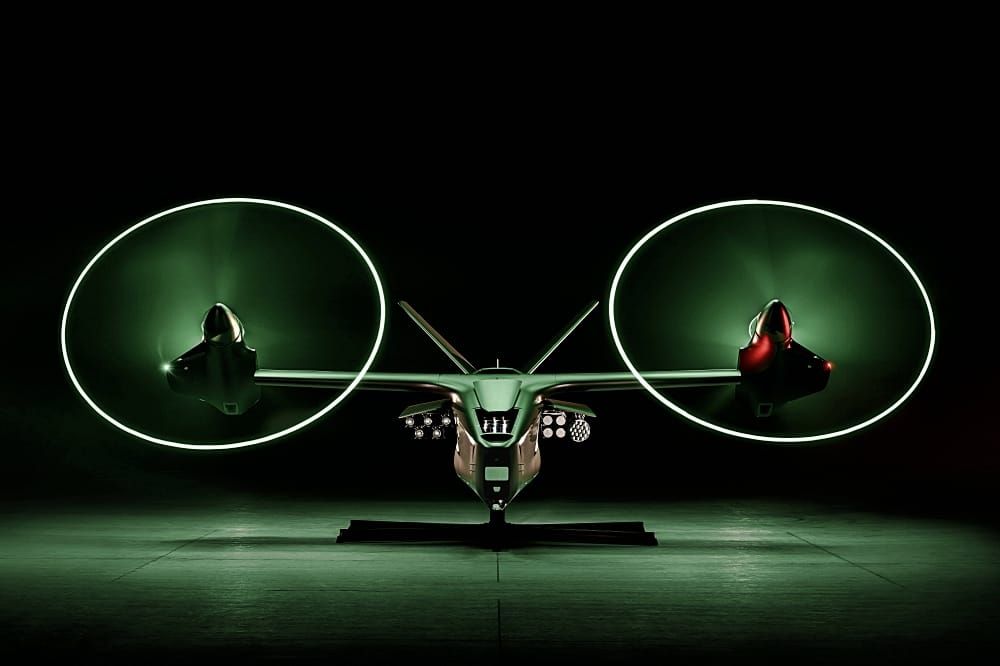
Anduril and Archer Aviation just unveiled their jointly-developed autonomous VTOL aircraft platform, built to serve both defence and commercial applications. Anduril showcased the defence variant, Thunder, a Group 5 autonomous attack rotorcraft specifically designed to multiply the combat power of current and next-generation crewed attack and assault aircraft.
Together, the two companies have built what they believe to be a step change in vertical lift: a new class of autonomous aircraft with the speed, range, payload and operating cost that defence and commercial missions demand. Archer will announce its first commercial partners for the platform later this week.
Thunder builds on a dual-use platform developed by Archer and Anduril, bringing the commercial VTOL sector's rapid innovation in electric propulsion and rotor design directly into a clean sheet configuration.
A series hybrid-electric powertrain enables the aircraft to achieve significant range and endurance, while still maintaining the necessary precision to closely optimize power through the full range of flight conditions. Meanwhile, dual tiltrotors vary rotor RPM to maintain efficiency across flight regimes, reducing power demand and fuel burn in cruise and minimizing acoustic signature to enhance survivability during low-altitude ingress.
The platform’s tiltrotor configuration combines vertical takeoff and landing (VTOL) with efficient wingborne cruise, enabling runway-independent operations from austere locations without the range constraints of traditional rotorcraft.
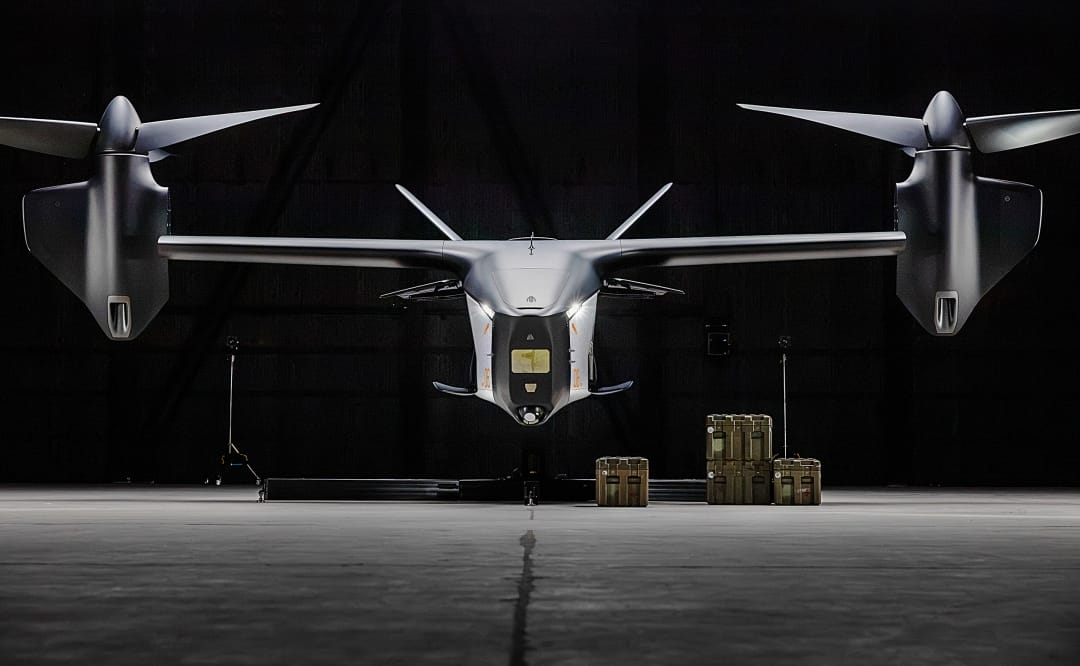
Anduril and Archer have configured the dual-use platform to bring modular, heavy payloads to an array of commercial and defence applications. It leverages years of development and flight testing on air taxis, highlighting Archer’s proven ability to rapidly design, manufacture and fly advanced VTOL aircraft platforms.
“From raw performance to producibility, harnessing the best technologies from the commercial eVTOL market for defense is central to how Thunder will deliver operational value to our customers. The clean-sheet, dual-use platform that we’ve built with Archer truly represents a step change in capability,”
said Shane Arnott, SVP of Maneuver Dominance at Anduril.
“This mission required a clean sheet design, built from the ground up to meet the needs of modern commercial and defense applications. We couldn’t simply tweak our existing aircraft. Instead, we took a bold first principles approach alongside Anduril to develop what we believe is the most sophisticated vertical lift aircraft ever made,”
said Adam Goldstein, Founder and CEO of Archer.
Thunder has a relatively traditional tiltrotor layout featuring a high-mounted, straight main wing on top of the fuselage. The wing has a single tilting rotor pod at each tip. It also has a V-tail.
In terms of overall size and performance, Anduril describes Thunder as a Group 5 design. The U.S. government breaks uncrewed aerial systems into five categories. Group 5 is the highest tier, covering anything with a maximum takeoff weight of 1,320 pounds or more, and that can fly at altitudes of 18,000 feet or higher.
“It will have the ability to work at that at [18,000 feet], but the intent is for it to be nap-of-the-earth for most of its life,” Anduril’s Arnott noted. “That’s where it’ll be spending its time. Think about the Apache kind of profile. So you’ll hit certain altitudes to get your ferry ranges, etc. But when you’re in the AO [area of operations] and in combat, you’re as close to the dirt as you can get.”
Arnott also described Thunder as having the same general top speed and range as the MV-75 Cheyenne II, which is now under development for the U.S. Army. The Army is reportedly expecting the MV-75 to boast a top speed of 320 miles per hour and have an unrefueled range of 920 miles. This is far above the range and speed offered by any current Army helicopter. Beyond teaming with Apaches and similar attack helicopters, being able to keep pace with the Cheyenne II could be an especially important feature for the Thunder.
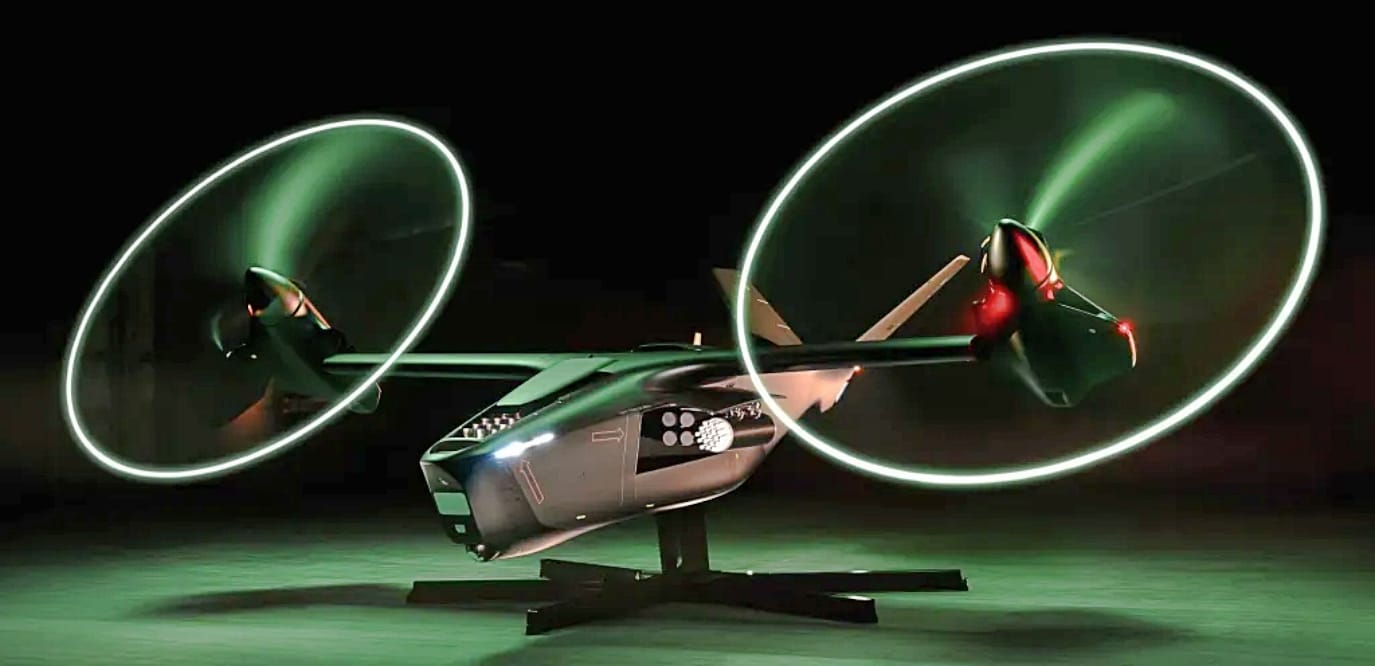
During the press call ahead of the unveiling, Chris Brose, Anduril’s President and Chief Strategy Officer, said that he felt that leveraging the immense investment by companies like Archer in the electric vertical takeoff and landing (eVTOL) development space had “made Thunder possible in a way today that it just wouldn’t have been possible five, 10, certainly 15 years ago.”
“So this is not electric, this is a hybrid-electric system,” Anduril’s Arnott also stressed. “But in doing so, it actually reduces the complexity of the drive trains, etc.”
Rotor technology for another firm, Karem, has also been leveraged in the development of Thunder. Karem has a long history in the tiltrotor design space, including work done for the U.S. Army and the Defense Advanced Research Projects Agency (DARPA).
Modular Capabilities and Advanced Autonomy
Capability-wise, Thunder is a highly modular design with reconfigurable payload bays in the nose and the center of the fuselage.
The drone can carry up to 10 air-to-ground missiles, 16 ‘launched effects,’ four 19-shot pods holding a total of 76 70mm laser-guided Advanced Precision Kill Weapon System II (APKWS II) rockets, or a mix thereof, on launchers that extend to either side from the main bay, according to Anduril. Air-to-ground missiles here could include AGM-114 Hellfires, AGM-179 Joint Air-to-Ground Missiles (JAGM), or Anduril’s Barracuda-100M.
The term launched effects is used today to collectively refer to drones configured to perform a variety of missions, including serving as loitering munitions, which can be fired from air, ground, and/or maritime platforms. Andruil specifically mentioned its ALTIUS-600 design as one potential option for Thunder. ALTIUS-600 can be set up to perform surveillance and reconnaissance and electronic warfare tasks, act as a decoy, and launch kinetic attacks.
The team has already completed multiple test flights with full-scale surrogate aircraft, a critical step towards proving out the systems that will be central to Thunder’s performance. Thunder’s first flight is planned for 2027.
Sources: Anduril; The War Zone