Yakovlev Yak-141 - America Stole it and Turned it into a Monster
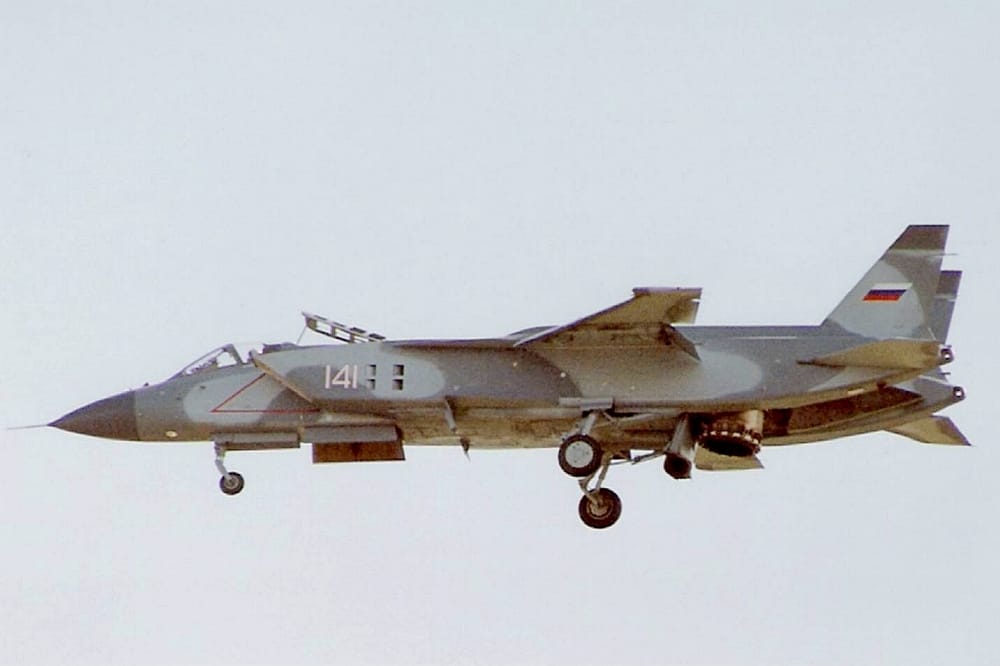
June 1990. The Soviets were about to do it again. Not since Sputnik had they so dramatically outpaced the West. They were about to deploy the most advanced vertical takeoff and landing combat aircraft the world had ever seen. The Yak-141, NATO reporting name Freestyle, didn't just outperform the legendary British Harrier—it made it look ancient.
Everything the Harrier could do, the Yak-141 could do better. While the Harrier struggled to break the sound barrier, Freestyle blasted through the sky at Mach 1.7. Its revolutionary rotating rear nozzle allowed for 95-degree thrust vectoring transitions in seconds—delivering helicopter-like hovering with fighter jet performance. The digital fly-by-wire system allowed a level of control Western pilots could only dream of.
Then, the unthinkable happened, and Yak-141's DNA would soon take flight in American colours.
Design and Development
Known internally as "Product 48", the Yak-41 was intended to replace the Yak-38 in service with the Soviet Navy. It went through significant design evolution. Configurations studied by Yakovlev included a twin-engine configuration, which was rejected due to asymmetric thrust issues in the event of an engine failure during landing, and a single-engined configuration, with lift jets to allow for vertical takeoff and landing, was selected.
The engines were controlled digitally; maneuverability during the hover was provided by reaction control jets, using excess airflow from the engines, located at the wingtips and under the nose. The pressurised cockpit was fitted with an automatic ejection seat; the automatic functionality would be armed when the engine duct was rotated past 30° when at an airspeed of less than 300 kilometres per hour (160 kn; 190 mph).
The prototypes had a cockpit arrangement similar to that of the Yak-38M; the production aircraft were planned to be fitted with an entirely new digital system including a helmet-mounted sight. The aircraft's landing gear was of the tricycle type; the nosewheel retracted to the rear, the main wheels retracting forwards.
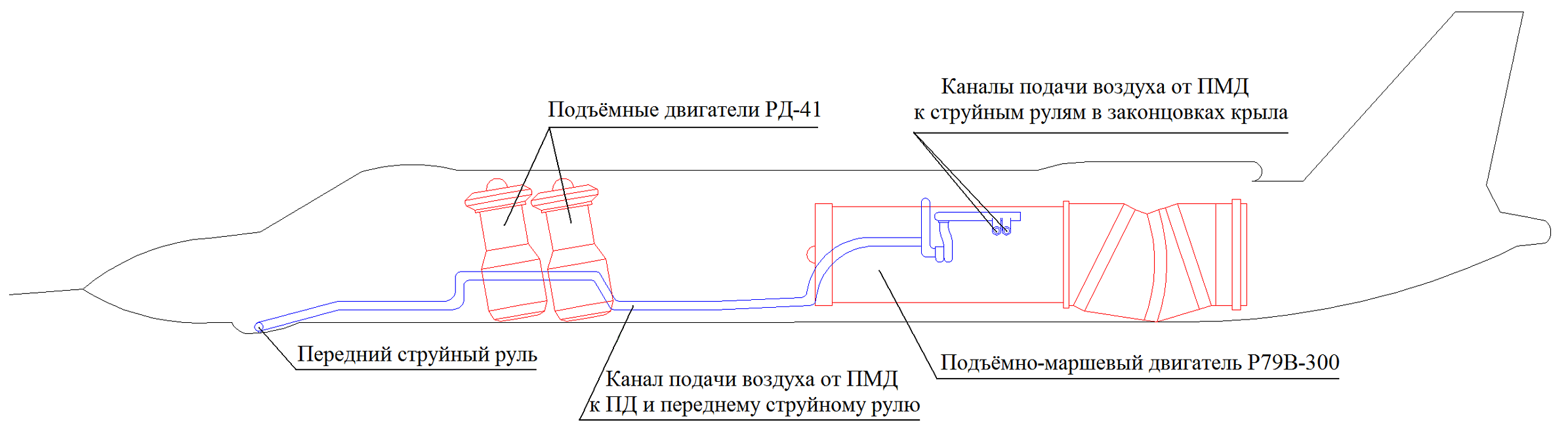
The wing was mounted high on the fuselage, and was foldable to allow for compact storage on board aircraft carriers. The main engine was a Tumansky R-79V-300, while the lift jets were a pair of Rybinsk (RKBM) RD-41s, installed at an angle of 85° in the forwards fuselage behind the cockpit.
Four prototypes were built; the first was a static-test article, the second a nonflying testbed, while the third and fourth prototypes would be used for flight testing. With the fall of the Soviet Union, Lockheed Aircraft entered a partnership with Yakovlev in 1991 for further development of the aircraft, now officially redesignated Yak-141; the partnership would not be announced by Yakovlev until 6 September 1992 and not confirmed by Lockheed until June 1994.
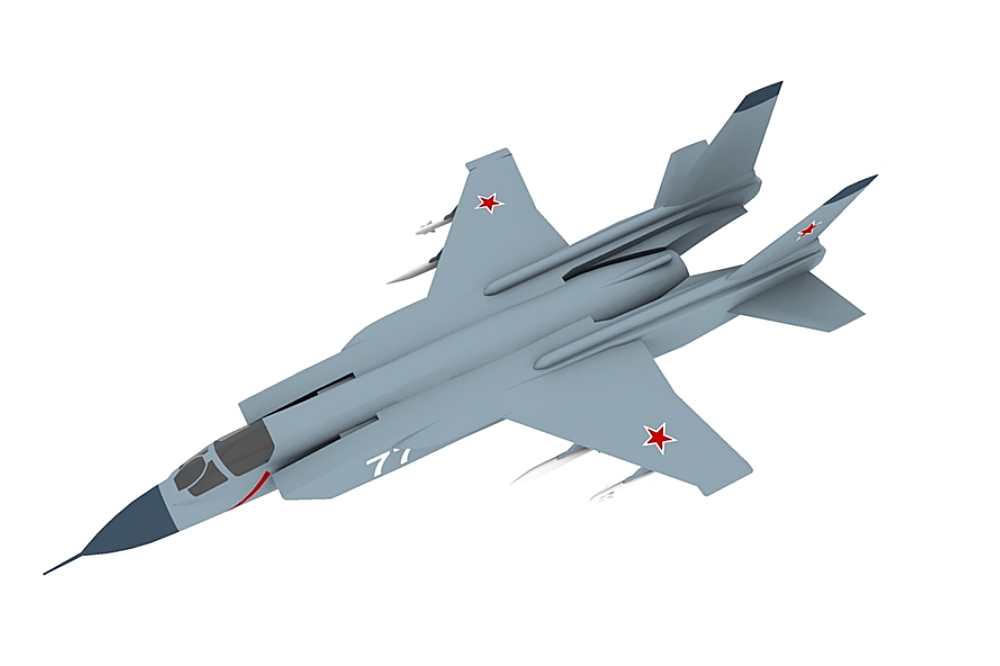
The remaining intact prototype was displayed at the Farnborough Airshow in 1992. It was announced that the joint venture would result in the construction of three additional prototypes and an additional static test aircraft, one a two-seat trainer version, and all with an increase in their gross weight, however no additional aircraft were ever built.
Top Photo: Yak-141 VTOL fighter during hover at 1992 Farnborough Airshow
Sources: YouTube; Wikipedia