USAF Defines Requirements for MQ-9A Replacement
“Operators desire low-cost, fast-to-field, fast-to-deploy airborne ISR mass to increase mission flexibility and mission surging”
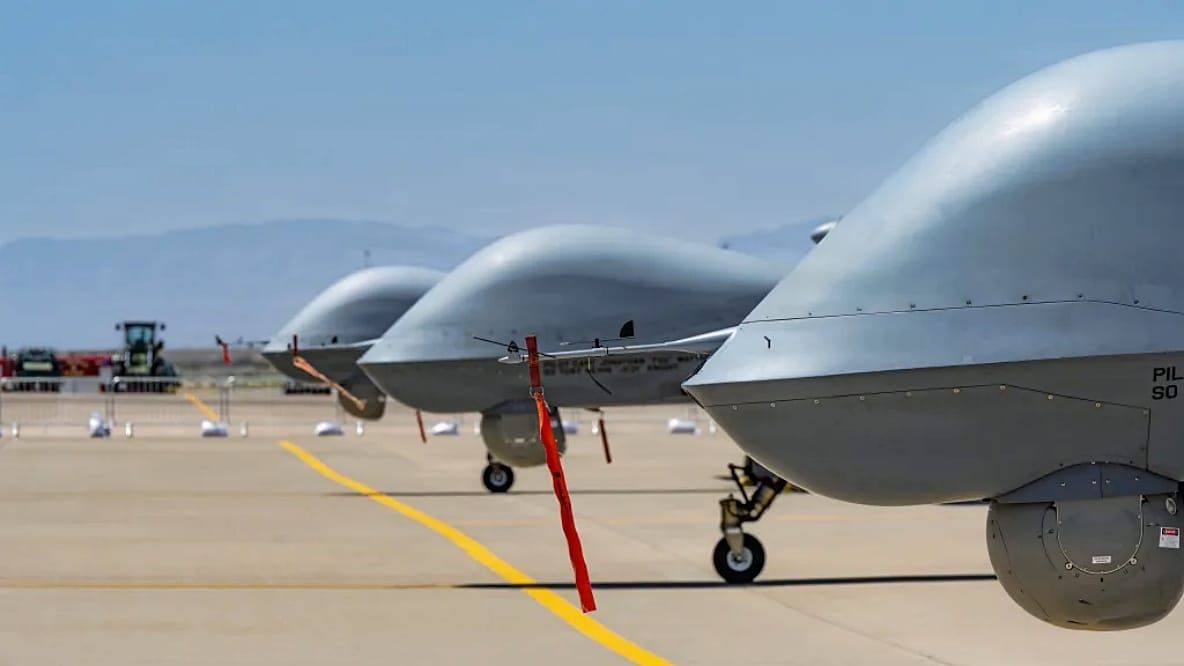
U.S. Air Force Futures has approved a requirements document for an aircraft that will replace the General Atomics Aeronautical Systems Inc. MQ-9A Reaper, Major General Christopher Niemi told lawmakers on May 12.
The OK clears the way for the Air Force to open an acquisition process for the unmanned aircraft system (UAS) that will take over the medium-altitude, long-endurance role of the MQ-9A in the intelligence, surveillance and reconnaissance (ISR) and strike missions.
“We believe what is possible is to take advantage of modern manufacturing technology so that we could buy something that is more flexible, lends itself more to open architecture, is more easy to produce in mass numbers, and then ultimately you could use in a more attritable way,”
Niemi, the acting head of Air Force Futures, testified during a Senate Armed Services Committee hearing.

The requirements document approval comes a month after the Air Force surveyed industry for an attritable ISR UAS. Potential attributes listed in the survey are a range of up to 1,500 km (932 mi.) with 20-hr. endurance. Attritable was defined as an aircraft that can perform 100 missions with a low-to-medium acquisition cost.
“Operators desire low-cost, fast-to-field, fast-to-deploy airborne ISR mass to increase mission flexibility and mission surging,”
the market survey notice on April 15 says.
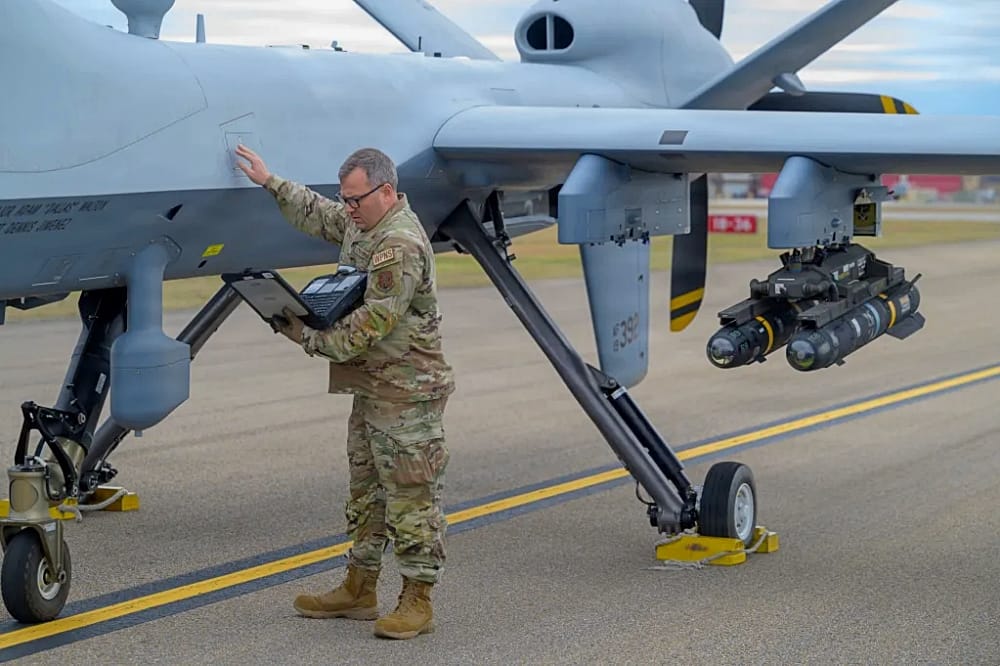
The MQ-9A replacement is moving forward months after the type played a large role in the U.S. air and missile strikes on Iran, while taking heavy losses. The Air Force plans to “buy back” some of the losses to maintain sufficient levels, Lt. Gen. David Tabor, the deputy chief of staff of the Air Force for plans and programs, testified in the same hearing. Tabor did not elaborate.
The Air Force now operates more than 130 MQ-9As, which is enough to support the operational requirement for 56 “combat lines” of deployable aircraft, an Air Force spokesperson told Aviation Week in an emailed response to questions prior to the May 12 hearing.
The Air Force plans to spend $1.56 billion in fiscal 2027 to maintain the 56 combat lines, but long-term spending plans includes no funding for the MQ-9A beyond fiscal 2027. Despite the lack of planned funding, the Air Force has no plans to divest any MQ-9As, the service spokesperson said.
Source: Aviation Week