US Navy Fighter Pilots Need to Gain Trust in Pilotless Wingmen by Actually Flying with Them
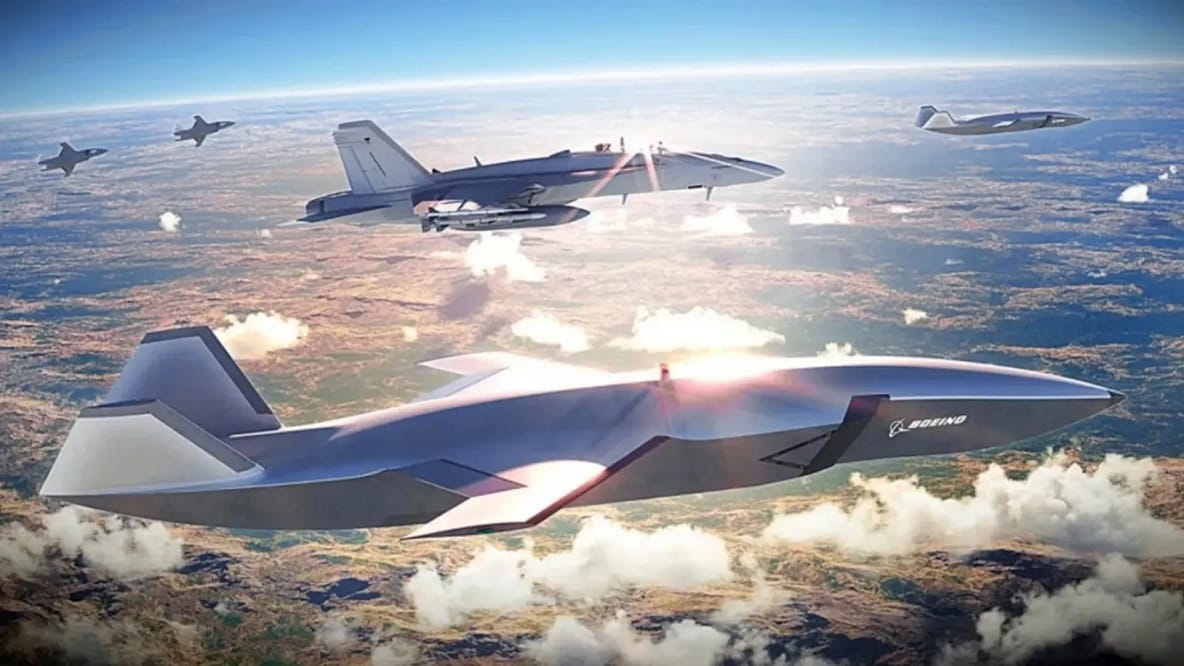
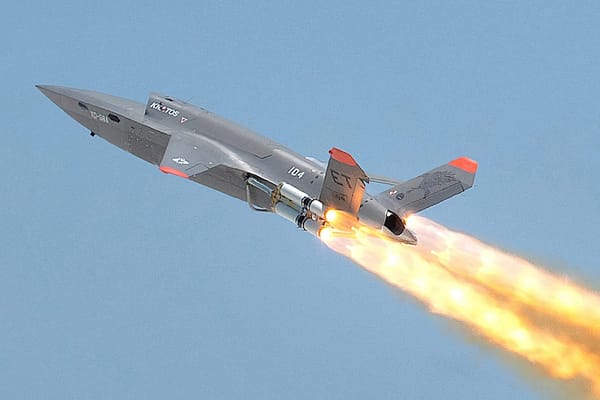
Naval aviators need to be able to trust any future drone wingmen as much as their human counterparts, a U.S. Navy strike fighter tactics instructor has told TWZ. This echoes past comments from members of the U.S. Air Force and U.S. Marine Corps, and is set to be a critical factor in turning the Navy’s still very nascent and evolving crewed-uncrewed teaming vision into a reality.
Navy Lt. Cmdr. Mark “Tugboat” Jbeily talked about ‘loyal wingman’ type drones, now commonly called Collaborative Combat Aircraft (CCA), and crewed-uncrewed teaming, and how they factor into his service’s plans for future carrier air wings, with our Jamie Hunter at the Tailhook Association’s annual symposium . Jbeily is a career F/A-18 pilot and TOPGUN graduate currently assigned as an instructor to the Strike Fighter Weapons School SFWSPAC) at Naval Air Station Lemoore in California.
“You know, the wings on your chest are a sign of trust, ultimately, right? They represent that you’ve been through an established training pipeline. You’re going to behave in a predictable manner, in a standardized manner. We can trust you with this awesome power of an F-18 or F-35,” he continued. “How do we take that concept of trust and now bring it to collaborative autonomy, or manned-unmanned teaming? How do we train to get them comfortable so, in the same way that if you and I were flying, if you were my wingman, I would know you’re going to behave in a repeatable, consistent [manner]?”
“I can have insight on your behaviors. We can do a thorough debrief about why did you do this or why did you do that?” Jbeily added. “And the key, I think, is going to be, regardless of the specific platform, how do we build that element of trust, and how do we get folks comfortable to be able to use it in a combat scenario if we have to.”
When it comes to advanced autonomous capabilities, whether they be integrated into drone wingman or another platform, the essential need for trust has now been a common refrain from members of the U.S. military for years. This trust will be just as critical during routine training and other day-to-day activities involving crewed-uncrewed teams as it will be during any future combat scenario, for exactly the kinds of reasons that Jbeily cited today.
Jbeily further talked about how CCAs could be incorporated in training in the future using what are called live, virtual, constructive (LVC) concepts. As the name indicates, LVC training blends together real and simulated elements in real-world and virtualized settings using a mixture of systems networked together, as you can read about in more detail here. LVC concepts are already regularly used as part of research, development, test, and evaluation activities related to advanced uncrewed capabilities. In line with his comments on trust, Jbeily put particular emphasis on the need for the live component.
“I think that when you think about the Live, Virtual, Constructive piece of this, there’s absolutely going to be a component, because you’re never going to see these collaborative combat aircraft, potentially, right? They may be dozens or hundreds of miles away, even,” he continued. “So, there’s got to be a constructive bit, but I think, ultimately, if we want to get that comfort level of having another piece of metal in the sky that you either join on, or you trust to employ weapons, or you trust to execute your mission command, there has to be some element of live flight. What the specific combination will be and where we can realize optimizations, I think, is still kind of to be determined, but it’s a place that I think we can realize gains on both ends, both the live and the sort of virtual, constructive piece.”
On a broader level, the Navy still has yet to settle on a clear vision for how it will incorporate CCAs into its future carrier air wings and what forms those drones might take, as a result. In the past, the service has put forward a concept for lower-cost carrier-capable drone wingmen in the past that envisions them being “consumable,” and expended as one-way kamikaze drones or aerial targets for training or testing use at the end of relatively short service lives. In recent years, the Navy has also openly talked about a more general goal to eventually see the aircraft in its carrier air wings become at least 60 percent uncrewed.
In addition, the Navy is party to a tri-service CCA agreement with the Air Force and the Marines, but, by its own admission, is trailing behind those services on all fronts. The Air Force currently has two CCAs – General Atomics’ YFQ-42A and Anduril’s YFQ-44A – under development, and is already looking toward future designs. The Marines are in the process of transforming their work with the XQ-58A Valkyrie into an operational capability.
Source: The War Zone