US Department of the Interior Awards 'Call When Needed' Contracts for sUAS Services
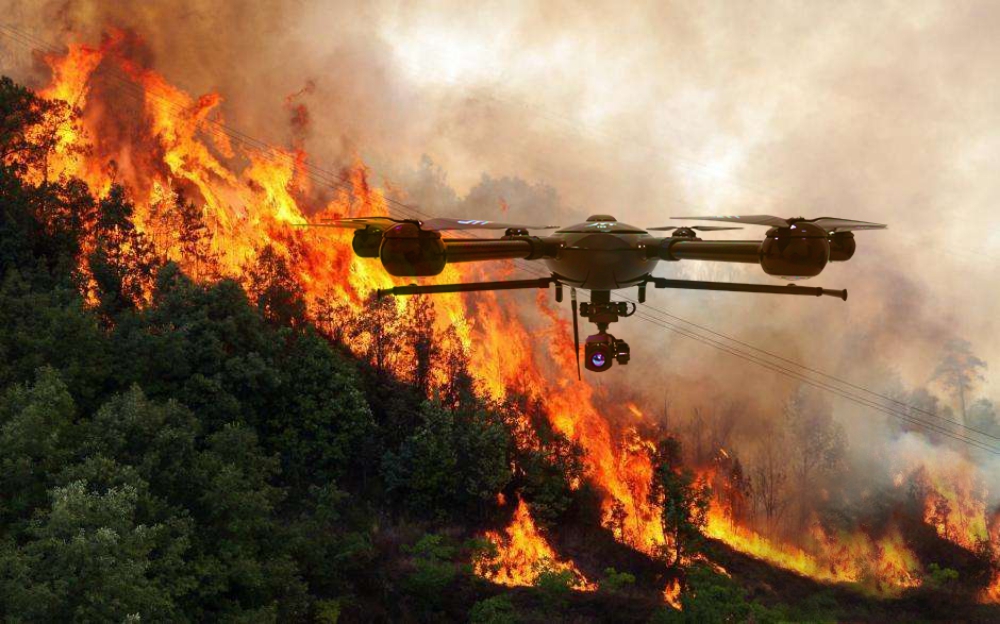
As part of a broader strategy to aggressively combat wildfires, the U.S. Department of the Interior has awarded a Call When Needed contract to four U.S. companies for small-unmanned aircraft systems services.
The contract, which is Interior’s first of its kind, will allow the agency to obtain fully contractor-operated and maintained small drones that are ready when needed to support wildland fire operations, search and rescue, emergency management and other resource missions in the Contiguous 48 States and Alaska.
said U.S. Secretary of the Interior Ryan Zinke.Wildland Fire Directive
The award follows a lengthy process to develop mission performance requirements and select a range of experienced commercial providers to meet this need. Companies receiving awards included, Bridger Aerospace of Boseman, Montana, Insitu of Bingen, Washington, Pathways2Solutions of Nashville, Tennessee and Precision Integrated of Newberg, Oregon.
said Deputy Assistant Secretary for Public Safety, Resource Protection, and Emergency Services Harry Humbert.
The contract consists of one base year with four option years. The total potential contract value is $17 million. Aircraft selected under the contract will be able to operate day or night, without a runway in sustained winds up to 25 knots and at altitudes consistent with typical western wildfire environments.
said Jeff Rupert, Director of the Office of Wildland Fire.
“Interior has a long history of collaborating and partnering with industry to provide our field and fire personnel with safe, effective, and cost-efficient commercial air services to meet unique mission needs,” said Interior’s Office of Aviation Services Director, Mark Bathrick. “Historically, nearly 70 percent of our manned aircraft missions are supported through commercial air services contracts. The capabilities of these contractor operated small-unmanned aircraft systems will provide our scientists, land managers, emergency managers, and firefighters with additional capacity to obtain enhanced sensing, increase employee and public safety, realize cost savings, and service Interior’s diverse and dynamic mission requirements more responsively. This new capability fulfills another important element in Interior’s Unmanned Aerial Services Integration Strategy.”
Like their Interior small-unmanned aircraft systems fleet counterparts, these aircraft will operate from within the Temporary Flight Restrictions established over most large wildfires. This will enable them to take advantage of Interior’s unique authorities from the Federal Aviation Administration to operate beyond visual line of sight—a critical capability in the smoky wildfire environment. Their longer endurance will provide incident commanders with near real-time access to critical fire boundary, behaviour, and hotspot location, enabling them to make faster, more informed decisions than in the past. In conjunction with the tactical and division level fleet small-unmanned aircraft systems Interior has already integrated into the wildland fire environment, these aircraft will enhance firefighter safety through the identification of emerging changes in fire behaviour and escape routes.
The collaboration between Interior and our U.S. Department of Agriculture Forest Service partners on unmanned aerial systems follows a tradition of effectiveness and efficiency where each Department takes the lead on a particular firefighting aircraft type. As an example, the U.S. Forest Service is the recognized lead for the Large Air Tanker and Very Large Air Tanker programs, while Interior leads the Single Engine Air Tanker program for both agencies. Similarly, Interior’s award-winning unmanned aerial systems program has been recognized by Congress as a leader “in piloting and demonstrating the potential for unmanned aerial systems to assist in wildland fire suppression.”
Interior is currently working to bring small unmanned aerial systems to the hazardous aerial ignition mission, which over the last 13 years has resulted in the loss of two contracted helicopters and five lives. Future initiatives include the continued development of optionally-piloted helicopter technology developed by the Department of Defense to enable safe and effective use suppression of fires during the approximately 16 hours each day when night and reduced visibility currently prevent aerial support. Historically, 20 percent of all wildfires are discovered outside periods of traditional aviation support. Interior believes tripling the amount of active aviation support time on wildfires will have game changing benefits in reducing the time, area, and cost to contain wildfires.
Source: Press Release