US Air Force Considers Air-Launched ‘Fighter Drone’ Collaborative Combat Aircraft
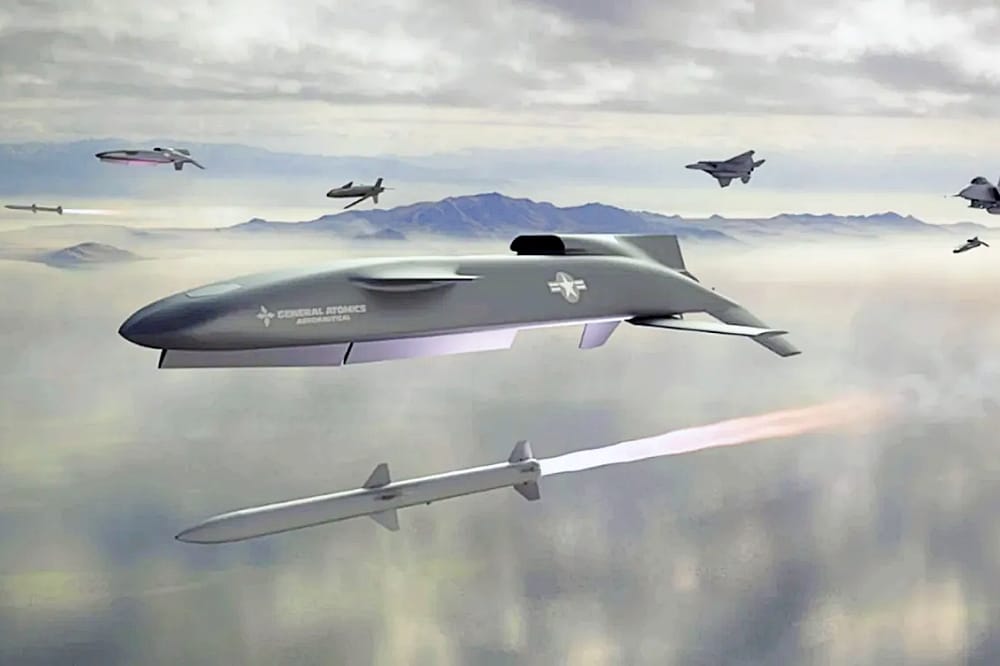
The U.S. Air Force is looking into the idea of air-launching Collaborative Combat Aircraft (CCA) drones from other airplanes in addition to other ways of reducing dependence on traditional runways. Air-launched CCAs also fit in with the service’s larger vision of CCAs having a disruptive impact on future aerial combat and presenting enemies with new challenges to address.
At the same time, launching CCAs from mothership aircraft would present other operational challenges and limitations that would have to be overcome.
Air Force Major General Joseph Kunkel raised the possibility of procuring air-launched CCAs during a virtual talk hosted by the Air & Space Forces Association’s Mitchell Institute for Aerospace Studies. Kunkel is currently Director of Force Design, Integration, and Wargaming and Deputy Chief of Staff for Air Force Futures at the Air Force’s headquarters at the Pentagon.
The Air Force’s CCA program is being run in iterative development cycles. General Atomics and Anduril are currently developing what have now been designated as the YFQ-42A and YFQ-44A as part of the program’s first phase, Increment 1. Requirements for the follow-on Increment 2 are now in the latter stages of being finalized, and Kunkel has previously said his service may be leaning toward lower-cost and less complex designs for the second tranche. The Air Force has said it is looking to acquire between 100 and 150 Increment 1 CCAs, and around 1,000 of the drones, at least, across all the future increments.
“We’re also looking at, maybe we don’t generate them [CCAs] from the ground at all,” he continued. “Maybe we generate them by dropping them out of the aircraft. And so those are, those are all concepts we’re looking at. But you’re absolutely right. We don’t necessarily want to be tied to air bases for our CCAs.”
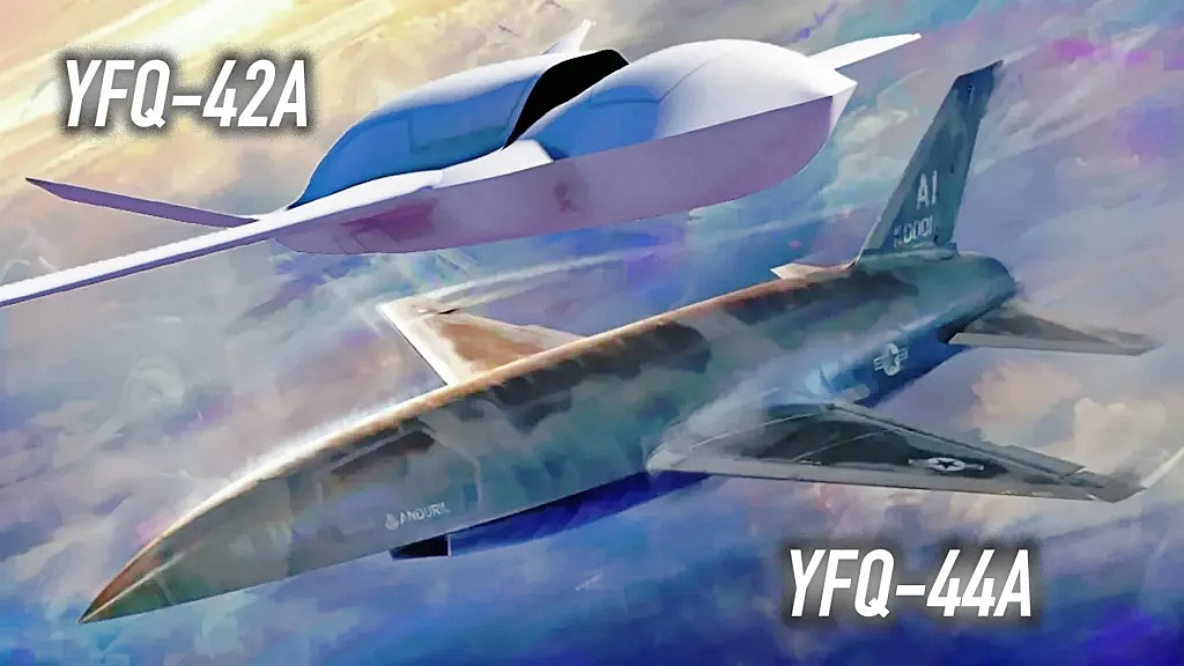
YFQ-42A and YFQ-44A are both designed to take off and land from traditional runways, but are already being engineered from the ground up to align with the Air Force’s Agile Combat Employment (ACE) concepts of operations. ACE focuses heavily on the ability to deploy in irregular ways to a disaggregated array of operating locations, which include remote sites with limited infrastructure. This, in turn, helps upend enemy targeting cycles and reduces vulnerability.
General Atomics has previously said the YFQ-42A incorporates specific design features that could help with operations from shorter and less well-maintained runways. The Fury design that serves as a base for Anduril’s CCA, originally developed by Blue Force Technologies, also has features that allow for shorter field performance.
Being able to air-launch at least some types of CCAs would only add to the complexities for a defender, who might suddenly find themselves facing a force that has multiplied substantially from what was originally seen on their sensors. Drones launched in mid-air could also approach a target area from multiple vectors at once or break off from the main group to head to a different adjacent operating area.
Less survivable aircraft could also air-launch CCAs from rear areas and send them into higher-risk zones where more survivable aircraft like crewed stealth fighters could then take control. Air-launched CCAs could also offer valuable added on-station time for more localized missions like defending high-value, but more vulnerable assets, such as airborne early warning and control, tanker aircraft. These aircraft could even be launched on warning only when needed after a threat is detected.
A very long-range and stealthy platform with a high payload capacity, like the forthcoming B-21 Raider bomber, might also be able to extend its reach even further by launching CCAs inside highly contested airspace. This could be for defense or offensive mission needs. The Air Force has separately been exploring how CCAs might pair with the B-21, in general. The Air Force also has a formal agreement with the Navy and the Marine Corps regarding the development of CCAs that includes a requirement for a common architecture that allows for seamless exchange of control during operations.
“As you look at CCAs, they’re going to be up in the sky, and there’s going to be opportunities to be controlled by multiple different aircraft,” he added.
All of this still leaves open key questions about where and how air-launched CCAs might be recovered after missions, especially if bases closer to operating areas are deemed too high risk or if missions take the drones deep inside contested airspace.
Any need to save range capacity to be able to recover at a location further away from hostile threats would trim back a drone’s useful combat radius and limit on-station time after it arrives at its designated objective area.
How those drones would be regenerated for other air-launched missions once recovered at remote locales is also another question that needs to be answered.
Source: The War Zone