Update on Helsing HX-2 Current Development Status
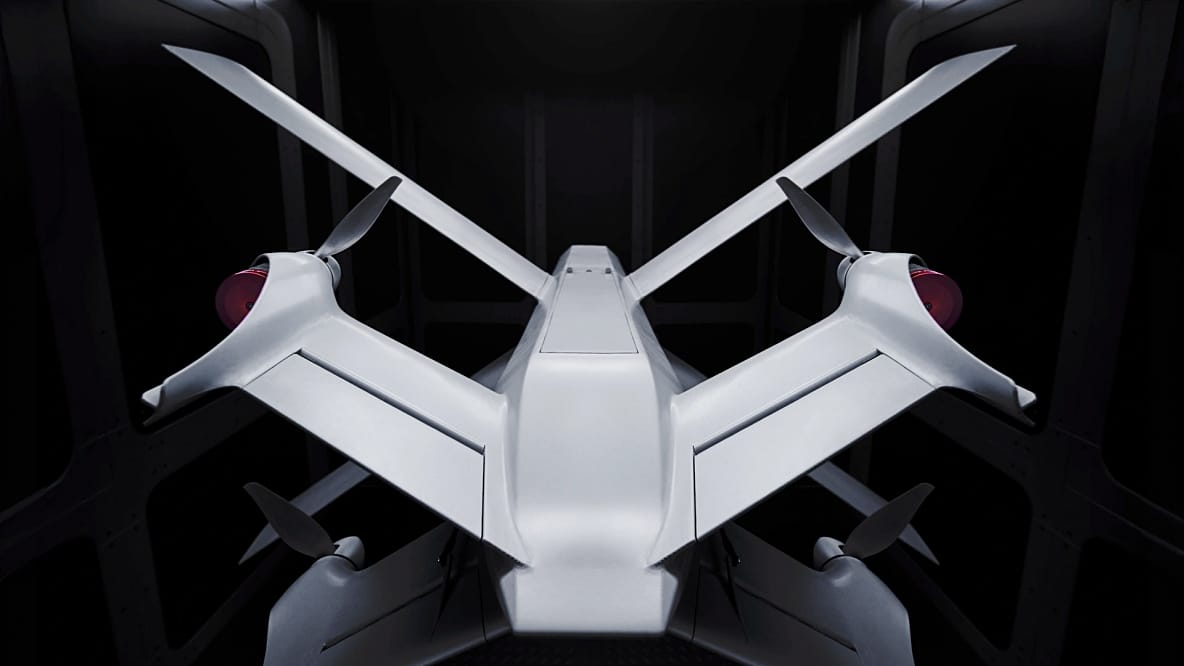
Niklas Köhler, co-founder and co-CEO of German technology company Helsing, presented the current development status of the HX-2 to selected media representatives and provided insights into the further development of the strike drone.
According to Köhler, the company has "destroyed" an average of 30 drones per week for approximately two years to reach its current state. However, these real-world flight tests alone are far from sufficient to explain the rapid development pace of the HX-2. Rather, they serve as data sources for building a simulation technology and infrastructure that plays a crucial role in the development of the strike drone, both up to its current status and beyond.
The current state of development of modern strike drones and loitering munitions allows for a reliable hit on the targeted enemy (even while moving) under adverse flight conditions. In the future, these systems are intended to be capable of exploiting a target's weaknesses and, if necessary, even circumventing countermeasures.
The Development of a Strike Drone
Strike drones manufactured in Germany are attracting considerable attention, not least due to recent media reports regarding more or less successful test campaigns. During the briefing, however, Köhler declined to comment on or confirm the tests with the German Armed Forces in Germany and the British Army in Kenya, which have been discussed in the media. Nevertheless, he stated that the company's HX-2 strike drones have successfully undergone tests in several countries in recent weeks and have been deployed by soldiers of the respective nations. According to him, the HX-2 has demonstrated its robustness in operation and a high degree of automation that stands out in international comparison. The reason for this result, Köhler explains, lies in the way Helsing develops, tests, and trains its strike drone.
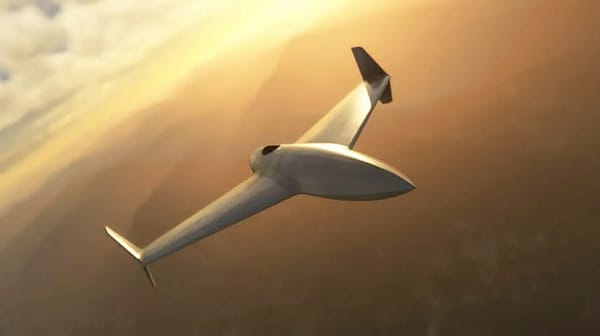
The HX-2 is an electrically powered X-wing precision drone with a range of up to 100 km. According to Helsing, the HX-2 was designed from the ground up for mass production to keep unit costs significantly lower compared to conventional systems. A key element of the HX-2's performance is the AI-powered software developed by Helsing. According to Helsing, the use of AI makes the drone resistant to electronic warfare and jamming. AI is also responsible for the system's high degree of automation.
Helsing sees the HX-2 as a precision weapon with an operator on the loop. While most drones in current drone warfare, such as those used in the Ukraine war, still require pilots to control them, strike drones like the HX-2 can successfully complete missions even without human input. The process is as follows: A identified target – the reconnaissance vehicle is irrelevant here – is transmitted to the HX-2 as a target report, including coordinates and a target description (e.g., main battle tank in position). After the operator issues the launch command, the strike drone flies automatically until it reaches the target area and locates the reported target independently. Once the operator confirms that the located target is indeed the one to be engaged, the drone autonomously attacks the target.
What sounds unspectacular is, according to Köhler, actually very complex. The drone's control software must perform virtually all these tasks at least as well as an experienced pilot for this type of mission. And the human pilot must consciously or unconsciously do many things correctly simultaneously for the mission to be successful. For example, a pilot must constantly maintain accurate spatial awareness of the drone's position and continuously estimate the distance to obstacles or potential targets in order to initiate the necessary flight maneuvers to accomplish the mission. However, this is just one of many tasks that the pilot must consciously or unconsciously perform in parallel with other duties. All of this must also be taught to the drone.
The last three seconds of the mission are particularly crucial, as Köhler says they determine whether the drone ultimately hits its target or not. Errors during the approach phase can be compensated for, but the final approach to the target allows no room for error. This phase is especially complex. The strike drone flies at a particularly high speed during the dive, and the wind conditions at ground level differ from those at altitudes of, for example, 100, 200, or 300 meters. Therefore, in the last three seconds of the final approach, the drone must compensate for several potential variables—wind speed, wind direction, changes in the target's position, and its own speed—simultaneously within milliseconds to ensure the mission's success.
A single mistake is all it takes for the drone to hit the ground instead of the target. Developing the HX-2 required not only creating a strike drone, but also developing a battle-tested software pilot.
Simulation is key. Training this software pilot requires countless test flights under every conceivable condition. Köhler himself speaks of 3,000 to 4,000 test flights necessary to calibrate a system so that it flies accurately to its target under a wide variety of conditions. If these test flights were conducted traditionally in the field, it would take years.
Modularity
Access to the powerful simulation environment allows the company to fully leverage the drone's modularity and continuously develop the system. According to Köhler, the HX-2's hardware is designed to accommodate a wide range of warheads from different manufacturers. If the warhead components are pre-qualified, the integration effort, according to the co-CEO of Helsing, is measured in weeks rather than months. This allows the HX-2 to accurately achieve different effects on the target, depending on customer requirements – for example, engaging soft targets or anti-tank defense.
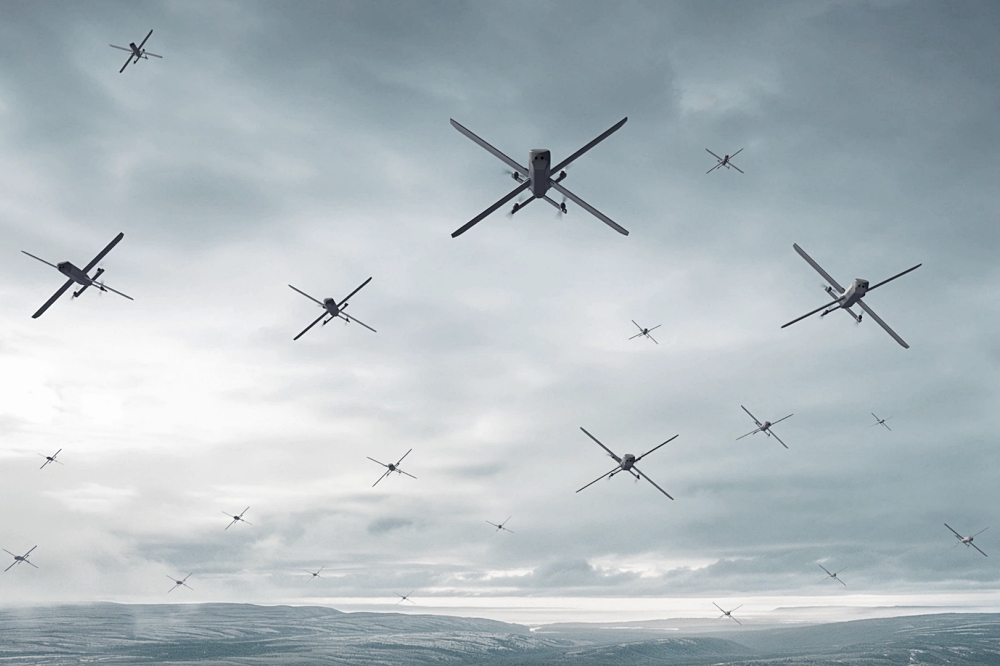
Several options are also available for launching the HX-2 strike drones. In addition to catapult launches, the HX-2 can also be pneumatically launched from reusable launch boxes that can be attached to combat vehicles. Furthermore, launching from a portable transport unit is currently under development.
Combat Effectiveness Enhancement
Although Köhler has great confidence in the already achieved "robustness" of the HX-2, which, according to him, "stands out positively from the crowd," the co-founder of Helsing sees further potential to continuously enhance the strike drone's combat effectiveness.
The focus, however, is not on the hardware, but on the software. Köhler sees no particular need for further development of the platform itself. "If the laws of physics don't change, no optimization of the aircraft is necessary as long as it is well-designed," Köhler explains. Adjustments are only required if the requirements—payload weight or size, range, etc.—change.
The Helsing manager also sees a gradual but steady slowdown in the pace of development at the component level. At the beginning of the Russian invasion of Ukraine, the pace was very high; in his opinion, it has now leveled off considerably.
When it comes to software development, Köhler is thinking particularly about further developing the control software. Instead of focusing solely on accurately hitting targets – stationary or moving – even under adverse conditions such as weather and camouflage, the system will be equipped to autonomously identify the target's vulnerabilities and exploit them during combat. The goal is not simply to hit the tank, but for the drone to optimize its approach angle to strike the precise point on the tank where its defenses are weakest.
According to Köhler, once this capability is implemented, further enhancements to the system's combat effectiveness are conceivable. For example, it could be investigated to what extent the drones can automatically react to and counteract the target's defensive measures. He cites as an example the drone being blinded during its final approach to the target if the crew of an attacked vehicle notices the HX-2 and activates a smoke grenade launcher to break line of sight. In such a situation, the strike drone would be unable to compensate for any changes in the vehicle's position and would ultimately miss its target. In the future, the system could be trained to recognize such situations and react accordingly. Instead of continuing its approach to the target, the drone could launch another attack once the fog has lifted, or adjust its angle of attack to compensate for the reduced visibility.
Helsing's software engineers will therefore have no shortage of work in the future.
Source: hartpunkt