Ukraine’s $2,500 Drones Down 1,000 Russian Shaheds in 4 Months
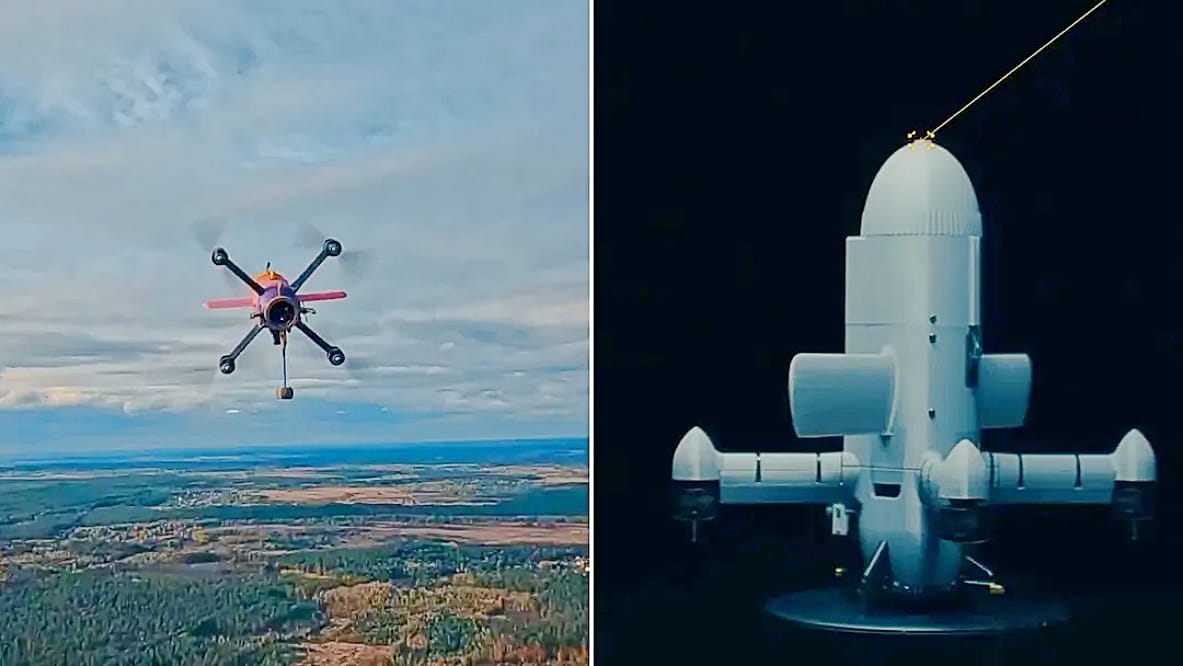
Ukraine’s battle against Russia’s relentless drone assaults has found a powerful counter in the STING interceptor drone, a compact, fast, and cost-effective weapon designed to neutralize enemy UAVs mid-air.
Developed by the Ukrainian team “Wild Hornets,” the STING has already proven its effectiveness in combat, marking a significant step forward in the evolution of drone warfare.
The Drone that Hunts Shahed Drones
The STING interceptor, showcased in a new video released by the Wild Hornets team, is described as a “massive, affordable, and effective” FPV (first-person view) drone capable of downing Russian attack UAVs, including Shaheds, Lancets, Zala, and SuperCam models.
Built for agility and speed, the STING can be deployed in less than 15 minutes and launched from virtually any surface without the need for a catapult.
If a target is not located, the drone autonomously returns to base, a feature that saves valuable resources during operations.
With an engagement range of up to 25 kilometers, it is designed for rapid response to aerial threats, offering Ukrainian forces a flexible defensive option against swarms of incoming attack drones.
Equipped with the Hornet Vision system and a 360° antenna ground station, the STING remains operational even under electronic warfare conditions.
The system works seamlessly with both analog and digital FPV stations, ensuring real-time video transmission and night operation capabilities. As described in the video, “no evasion system can save a Shahed,” highlighting the precision and speed of the drone.
A distinct dome atop the STING’s frame houses its camera system and explosive payload.
Operated via VR goggles, the pilot experiences a first-person view of the flight, enabling high-speed maneuvering and pinpoint accuracy, often culminating in a mid-air collision with its target.
Compact yet lethal, the drone embodies Ukraine’s shift toward smart mass-produced weaponry. Simple to maintain, fast to deploy, and deadly effective.
Training and Deployment
A dedicated instructor unit, known as the “Night Hornets,” is responsible for training new STING operators. According to the Wild Hornets, “by day, they train soldiers to operate STING. By night, they hunt Shaheds alongside them.”
This continuous cycle of training and combat ensures that the frontline experience directly informs new recruits, rapidly expanding Ukraine’s corps of skilled FPV drone pilots.
In just four months since serial production began, STING claims to have destroyed over 1,000 enemy targets.
This would make the Wild Hornets initiative one of Ukraine’s most successful combat drone programs to date.
Toward a Drone-Driven Defence
As Business Insider reports, President Volodymyr Zelenskyy announced that the country aims to reach a daily production rate of 600 to 800 interceptor drones by the end of November.
Although lower than his initial target of 1,000 per day, Zelenskyy noted,
“We believe that by the end of November, there will be 600 to 800 interceptor drones produced per day, if nothing goes wrong.”
The move comes amid escalating Russian attacks using waves of Shahed-136 drones and missile salvos meant to overwhelm Ukrainian air defenses.
Traditional anti-air systems, such as Western-supplied surface-to-air missiles, can cost millions per unit, far exceeding the price of the drones they are used to destroy. In contrast, interceptor drones like STING provide a far cheaper and more scalable solution.
Source: Interesting Engineering