Ukraine is Adding Anti-Drone Cages to Drones
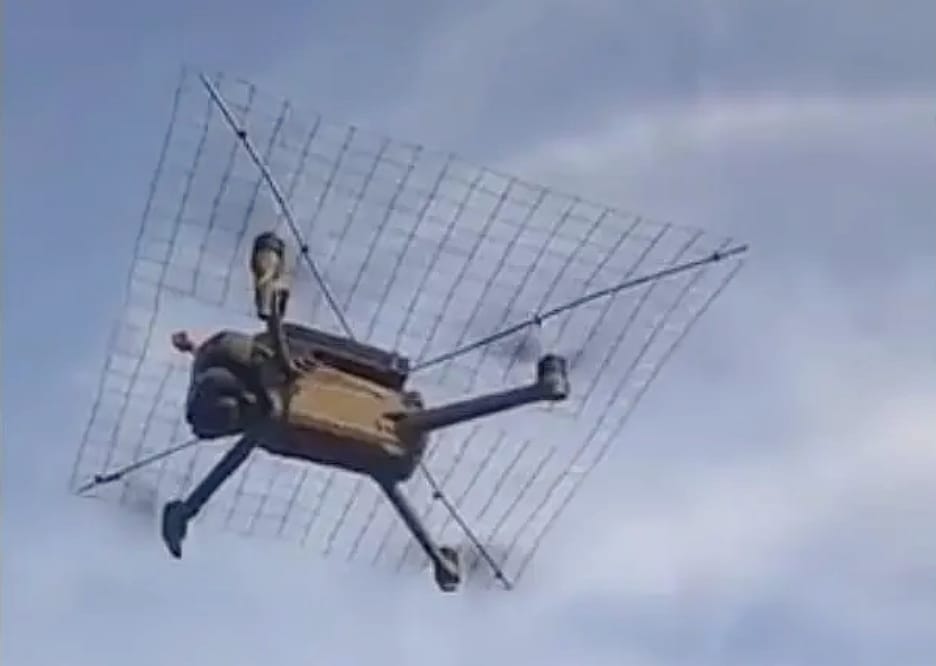
Ukrainian forces are now equipping drones to fly with metal mesh meant to protect them from other drones. The first video of an up-armoured Ukrainian drone just circulated online.
[embed]https://vimeo.com/1085416819[/embed] The first anti-drone cages, which Ukrainian observers dubbed “cope cages,” began showing up on Russian armored vehicles shortly after Russian forces widened their war on Ukraine in February 2022.
The occasionally crude cages weren’t really cope, however—they were simply the Russians internalizing an uncomfortable truth: that tiny explode-on-contact drones would soon be the main threat to vehicles and troops in an ever-expanding kill zone extending for miles from the line of contact.
Cope cages, along with anti-drone nets and chains, are now standard on ground vehicles of all types on both sides. Ukrainian and Russian forces have also stretched drone-catching nets along miles-long lengths of the most vulnerable supply routes—and some Russian companies have installed them around oil refineries within reach of Ukraine’s long-range attack drones.
The cope cages didn’t start appearing on drones until anti-drone drones proliferated starting last year. Both sides have developed these “interceptor” drones. Some fire shotguns at enemy drones. Others explode on contact with their airborne targets. Many simply ram them, so that the interceptor stands some chance of being used more than once.
It’s tough work for the operators of the interceptors. Drones are small and nimble—and can be hard to detect. “It’s very, very difficult to sight in, to get visual on the target,” a Canadian drone operator with the callsign “Butcher,” who fights for Ukraine, told Forbes’ David Hambling.
But once an interceptor zeroes in on an enemy drone, the kill rate is as high as 75 percent, Butcher said. Some Russian drones have rear-facing cameras and automated systems that trigger evasive maneuvers. But most targeted drones are vulnerable to getting rammed from above or behind.
Source: Forbes