These Planes Mimick Shahed-136 Drones in US Military War Games
"KestrelX provided a unique opportunity to replicate what we are seeing in war right now - smaller aircraft that fly lower and slower, but are still a potent threat. It’s an aircraft that is smaller, low RCS (radar cross-section), difficult to find, and blends into the ground."
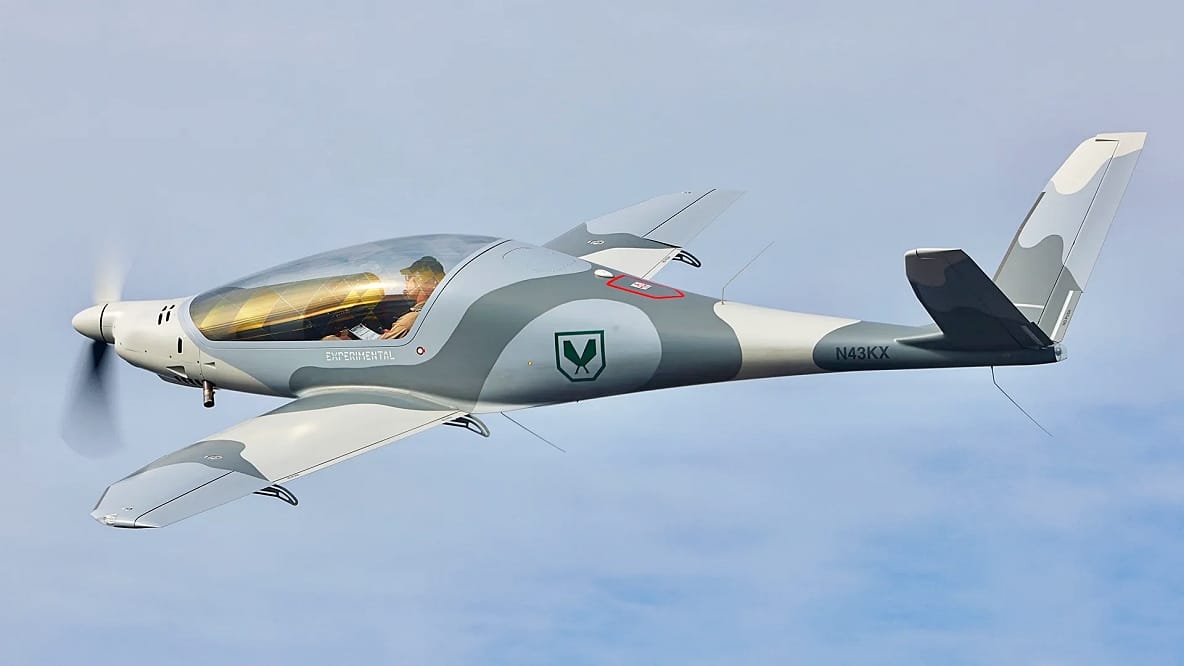
For the past week, two small experimental aircraft have been operating off the coast of Savannah, Georgia. Their job is to replicate long-range kamikaze drones similar to the Iranian Shahed-136.
These weapons were a steadily growing threat that was overlooked for years. Now the U.S. military needs to test and train against these capabilities, including honing the abilities of United States fighter squadrons to track and destroy them.
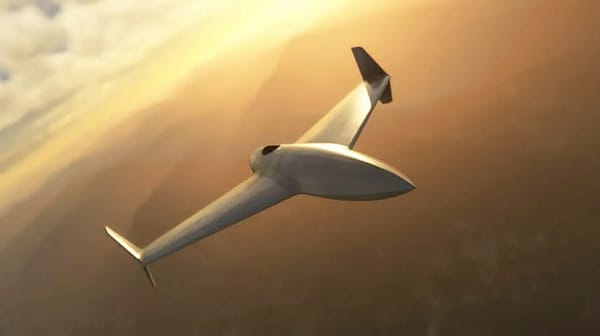
A private company, KestrelX, is operating two of its composite two-seat propeller aircraft, the Risen KX-2, as part of Sentry South 26.1. The aircraft is the world’s fastest ultralight. In 2021, KestrelX received a Small Business Innovation Research (SBIR) contract from the U.S. Air Force valued at just over $725,000 for “UAV [unmanned aerial vehicle] and Cruise Missile Threat Replication Aircraft.”
Their first major exercise was Northern Strike 24-2, where they flew two tiny microjets. To operate over water for longer missions, among other features, the company’s new propeller-driven KX-2s were deemed a better fit for Sentry South 26.1.
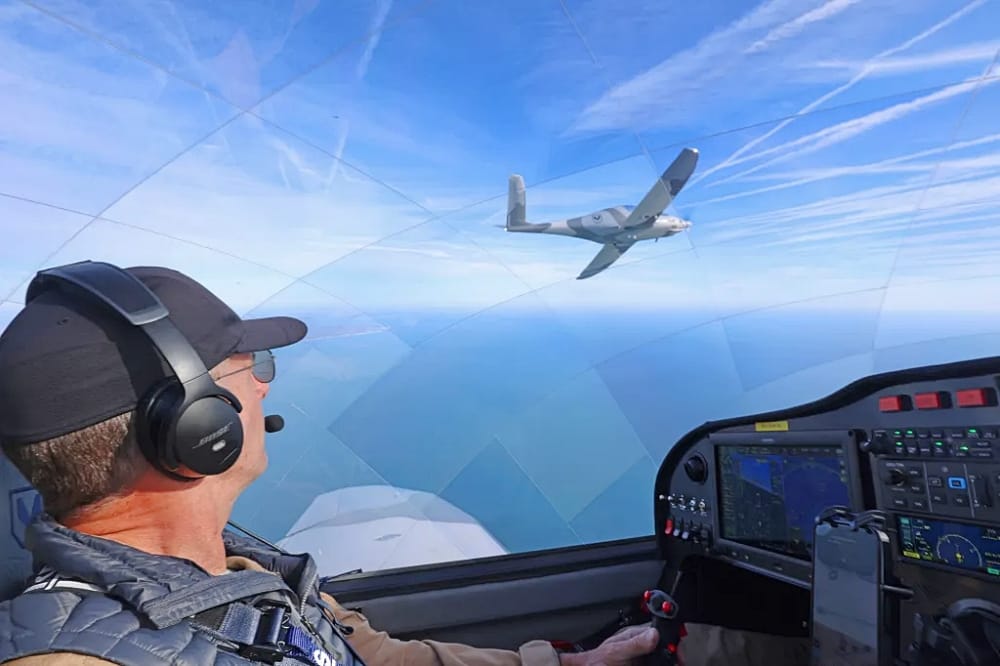
Don Moseley, a former Navy pilot who flew both the F-14 Tomcat and the F/A-18 Super Hornet before attending Navy Test Pilot School at Naval Air Station Patuxent River in Maryland, is the chief executive officer (CEO) at KestrelX. He then became the head developmental test pilot for the F/A-18 at VX-23, which is a Navy Air Test and Evaluation Squadron. Moseley also did what is known as a disassociated sea tour, during which he worked on the Tomahawk missile program, giving him a deep look at cruise missiles and the threat they pose.
“They joke that once you get test ink on you, you can’t wash it off. After retirement, I did some test work for big companies like Lockheed Martin and Boeing. I also did some adversary work at Draken.”
In 2019, while flying in the Nevada Test and Training Range (NTTR) in a 3rd-generation adversary jet aircraft, the idea for KestrelX began to form in Moseley’s head.
Moseley elaborated, telling us,
“While flying in the NTTR, I see that they bring out the F-117A out of Type-1000 storage and see they are also using the F-35 for red-air as they are preparing to stand up the 65th Aggressor Squadron. These are extremely expensive assets to try to replicate low-observable targets. I am flying in a Gen 3 fighter with a large radar cross section simulating a cruise missile down low, and I am getting detected, prosecuted, shot, and killed out of the fight before I really even detect [the blue force], which is really just negative training. I thought to myself, you don’t need just one F-117; you need about 10 to properly replicate the threat out there. The true threat, in my opinion, where the cost barrier is super low, is weaponized UAVs like what we see in Ukraine.”
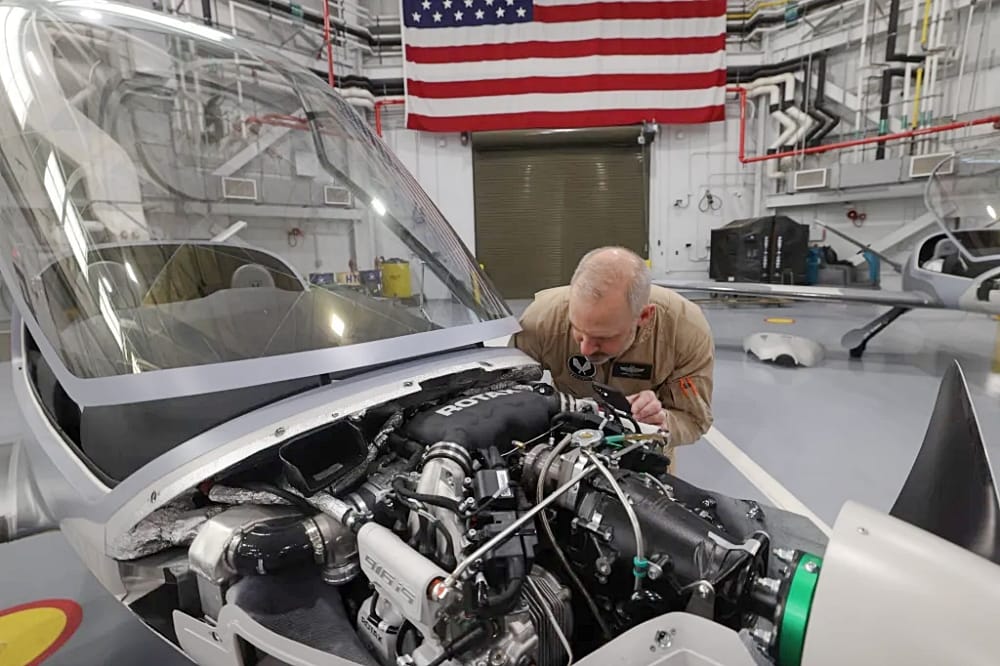
KestrelX selected the KX-2 from manufacturer Risen for its endurance, as well as its internal and external payload capability, with hardpoints, as well as its signature. The aircraft is also remarkably fast… or slow. It is capable of hitting speeds of up to 240 knots, while also being able to fly very slowly. This allows it to mimic a wide range of threats.
Targeting UAS that fly at slow speeds and low altitudes poses a host of challenges for American fighter aircraft and carries a significant risk. These aircraft can have tiny infrared and radar signatures. The ability to detect the target and then identify it visually (without running into it) before coming around and getting a proper weapons solution can be harder than attacking another fighter aircraft or cruise missiles that fly at jet speeds. Weapons engagement can be complicated, as well, especially when using laser-guided rockets, which have a short range and often require two aircraft to attack a target cooperatively.
The Risen was a perfect aircraft for the UAS threat replication mission being flown at Sentry South because it was already built with low-observable properties. Its composite materials and shape were naturally conducive to making a stealthy target. With a swept wing made of carbon fiber and a small engine with low infrared signature, little modification was needed to perform its mission. Having an amazing endurance of around 12 hours, the options provided to exercise planners are plentiful.
Flying out in the large MOA, the KX-2s were replicating Shahed-136 drones. They took off first so they could be in the area when the other fighters had arrived. Then, they simulated a drone launch from about 50 miles away from the ‘blue’ force (friendly) targets, which were the defended assets. Operating at about 1,000 feet above the water and at about 120 mph, they provided a tough target for Blue forces as they made two runs at the target.
“One of the unique challenges was that because we were at such a low altitude operating far off the coast, the people who were controlling the mission from the shore could not hear us, so we relayed our position through the red [aggressor] fighters. On the second mission, we doubled our speed to better replicate a cruise missile threat. On all six attempts to enter the target area, the fighters successfully tracked and targeted the Risens."
KestrelX is growing rapidly, with plans to have 10 KX-2s flying by the summer, as well as the three KX-1s. Clearly, this will help to better replicate the flocks of long-range one-way attack munitions that are already appearing on the battlefield, and the rise of cooperative swarms tomorrow. It will also allow the firm to support more training and testing events in more locations.
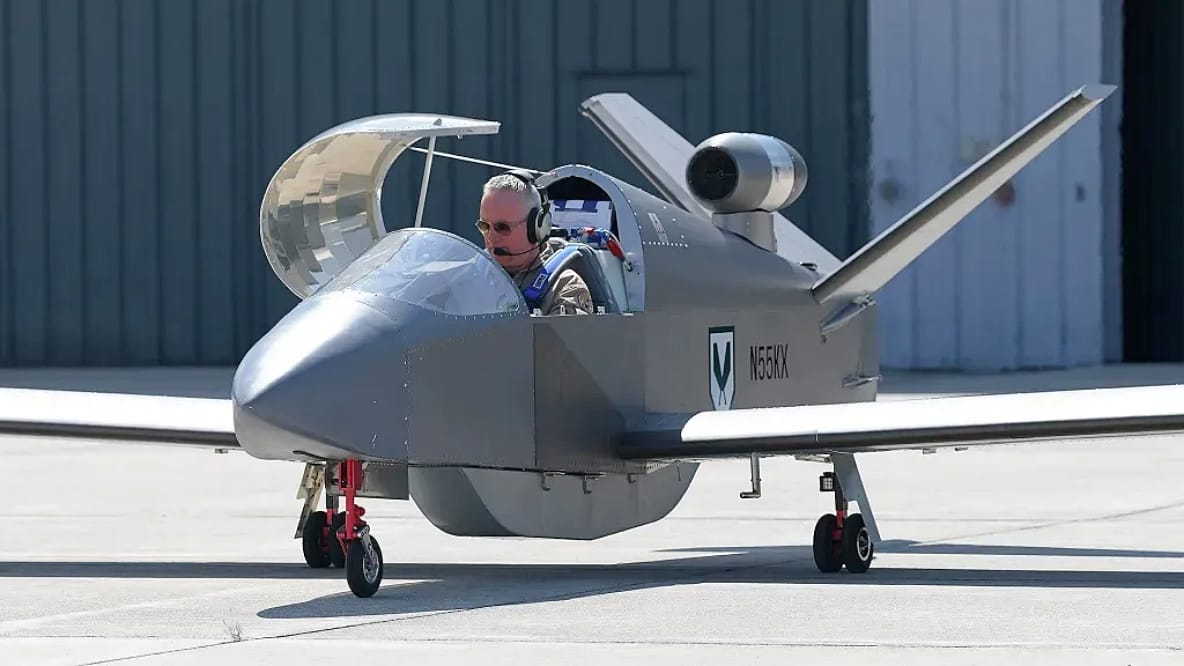
Having now flown drone replication missions at the USAF Weapons School as well as Top Gun in Fallon, Nevada, and several other air exercises, the need for these assets is becoming very clear.
Full article is available on The War Zone.