Thales Develops $10K Laser-Guided C-UAS Rocket for Ukraine
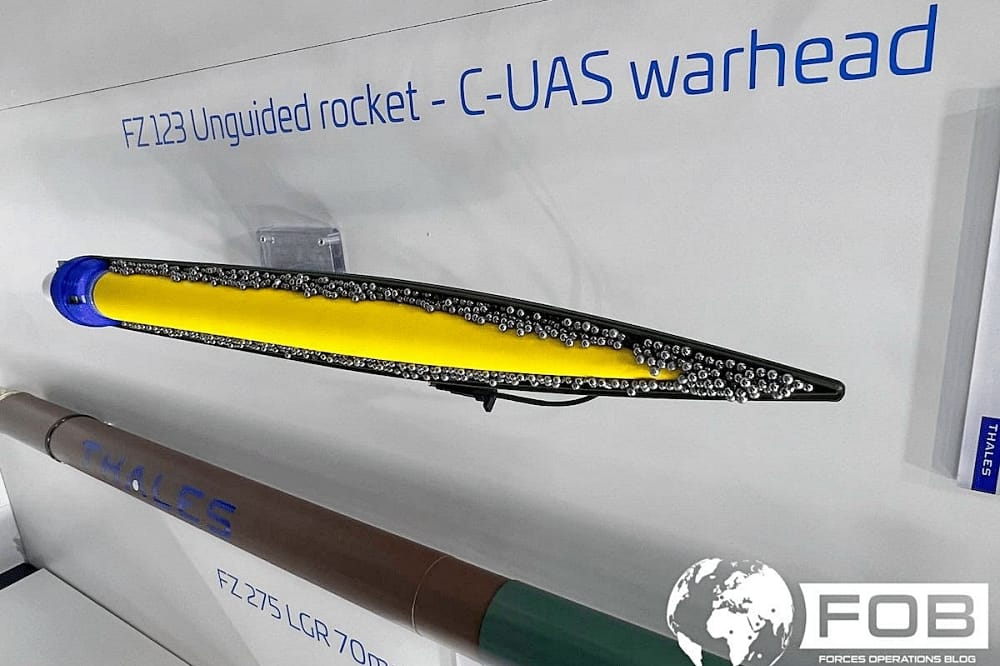
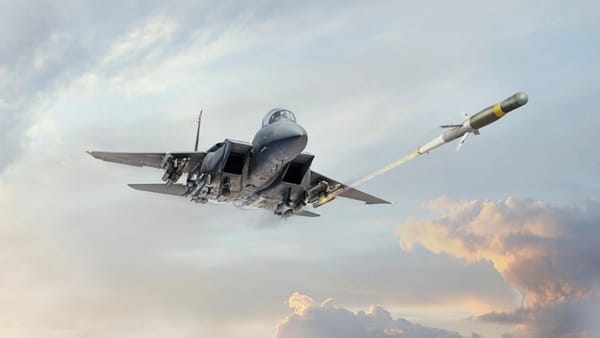
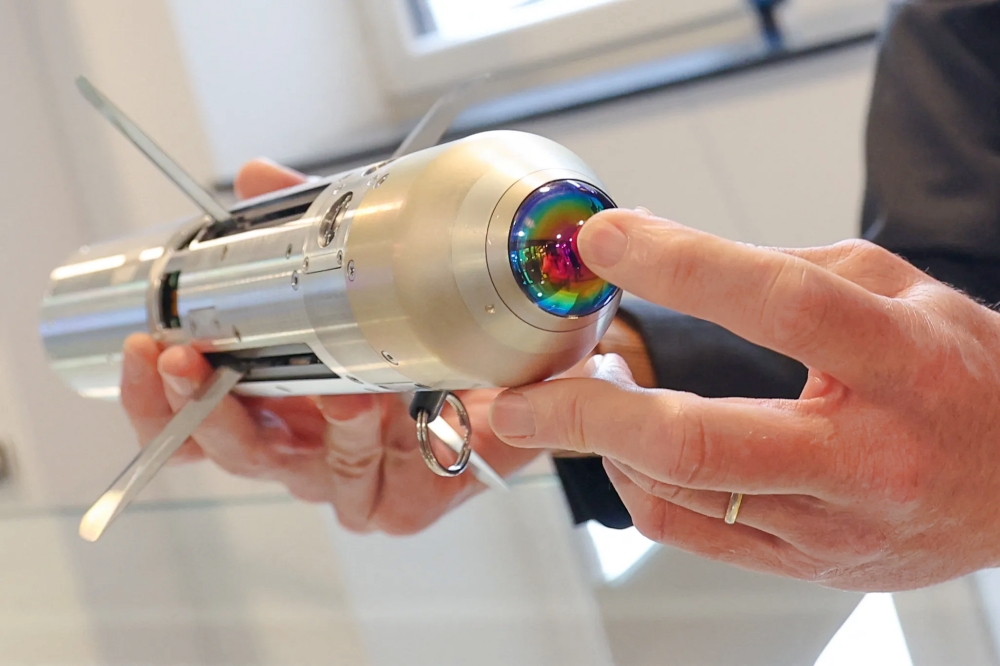
Belgian defense firm Thales is developing a low-cost laser-guided rocket to help Ukraine counter Russian drone swarms, the latest development in an ongoing effort by EU members to supply affordable air defense systems. The 70mm FZ275 LGR is designed to detonate mid-air, releasing a cloud of tungsten fragments capable of destroying low-flying drones.
Priced at under $10,000 per unit, the rocket offers a cost-effective alternative to advanced air defense systems like Patriot interceptors, which can cost millions per missile. The airburst warhead's fragmenting effect makes it particularly suited for low-flying threats such as Iranian-made Shahed drones, which Russia has used extensively since 2022.
The warhead is comprised of two pounds of high explosives, which detonates and radially spreads out the steel pellets, creating a lethal cloud with a diameter of around 80 feet.Thales has accelerated production in response to Ukraine's operational demands, with the system tested from platforms including helicopters and ground vehicles. Its laser guidance provides precision at ranges of up to 4.3 miles, allowing accurate strikes while reducing risks to civilian areas. Early feedback from Ukrainian operators suggests the rocket could quickly integrate into existing counter-drone strategies.
The development reflects a wider NATO focus on scalable and affordable defenses. European allies, including Belgium and France, are supporting the effort to ensure Ukraine receives effective systems without straining their own stockpiles. The emphasis on affordability also responds directly to Russia's reliance on cheap drones to exhaust high-value interceptors.
The rocket's design, drawing on principles from anti-personnel munitions but optimized for aerial targets, has already attracted interest from other nations confronting drone threats.
Challenges remain in scaling production, particularly with tungsten supply chains vulnerable to geopolitical disruption. However, Thales aims to expand output into the thousands annually, with future iterations potentially incorporating autonomous targeting features.
The FZ123 was unveiled last year during the Eurosatory 2024 defense exhibition in Paris. Thales Belgium hosted Business Insider at one of its production facilities in the eastern city of Herstal to give us a closer look at the warhead and its delivery rockets.
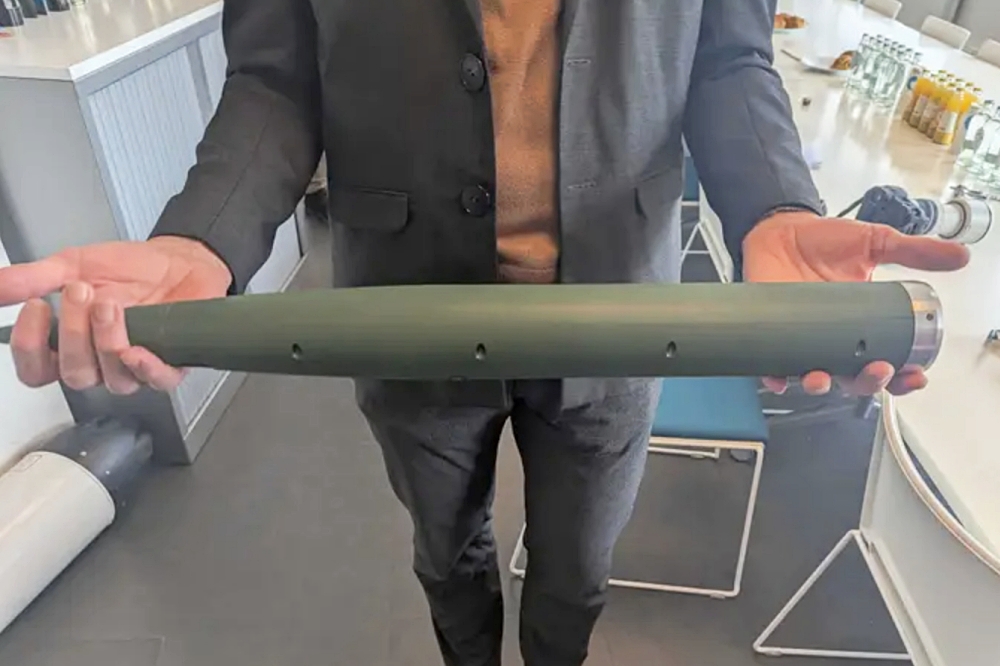
Thomas Colinet, Thales Belgium's domain director for vehicles and tactical systems, confirmed that the weapon is being deployed in Ukraine, and that Kyiv's demand is greater than what the firm can produce.
"The good thing for us is, if they are asking for more, it means they are happy with it," said Colinet.
Costlier than Drones, Cheaper than Missiles
Ukraine, hard-pressed for cost-effective defenses against Russia's Shahed waves, has also been building new types of first-person-view drones that fly fast enough to catch up to the loitering munitions and intercept them.
These interceptor drones typically cost $500 each, and it's rare for one to be more expensive than $5,000.
Thales Belgium declined to reveal the cost estimate for its 70mm rockets with the FZ123 warhead. But even its most expensive rockets, with laser guidance kits, are generally a fifth the cost of a conventional missile. Cheaper air defense missiles, such as the AIM-7 Sparrow, cost roughly $125,000 each.
"I will not give numbers, of course, but if you have to compare that to a missile? There is no fight. The rocket is kind of a low-cost missile," Colinet said of the cost.
He also declined to say how many warheads have been sent to Kyiv's forces. Thales Belgium's production capacity, however, can provide some clues.
The FZ123 is one of the warheads that can be delivered via Thales' laser-guided 70mm rocket originally made for attack helicopters.
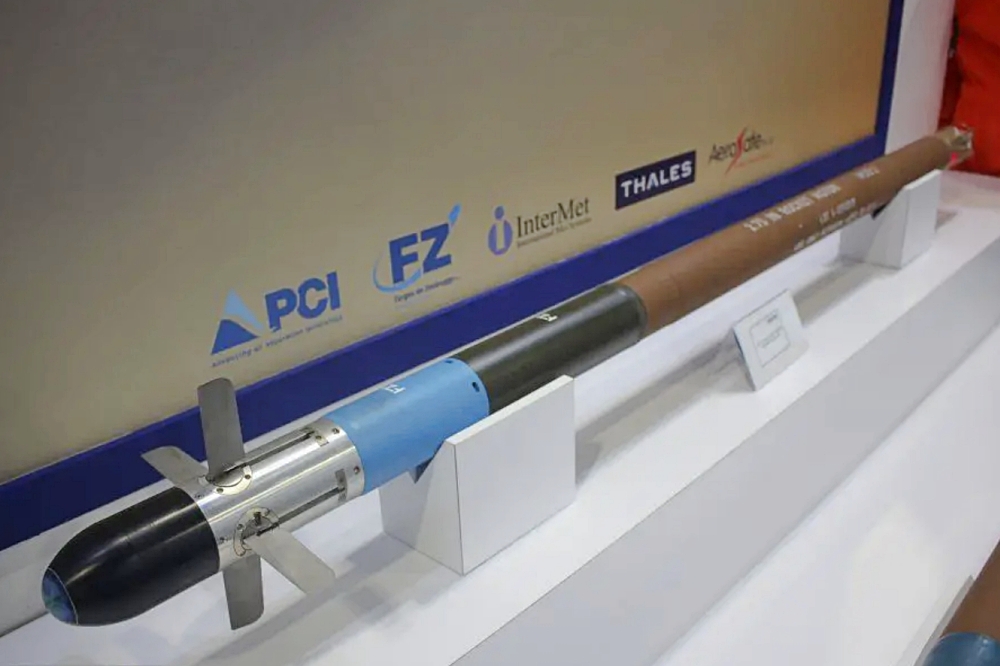
Thales Belgium aims to produce roughly 3,500 of these rockets by the end of the year, and hopes to scale up to an annual capacity of 10,000 by 2026.
The anti-drone warhead can also be fitted onto an unguided version of the 70mm rocket, of which Thales Belgium says it can now build 30,000 a year. If its Herstal factory works double shifts, it might reach an annual capacity of 60,000, though its suppliers would also have to step up production.
How the FZ123 and its Rockets Work
Compatible with standard NATO 70mm launchers, the rockets are currently fired by Ukraine's Vampire systems, which are multibarrel launchers manufactured by L3Harris that can be mounted on trucks.
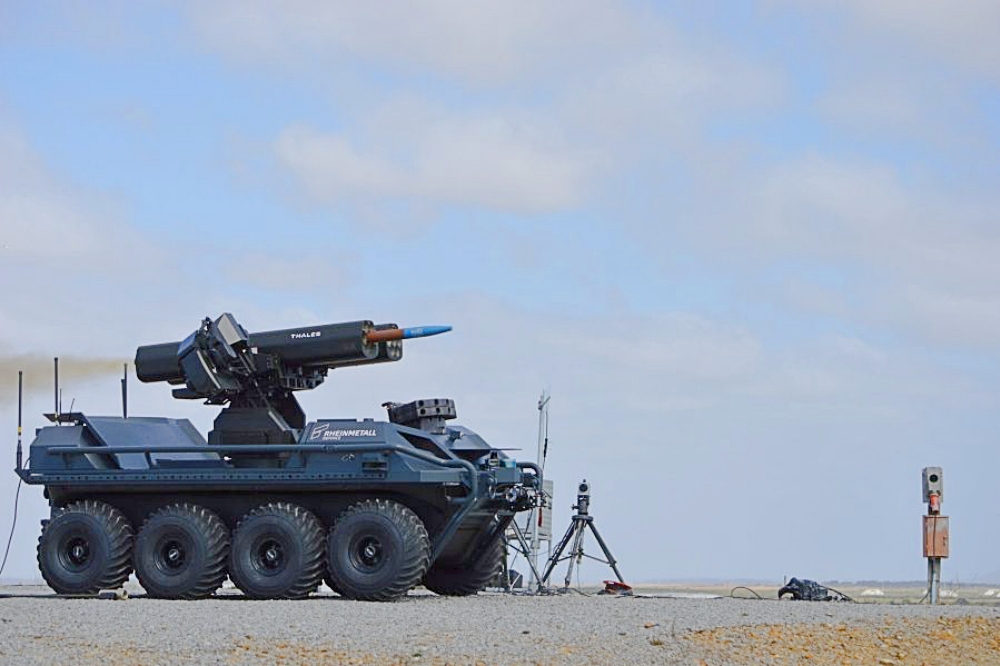
Some versions are also fired by Ukrainian MI-8 helicopters that were retrofitted to shoot NATO munitions. Truck-mounted 70mm rocket batteries with the FZ123 could be useful for point defense, and helicopters can fluidly intercept drones in flight with these short-range weapons.
The laser-guided rocket faces some challenges. To down a Russian attack drone, Ukrainian troops will have to consistently illuminate their target until the rocket reaches it, when a proximity or impact fuze would detonate the warhead.
Olivier Heuschen, head of strategy and marketing for vehicles and tactical systems at Thales Belgium, said that if the 70mm guided rocket can't detect a laser, it flies toward its last-known target for five seconds before continuing in ballistic flight.
Olivier Heuschen, head of strategy and marketing for vehicles and tactical systems at Thales Belgium, said that if the 70mm guided rocket can't detect a laser, it flies toward its last-known target for five seconds before continuing in ballistic flight.
Top Photo: FZ123 warhead - Forces Operations Blog
Sources: The War Zone; Business Insider; Militarnyi; C-UAS Hub