Student Expelled over Gun-Firing Drone Sues University
Austin Haughwout, the Central Connecticut State University engineering student who was expelled last October for building a gun-firing drone, has filed a lawsuit against the university. The lawsuit, filed in New Britain Superior Court, alleges that Haughwout, of 7 Egypt Lane in Clinton, was expelled unlawfully by university officials.
The lawsuit names as the defendants Laura Tordenti, CCSU’s vice-president of student affairs; Christopher Dukes, the judicial director within the university’s Office of Student Conduct; Ramon Hernandez, CCSU’s associate dean for student affairs; and Densil Samuda, a CCSU Police Department detective.
In a disciplinary hearing held Oct. 14 at CCSU, no witnesses were called by the defendants to testify against Haughwout, the lawsuit states. During the hearing, Haughwout denied “each and every allegation made by the defendants,” according to the lawsuit.
The lawsuit alleges that the hearing was prompted by a letter, written by a CCSU engineering professor, that accused Haughwout of ‘“immoral and extremely dangerous’ activity by creating the UAS (Unmanned Aircraft Systems) and speculated that the plaintiff could involve other students and use of facilities within CCSU’s Engineering Department.”
The suit states that Haughwout had never met the professor who wrote the letter; nor had he taken any classes taught by him. The lawsuit also seeks monetary damages.
“The defendants failed to offer a modicum of evidence to support the allegations, resulting in a denial of fundamental fairness, notice and the right to contest charges, and willfully made false and misleading representations to the plaintiff concerning the nature and substance of any accusations,” the lawsuit continues, “so as to preclude his ability to meet and respond to the charges.”
Haughwout was expelled on Oct. 19, five days after the hearing.
“The main issue now is the injunction to get him back in school and declare their act of expelling him as unconstitutional and unlawful,” Houghwout’s attorney, Jon L. Schoenhorn, said Monday.
“There was a sham of a hearing at CCSU,” he added. “No witnesses whatsoever were called. Nothing that was brought up was not constitutionally protected speech.”
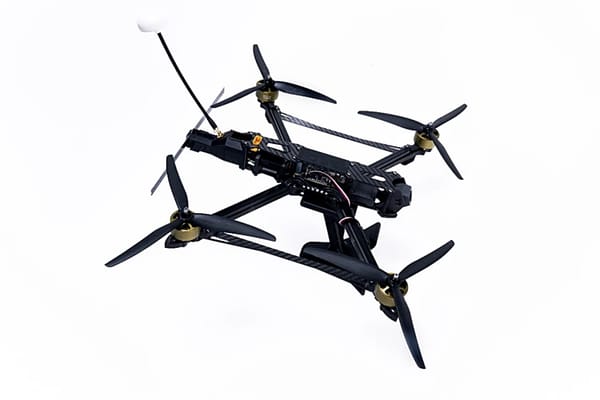
Last July, Haughwout made national headlines after posting a video of his gun-firing drone on YouTube.
“Austin emphasized that by learning the basic mechanical engineering skills that he obtained as a student at Central, he was able to construct various unmanned aircraft systems with different abilities, including one that could fire a weapon,” said Schoenhorn. “He did that because it was lawful to do so, and to show how easy it was. He did this in his backyard and posted it on YouTube to encourage discussion about the multiple and unlimited utilities of quadrocopters.”
Janice Palmer, media relations officer at CCSU, declined comment on the matter citing the pending litigation.
Source: The Bristol Press