Stratodynamics to Participate in NASA's Flight Opportunities Program
NASA recently selected 25 space technologies for flight tests onboard aircraft, high-altitude balloons and suborbital rockets. Stratodynamics is the flight provider for the University of Kentucky project to assess new methods of turbulence detection with forward sensing technologies in stratospheric flight.
Currently, significant gaps exist in the detection of turbulence, impacting suborbital vehicles and aviation in general.
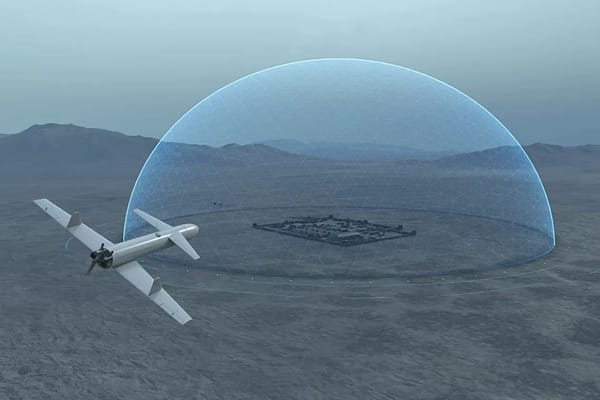
The flight campaign will utilize Stratodynamics’ HiDRON, an unmanned glider that’s balloon-launched to stratospheric altitudes. Once released from the balloon, the HiDRON will fly semi-autonomously and return home in a controlled descent while collecting and transmitting 200 points of data in real-time to the ground station.
During the Canadian Space Agency’s stratospheric balloon 2019 campaign, Stratodynamics completed a record-setting flight reaching an altitude over 110,000 feet. The flight was a first for unmanned aircraft operating beyond visual line of sight (BVLOS) and above 29,000 feet in Class A airspace and demonstrated the company’s ability to customize a solution for their client, the Slovak Academy of Science.
“These suborbital flights enable researchers to quickly and iteratively test technologies with the opportunity to make adjustments between flights,” Baker said. “The ultimate goal is to change the pace of technology development and drastically shorten the time it takes to bring an idea from the lab to orbit or to the moon”.
NASA said this year’s awards total nearly $10 million. Other flight providers in this cohort include the Blue Origin New Shepard suborbital rocket and Virgin Galactic suborbital spacecraft.
Dr. Sean Bailey, principle investigator with the University of Kentucky, is “excited to work with Stratodynamics on this project. This is a great opportunity to learn more about a rarely explored region of the atmosphere.”
CEO, Gary Pundsack:
“This NASA announcement acknowledges Stratodynamics’ position at the frontier of stratospheric exploration. Moreover, the project brings together key interests for us; high altitude flight dynamics, efficient airframes, and turbulence sensing and response. We’re pleased to be collaborating again with our colleagues at the University of Kentucky in the exploration of turbulence and are anticipating a host of commercial outcomes from this series of technology advancement exercises.”
Source: Press Release