Skunk Works Unveils Vectis Air Combat Stealth Drone
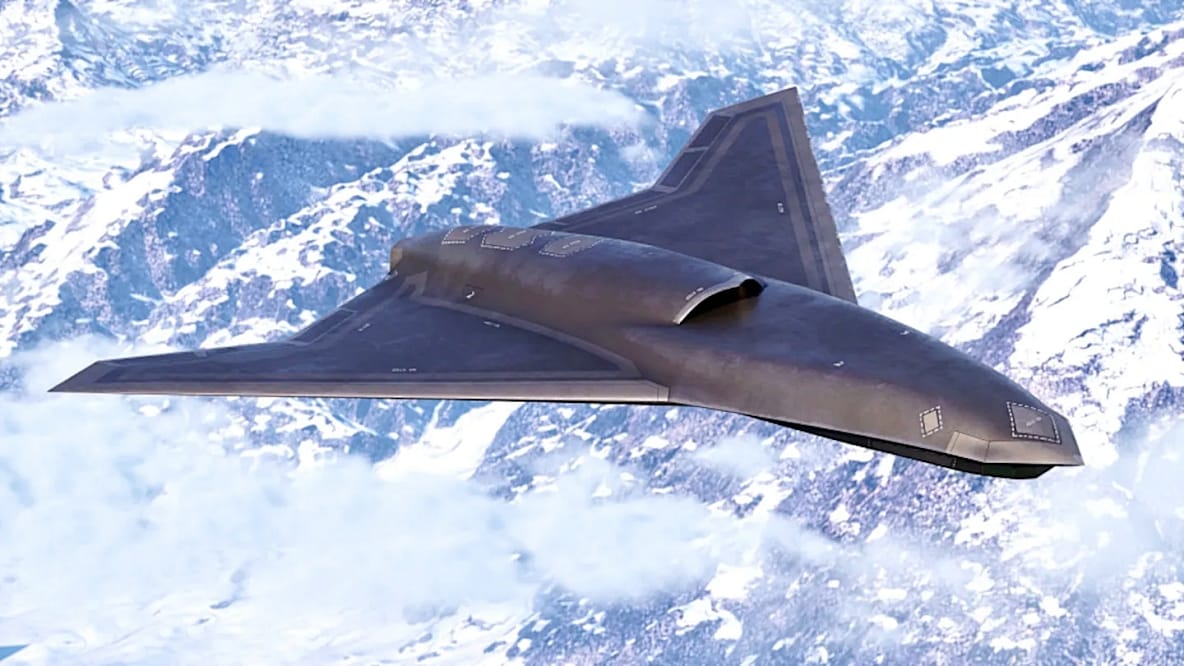
Lockheed Martin’s famed Skunk Works advanced projects division has lifted the lid on a new, higher-end stealthy Collaborative Combat Aircraft (CCA) type drone named Vectis. The unmanned aircraft is designed to be highly adaptable to an operator’s requirements, whether they be in the United States or elsewhere around the world, and is expected to fly within two years.
Vectis notably follows Skunk Works’ failed ‘gold-plated’ high-stealth bid for the first phase of the U.S. Air Force’s CCA program, but still puts above-average emphasis on survivability compared to the other designs that service is now testing.
Skunk Works has yet to share exactly when development of Vectis began, but has described it as a product of a broader development philosophy it has adopted called the Agile Drone Framework. The framework prioritizes modularity and open mission systems, as well as interoperability in areas like command and control architectures, over any specific hardware. The name Vectis means lever or pole in Latin, and is meant to reflect the ‘leverage’ the platform offers.
“Meet Vectis, a Group 5, survivable, lethal, and reusable, Collaborative Combat Aircraft that embodies not only our pedigree in [crewed] fighter aircraft, autonomy, and uncrewed systems, but [that] is also enabled by that Agile Drone Framework,” O.J. Sanchez, Lockheed Martin Vice President and General Manager of Skunk Works, told TWZ and other outlets this past week. “Vectis will provide U.S. and allied warfighters with range, endurance, and multi-mission flexibility, including air-to-air, air-to-surface, and ISR [intelligence, surveillance, and reconnaissance].”
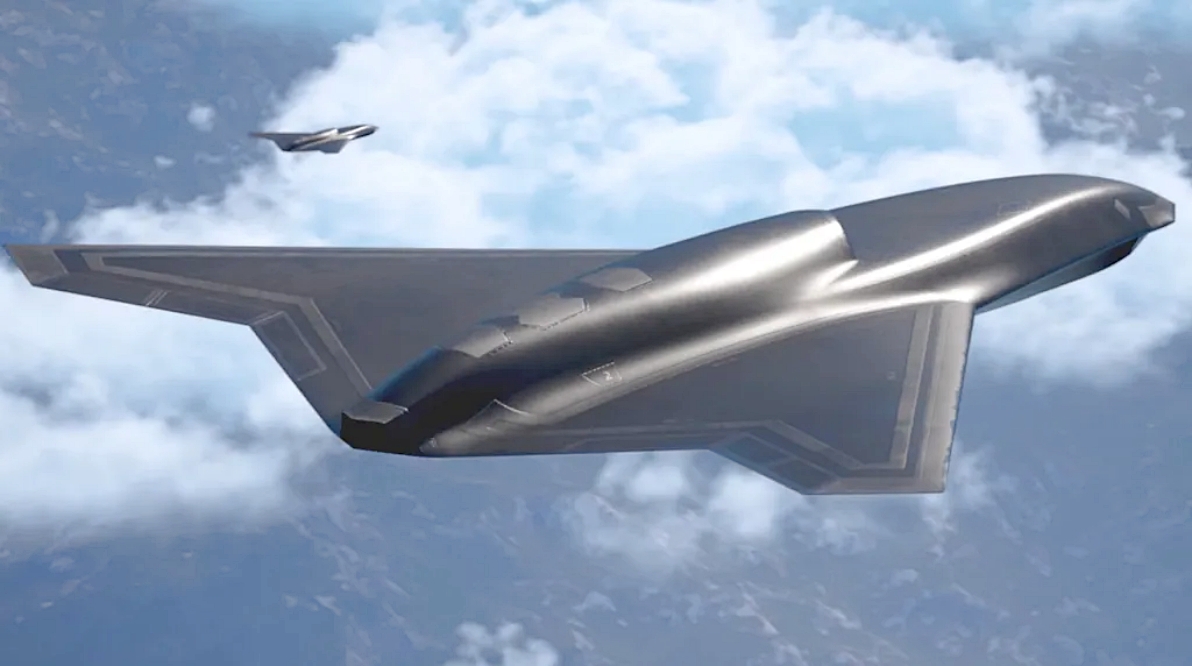
"Vectis is the culmination of our expertise in complex systems integration, advanced fighter development and autonomy," said OJ Sanchez, vice president and general manager, Lockheed Martin Skunk Works. "We're not simply building a new platform – we're creating a new paradigm for air power based on a highly capable, customizable and affordable agile drone framework."
What You Need to Know About Vectis
Integration:
- Seamlessly integrates with 5th and next-gen aircraft to advance the Family of Systems vision for next-gen air dominance.
- Proven Lockheed Martin performance on common control systems like the MDCX™ ensure compatibility across the command and control spectrum.
Mission Flexibility:
- Capable of executing precision strike, ISR targeting, electronic warfare and offensive and defensive counter air missions.
- Provides multi-domain connectivity, whether standalone or as part of integrated teaming missions with crewed aircraft like the F-35.
- Extended Range: Endurance ranges compatible with Indo-Pacific, European and Central Command theaters.
How We're Making It:
- Stealth: Leverages decades of experience in stealth advancement to deliver best in CCA class survivability.
- Affordable: Applies advanced manufacturing and digital engineering techniques learned from next-gen aircraft development to drive affordability and speed. Vectis will be offered at a CCA price point.
- Open Systems: Built to avoid vendor lock by aligning to Government Reference Architectures.
Vectis' development is underway. Parts are ordered and a team is executing. Skunk Works is investing the funds and manpower necessary to build and test survivable systems to meet customers' evolving needs while broadening alignment with new tri-service architectures and global requirements as they are defined.
Skunk Works has decades of experience leveraging speed, altitude, shape, advanced materials and more to keep crewed and uncrewed platforms safe in the most challenging environments to solve the warfighter's hardest problems. All of this pioneering work is reflected in Vectis, which delivers class-leading survivability in an agile, multi-role package.
In the U.S. military’s parlance, Group 5 unmanneed aerial systems are the largest and most capable, covering anything pilotless with a maximum takeoff weight of 1,320 pounds or more, and that can fly at altitudes of 18,000 feet or higher. When asked, Sanchez declined to offer any hard dimensions or other specifications for Vectis. He did say it was smaller than a Lockheed Martin F-16 fighter, but larger than one of the company’s Common Multi-Mission Truck (CMMT, pronounced ‘comet’) missile-like drones, which is a very broad size range.
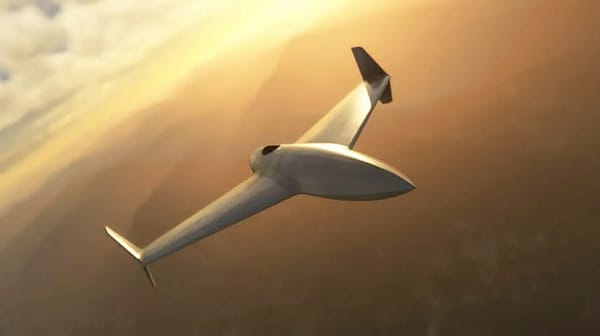
Renderings of Vectis from Skunk Works show a tailless drone with a lambda wing planform and a top-mounted air intake. There is a pronounced chine line around the forward end of the fuselage and a shovel-like shape to the nose, as well as various conformal antennas and/or sensor apertures, all of which are indicative of low-observable (stealthy) design considerations. A short promotional video, seen below, also includes a cutaway view showing an S-shaped duct behind the air intake and exhaust shrouding, features that offer further radar cross-section and infrared signature reducing benefits.
Skunk Works’ Sanchez also said Vectis is runway dependent in its “current instantiation,” something we will come back to later on. Its landing gear configuration has not yet been shown.
Sources: Lockheed Martin; The War Zone