Shield AI Reveals Prototype X-BAT VTOL ‘Fighter’ Drone
No runway, no problem.

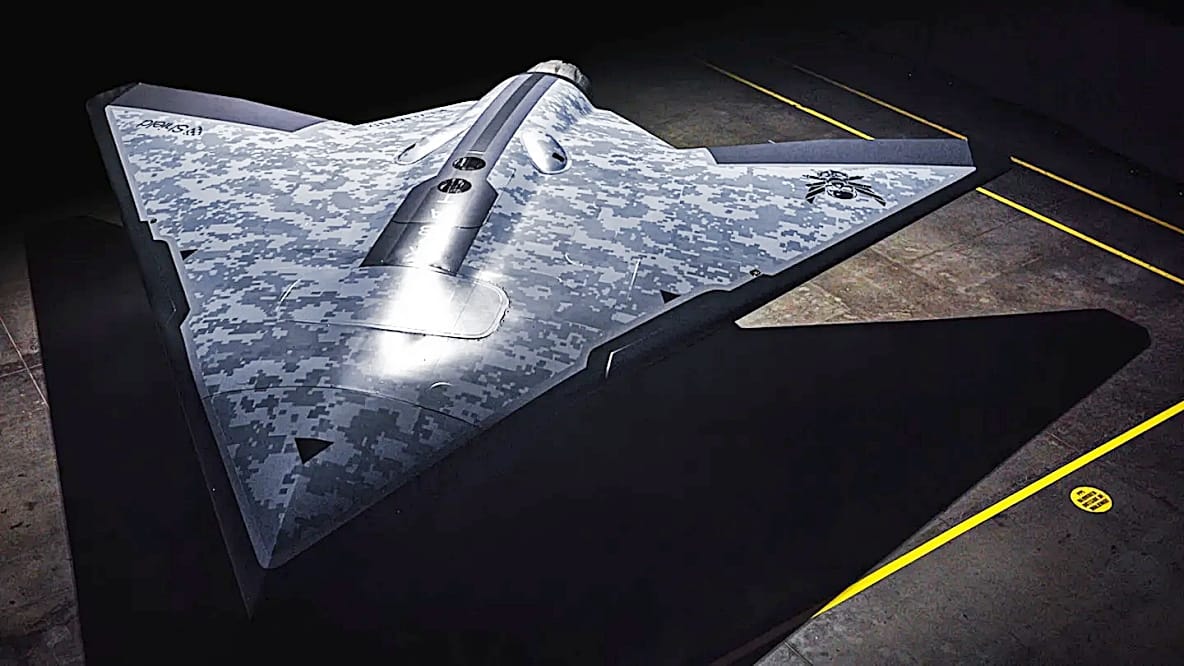
One year ago, Shield AI shared its design and vision for X-BAT, the world’s first autonomous vertical take off and launch (VTOL) strike fighter. The first-full scale X-BAT prototype is complete and on its way from the development facility in Frisco, Texas, to our flight test facility in Newton, Kansas.
This milestone represents a year of sustained effort and discipline from a team that committed to an ambitious design and build schedule and delivered. That is no small feat.
Shield is building the best team in aviation. This aircraft, and the speed at which we built it, is a testament to that team and the work put in over the last year. It’s an incredible accomplishment, to be sure. But we still have a long way to go, and we’re not losing sight of that.
Why We’re Moving Fast
The team is laser focused on keeping pace because we know a capability is only useful if it arrives in time to matter. We cannot take decades to develop an aircraft when the need is already here. That urgency has shaped how we approach the engineering work, and how we work with partners in the U.S. government.
From early on, leaders committed to working with us, making subject matter experts available to our technical team day and night. Over the past year, that collaboration has included wind tunnel testing, engine testing, and thermal testing to address major technical risks. Working through those risks together gives us the confidence to build and test the aircraft at the speed America and its allies need.
What We’re Building X-BAT to Do
What makes that pace so important is the range of missions we’re building X-BAT to take on. No one can predict what the future fight is going to look like 10 or 20 years from now. So we’re developing an aircraft for today’s operational needs while giving it the versatility to remain useful as those needs evolve.
That thinking has shaped X-BAT’s design from the beginning. We sized X-BAT to be a true multi-role aircraft: big enough to be able to carry serious strike weapons internally and externally, plus the ability to execute air-to-air, electronic warfare and other mission sets.
Those multirole abilities put X-BAT it in a very different category from Air Force Increment 1 CCAs. Those are much smaller aircraft, focused exclusively on air-to-air. X-BAT is twice the size, has the capacity for air-to-ground strike missions, and carries many more sensors on board. The F110 engine with thrust vectoring also gives X-BAT a much more fighter-like flight envelope than those smaller aircraft with Williams-type engines.
Creating an Asymmetric Threat
Equally important to X-BAT’s capabilities is where it can actually operate and execute. We’re bringing multi-mission capabilities together in an aircraft designed to take off and land vertically, giving commanders more places to operate from and makes the aircraft harder to find and destroy. That optionality makes X-BAT an asymmetric threat.
Our adversaries have invested in long range missiles that put our aircraft at risk when they’re on the ground. Aircraft are hard to shoot down in the air, but easy to destroy when they’re on the ground.
X-BAT is the answer to this threat because it forces the adversary to take all those assets that are overhead looking down at our airbases and makes them try to go and find where the X-BATs are hiding. That could be on a ship somewhere out in the middle of the ocean, or on an island in the first island chain, or any other theater around the world.
That presents a big problem to the adversary because now they’re spending all their time and energy looking for X-BATs, so everything else in America’s arsenal can come in and punch them in the face. Or if the enemy is not looking for X-BATs, the X-BATs will be the thing that can come in and kick down the door. This type of asymmetric capability can tip the balance of power in the Pacific and in theaters everywhere.
Now It’s Time to Test
Now that we’ve completed the first full-scale X-BAT prototype, we’re moving into the next phase of testing and development: proving out the vertical takeoff and landing technology that enables asymmetric operational options.
The test campaign starts with the vehicle horizontal, sitting on the launch and recovery vehicle, running the engine. Then we bring it up vertical and run the engine and the vehicle vertically.
Next, we suspend the aircraft from a crane for testing before moving to untethered flights. The crane is only for testing. It exists purely as a safety mechanism to hang the vehicle from, so if we have an engine stall or other issue, we don’t crash the vehicle.
What we’re doing right now is focused on launch and recovery and making the envelope for that as wide as possible. Then we are aiming to fly the missionized aircraft in 2028 and ultimately get into production in 2029.
We’re going to operationalize this thing. We’re going to get it out in the field. We’ve built the first aircraft. Now it’s time to go prove what it can do.
X-BAT is built to solve the operational problems facing today’s forces: contested airspace, vulnerable runways, and the need for aircraft that can fly long distances while carrying a heavy weapons load. It’s a long-range, survivable, AI-piloted strike fighter that takes off and lands vertically, so it can operate from ships, islands, or remote sites without runways or support infrastructure. Powered by Shield AI’s Hivemind autonomy software, X-BAT can fly independently or as part of a force package alongside crewed aircraft.
X-BAT is sized to carry weapons up to the 2,000-pound class internally in each bay, with bays comparable in size to the F-35’s. It generates 80 kilowatts of electrical power, enough to run electronic warfare suites — allowing it to act autonomously as a jammer —along with intelligence, surveillance, and reconnaissance (ISR) payloads and active and passive radar modes. With a combat radius of 1,000 nautical miles, X-BAT begins flight testing later this year.
In November 2025, Shield AI selected GE Aerospace to provide the engine, propulsion, and testing support for the X-BAT program. GE Aerospace’s F110 engine has more than 11 million flight hours, the most thrust in its class, and recently marked 40 years of continuous production and improvement.
Quick Facts
- Aircraft: Shield AI X-BAT, first full-scale prototype "X-BAT 001"
- Revealed: Video released 3 November 2026
- Concept: Jet-powered, tailless combat drone that takes off and lands vertically from a tail-sitting position
- Engine: GE Aerospace F110-GE-129E with Axisymmetric Vectoring Exhaust Nozzle (AVEN)
- Prototypes: Two full-scale aircraft planned
- Next stop: Flight test site at Newton, Kansas ("X-Forge 2"), moving from Frisco, Texas
- Advertised range: More than 2,000 nautical miles with a full mission payload (Shield AI figure)
Harris said the rapid development of X-BAT, which Shield AI publicly announced in October 2025, shows it can quickly design and build advanced aircraft, in time for the military to employ it to counter threats.
“This milestone represents a year of sustained effort and discipline from a team that committed to an ambitious design and build schedule and delivered,” Harris said. “That is no small feat. Shield AI is building the best team in aviation. This aircraft, and the speed at which we built it, is a testament to that team and the work put in over the last year.”
Harris said Shield AI’s X-BAT team focused on developing it quickly “because we know a capability is only useful if it arrives in time to matter.”
“We cannot take decades to develop an aircraft when the need is already here,” Harris said. “That urgency has shaped how we approach the engineering work, and how we work with partners in the U.S. government.”
The Navy made subject matter experts available to Shield AI’s team, and they collaborated on steps to fix technical risks including wind tunnel, engine, and thermal testing.
“Working through those risks together gives us the confidence to build and test the aircraft at the speed America and its allies need,” Harris said.
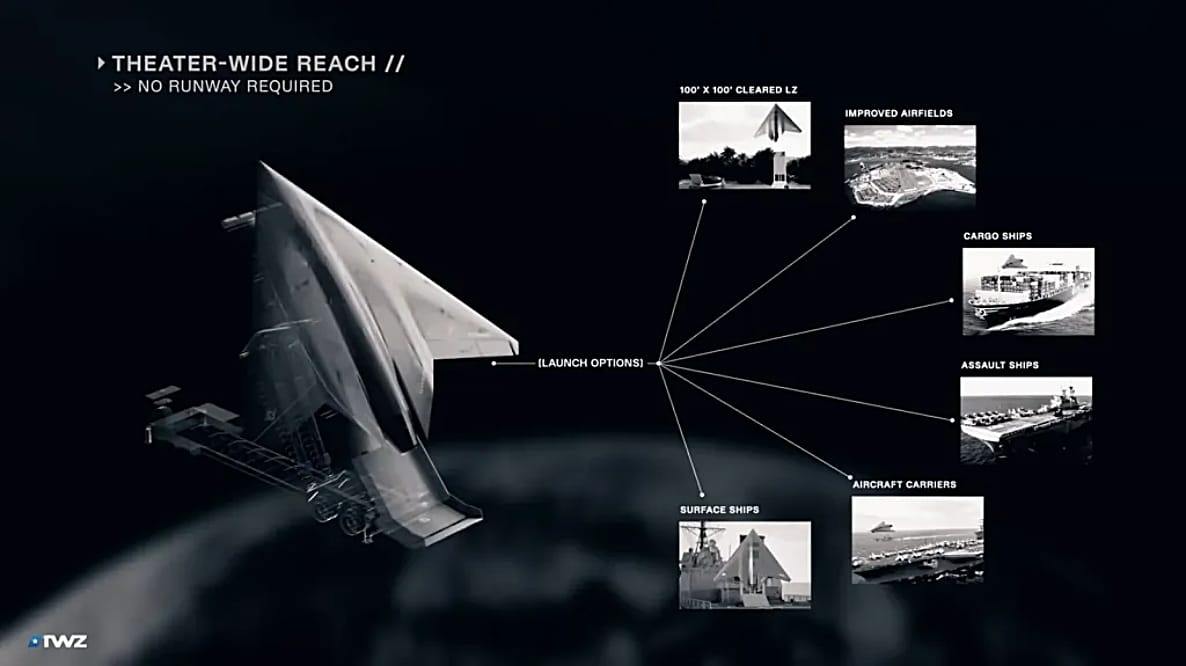
Shield AI says X-BAT will be stealthy and—unlike other autonomous drones competing for Collaborative Combat Aircraft programs—able to fly at supersonic speed. The aircraft will also have a combat radius of 1,000 nautical miles, and could operate from ships, islands, and austere sites with its vertical takeoff and landing capabilities. Harris said that gives commanders more options on where to operate X-BAT from, and would make it harder for an adversary to find and destroy it, making it an “asymmetric threat.”
“Our adversaries have invested in long-range missiles that put our aircraft at risk when they’re on the ground,” Harris said. “Aircraft are hard to shoot down in the air, but easy to destroy when they’re on the ground. X-BAT is the answer to this thread because it forces the adversary to take all those assets that are overhead looking down at our airbases and makes them try to go and find where the X-BATs are hiding,” such as on board a ship or an island.
“That presents a big problem to the adversary because now they’re spending all their time and energy looking for X-BATs, so everything else in America’s arsenal can come and punch them in the face,” Harris continued. “This type of asymmetric capability can tip the balance of power in the Pacific and in theaters everywhere.”
The upcoming test campaign will focus on proving X-BAT’s VTOL technology works, Shield AI said. The first step will have the prototype horizontal, running its engine on the launch and recovery vehicle, before being moved into a vertical position.
In the next step, the prototype X-BAT will be suspended from a crane for safe testing, to ensure it doesn’t crash in case the engine stalls or another problem emerges. Shield AI will then move on to untethered flights of the X-BAT.
Shield AI plans to fly the missionized X-BAT in 2028, and move it into production in 2029.
X-BAT operates using Hivemind, the company’s autonomy software driven by artificial intelligence, and is significantly larger than the company’s V-BAT drone, which has been used by Ukraine in its war against Russia.
Harris said X-BAT was designed to be versatile, and evolve to meet future operational needs. It will be able to carry “serious strike weapons” both internally and externally, and carry out multiple missions including air-to-air strikes, air-to-ground strikes, and electronic warfare operations. The Air Force’s first CCA models—General Atomics’ FQ-42A Vengeance and Anduril’s FQ-44A Fury—were designed for air-to-air missions.
Shield AI said X-BAT is also twice the size of those increment 1 CCAs, and has more sensors than they do, and is powered by General Electric’s F110 engine, which is also used in some F-15 and F-16 fighters.
Sources: Air&Space Forces Magazine; MigFlug; Shield AI