Russia Launches Brain-Chipped Bird Drones for Surveillance
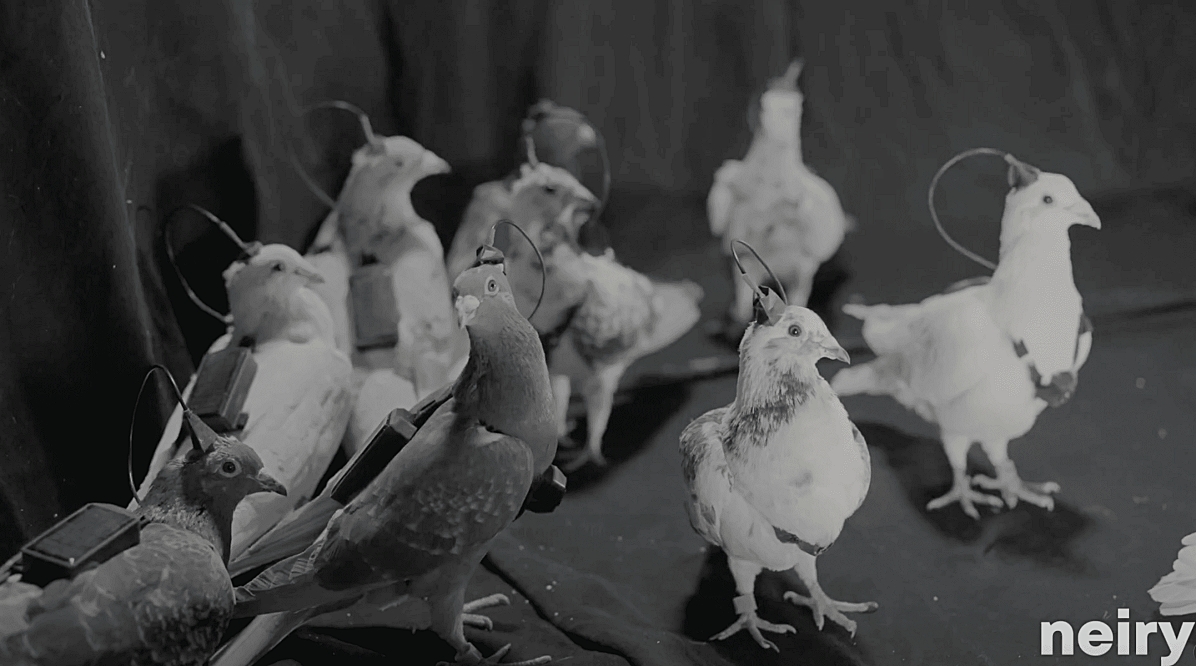
Russia's Neiry has tested the first flock of biodrone pigeons with neural interfaces implanted in their brains. They differ from conventional drones in their long operating time and range.
The company also assured that the birds "while in use" live a normal lifespan, no different in length from their peers. The biodrones are planned for use in monitoring power lines, gas distribution hubs, and infrastructure facilities.
The first flock of biodrone pigeons, implanted with neural interfaces in their brains, completed test flights from the laboratory and back, the press service of Neiry Group reported.
Currently, the flight characteristics of dozens of microchipped pigeons are being tested. Later, some of the birds will remain in Moscow, while the operators will send the rest in different directions, thousands of kilometers away.
Biodrones are a new product from Neiry—the developers use birds with neurochips in their brains instead of aircraft. This allows the operator to control the bird by loading it with flight instructions, just like with conventional drones. Moreover, the company emphasizes that, thanks to neurostimulation of specific areas of the brain, the bird itself "wills" to fly in the desired direction.
"No training is required: any animal becomes remotely controllable after surgery," the company emphasized. Surgeries are performed routinely using a stereotactic system that allows electrodes to be placed in the desired areas of the brain. "Scientists are striving for a 100% survival rate for the birds after surgery."
Biodrones differ from conventional drones in their long operating time and operational range, according to Neiry's press release. The company also assures that while in use, the bird lives a normal lifespan, no different in length from its peers.
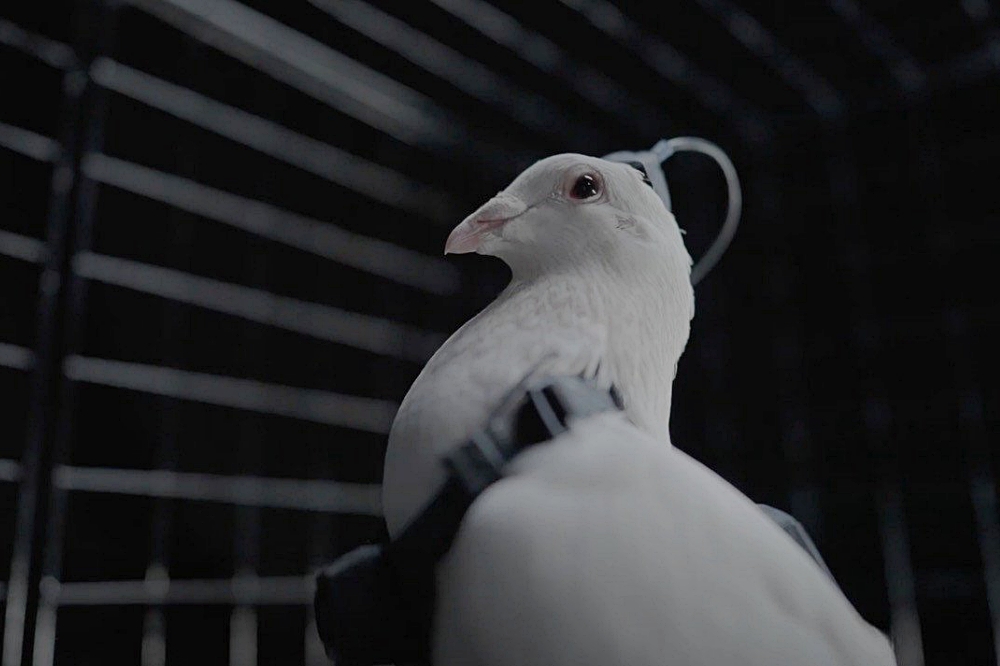
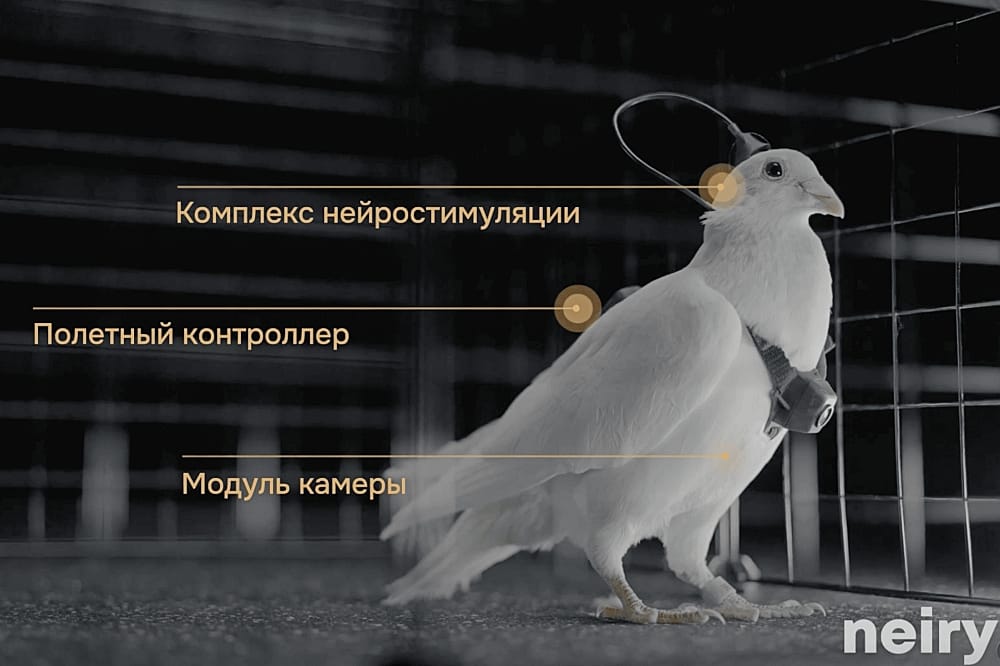
Electrodes developed by Neiry are implanted in the pigeon's brain. They are connected to a stimulator, which is stored in a backpack on the bird's back, along with a controller, where the flight instructions are loaded. The stimulator sends pulses that influence the bird's instincts, such as turning left or right. Positioning is achieved via GPS and other means. All attached electronics are powered by solar panels located on the back. The biodrone's risk of falling or crashing is equal to that of a bird, making it safe to operate in urban areas.
"The solution currently works with pigeons, but any bird can be the carrier,"
assured Neiry founder Alexander Panov. He added that they plan to use ravens to carry larger payloads, seagulls for coastal monitoring, and albatrosses for larger offshore areas.
Neiry's press service noted that the biodrone is comparable in price to similar drones, but offers hundreds of times greater range and flight time. The company noted that the project is in its final stages and is preparing for pilot implementation. Biodrones can be used, among other things, for remote monitoring of power lines, gas distribution hubs, and infrastructure facilities.
Earlier, in the fall of 2024, Neiry developers, together with scientists from Moscow State University, connected a rat's brain to artificial intelligence. An invasive neural interface was implanted in the rat's brain. It works in tandem with the AI, allowing the rat Pythia to answer questions.
In 2025, Neiry announced the installation of neurochips in cows to increase milk yield.
Neiry, founded in 2017, employs over 250 people. The startup develops technologies for direct brain-computer data transfer using electroencephalogram (EEG) and other sensors. In 2021, Neiry raised 360.5 million rubles from the National Technology Initiative Project Support Fund and 180.5 million rubles from external investors. At that time, according to the company's own data, Neiry was valued at 2.4 billion rubles. In the summer of 2024, the company raised 300 million rubles in a new funding round. A group of private investors and the Voskhod venture fund, founded by Interros, owned by billionaire Vladimir Potanin (No. 5 on the Forbes 2025 Russian Billionaires Ranking , with a net worth of $24.2 billion), participated in the closed round.Source: Forbes