Report to Congress on US Army’s Small UAS Program

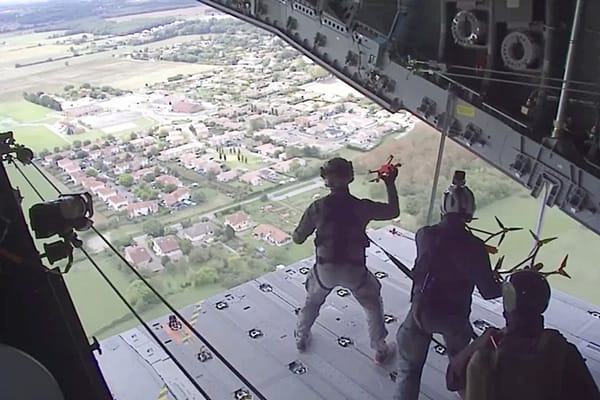
The U.S. Army has requested Fiscal Year 2026 funding for small uncrewed aircraft systems (sUAS, commonly referred to as drones). These systems support intelligence, surveillance and reconnaissance (ISR); target acquisition and strike; electronic warfare operations; and other missions.
Congress has expressed an interest in the U.S. military’s UAS capabilities and in the Department of Defense’s (DOD’s) ability to develop, acquire, and integrate such systems into tactical units. In proposed FY 2026 defense authorization and appropriations legislation, Congress is considering whether to approve, modify or deny the Army’s requested funding and its plans for incorporating these systems into Army units.
This product primarily covers Group 1 and 2 UAS — that is, those sUAS that weigh less than 55 pounds and fly at or below 3,500 feet above ground level.
Background
In 1988, at the direction of Congress (see P.L. 100-202, 101 Stat. 1329-60), DOD published its first "Master Plan" for uncrewed aircraft, establishing requirements and an acquisition strategy for UAS. The plan recommended a "close range" UAS for "lower level tactical units," one that could be acquired in large numbers and at low cost. Beginning in the 2000s, the AeroVironment RQ-11 Raven, a 4-pound fixed-wing aircraft, largely filled this role for the Army. By 2010, the Army reportedly fielded close to 4,000 Raven aircraft. The Marine Corps, Special Operations Command, and the Air Force also adopted the Raven.
In February 2024, then-Secretary of the Army Christine Wormuth and Army Chief of Staff General Randy George announced plans to phase the RQ-11 Raven out of service as part of a broader "rebalance" of the Army's aviation investments and to "increase investments in research and development to expand and accelerate the Army's unmanned aerial reconnaissance capability." Under the ongoing Transformation in Contact (TiC) initiative, first revealed by General George in December 2023, the Army is evaluating various types of sUAS and the potential force structure requirements that may accompany the integration of these systems into ground units.
The second Trump Administration has sought to encourage the Army's adoption of drones and reduce perceived barriers to the development and procurement of sUAS within DOD. In an April 30, 2025, memorandum, Secretary of Defense Pete Hegseth directed the Army to implement a comprehensive transformation strategy, including by fielding unmanned systems and ground/air launched effects "in every Division by the end of 2026." In a July 16, 2025, press release, DOD stated that Secretary Hegseth had issued a second, department-wide memorandum, "rescinding restrictive policies that hindered drone production."
The full 3-page report can be accessed here.
Source: CONGRESS.GOV