Raspberry Pi Powers Next-Gen UAV Swarm Intelligence
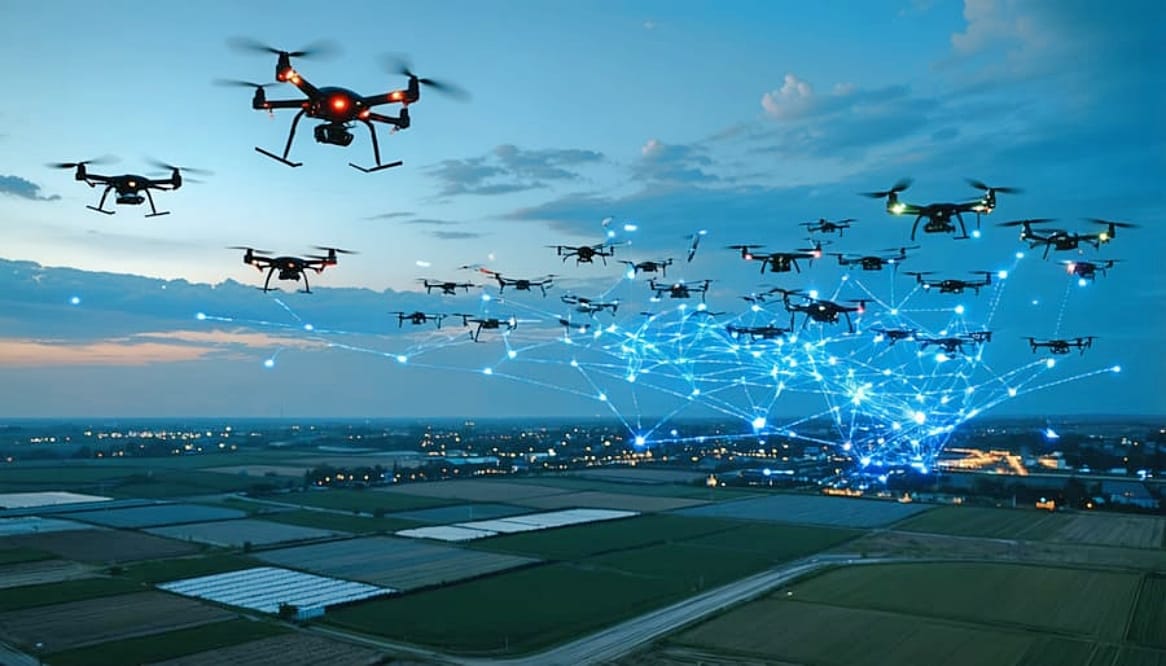
Imagine a sky filled with dozens of synchronized drones, moving as one cohesive unit – this is UAV swarm technology, and it’s revolutionizing everything from search and rescue operations to precision agriculture. By combining advanced algorithms, mesh networking, and distributed intelligence, drone swarms represent the next frontier in autonomous aerial systems.
Today’s UAV swarms leverage Raspberry Pi computers and open-source flight controllers to achieve remarkable feats of coordination. These affordable yet powerful platforms enable hobbyists and researchers alike to experiment with swarm behaviors that were once limited to military applications. Through simple programming interfaces and readily available components, building your own drone swarm has become increasingly accessible.
The real power of UAV swarms lies in their ability to tackle complex tasks through emergent behavior – much like how ant colonies or bird flocks operate in nature. By distributing decision-making across multiple units, these systems achieve remarkable resilience and adaptability. Whether mapping disaster zones, monitoring wildlife populations, or creating spectacular light shows, swarm technology is opening new possibilities in autonomous aviation.
As we explore this fascinating intersection of robotics, artificial intelligence, and distributed computing, we’ll discover how Raspberry Pi-based UAV swarms are democratizing access to this groundbreaking technology.
Understanding UAV Swarm Technology
Key Components of Swarm Intelligence
Swarm intelligence in UAV systems relies on three fundamental components that mirror natural swarm behaviors found in insects and birds. Understanding these swarm robotics basics is essential for successful implementation.
First, distributed decision-making allows individual drones to make autonomous choices while contributing to the swarm’s collective goals. Each UAV processes local information and communicates with nearby units, creating a robust network that doesn’t depend on centralized control.
Collective behavior emerges from simple rules followed by each drone, such as maintaining specific distances from neighbors, matching speed, and avoiding obstacles. These rules, when followed by all members, create coordinated movement patterns and efficient task execution.
Finally, emergent properties arise from the interaction between individual drones. These properties often manifest as complex behaviors that weren’t explicitly programmed, such as adaptive formation changes or spontaneous task distribution. Using Raspberry Pi’s computing power, we can implement these components through simple algorithms that create sophisticated swarm behaviors.
Communication Protocols in Swarm Systems
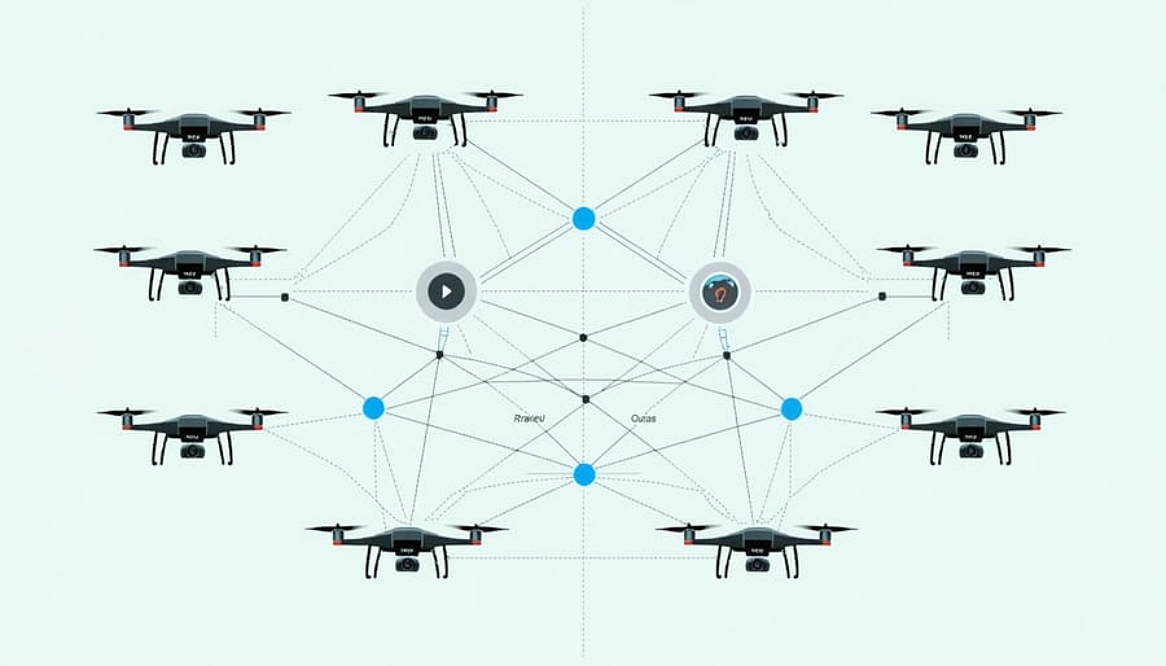
Effective communication is the backbone of UAV swarm operations, relying on robust protocols to ensure seamless coordination between multiple drones. Similar to collaborative robot coordination, UAV swarms employ both centralized and mesh networking approaches to maintain reliable data exchange.
The most common protocols include MAVLink (Micro Air Vehicle Link) for command and telemetry data, and WiFi-based mesh networks for peer-to-peer communication. When implementing these protocols on Raspberry Pi-based drones, developers typically use libraries like DroneKit-Python or MAVSDK to handle the communication stack.
Real-time data sharing between swarm members covers essential information such as GPS coordinates, altitude, speed, and mission parameters. To maintain network stability, swarms often implement adaptive routing algorithms that can handle dynamic topology changes as drones move in formation.
For hobbyists building DIY swarms, the Raspberry Pi’s built-in WiFi capabilities can be leveraged to create a basic mesh network, while more advanced implementations might use dedicated radio modules for extended range and reliability.
For full details on Building a Raspberry Pi-Based Swarm Controller see the original article in Pidora.
UAV swarm technology represents a fascinating frontier in robotics and automation, combining the power of distributed systems with the versatility of unmanned aerial vehicles. As we’ve explored, Raspberry Pi has become an invaluable platform for developing and testing swarm applications, offering an accessible entry point for enthusiasts and researchers alike.
The future of UAV swarms looks particularly promising, with potential applications ranging from search and rescue operations to environmental monitoring and precision agriculture. While challenges remain in areas like communication protocols and autonomous coordination, the rapid advancement of processing capabilities and sensor technologies continues to push the boundaries of what’s possible.
As the technology matures, we can expect to see more sophisticated swarm behaviors, improved collision avoidance systems, and increasingly robust communication frameworks, making UAV swarms an increasingly practical solution for complex real-world problems.
Source: Pidora