Rafael Unveils Two C-UAS Systems : Hunter Eagle and Ghost Hunter
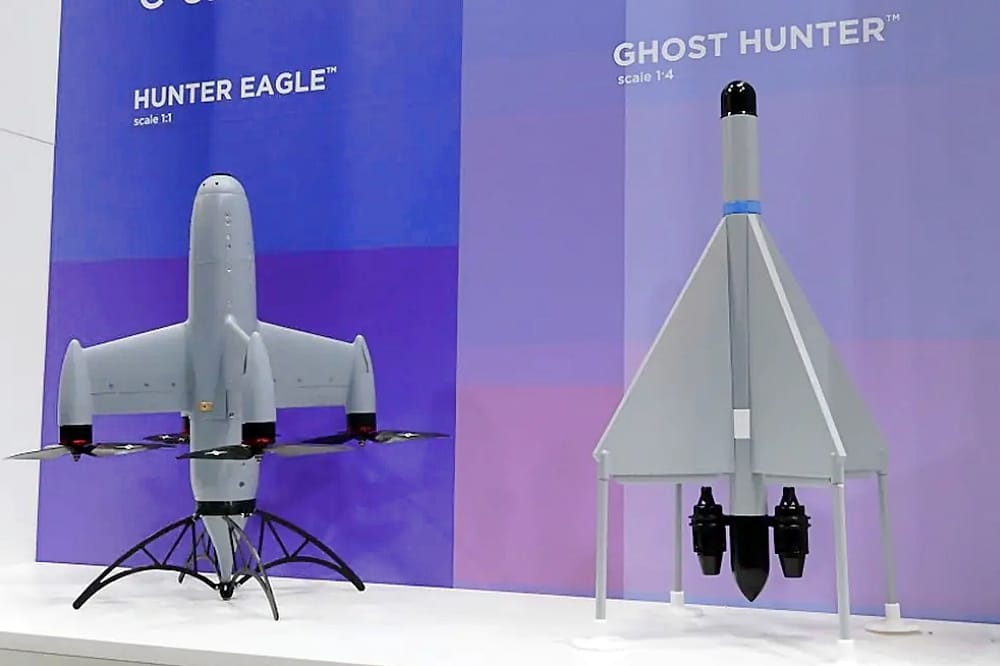
At DSEI 2025 the Israeli company Rafael presented two new counter-UAV systems – Hunter Eagle and Ghost Hunter. Its approach to countering drones is based on three stages: detection, classification, and neutralization.
The company already offers the Drone Dome suite, which combines a radar, an EW-SIGINT sensor, the Speed ER electro-optic sensor, a jammer, and a command centre. Drone Dome detects unmanned aerial systems at ranges up to 3.5 km in any weather. However, with the growing number of drones worldwide Rafael decided that this was not enough, and supplemented the platform with a remote control console for the Samson weapon station and a 10 kW Lite Beam laser. Two additional systems – Hunter Eagle and Ghost Hunter – have now been added to that list.
Both systems were already shown at the Paris Air Show in June, but at that time they were closed to the general public. At the exhibition in London Rafael displayed models of both platforms. Both projects are still in development, so the company did not disclose exact specifications. At the same time, sources indicate that AI elements are present in the designs. Some details may still change in the final iterations.
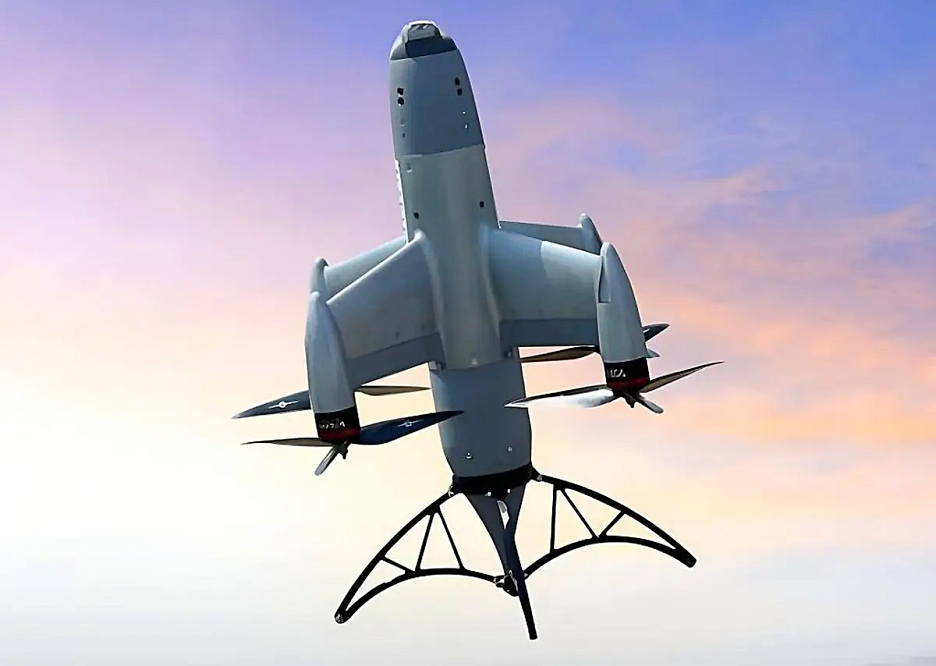
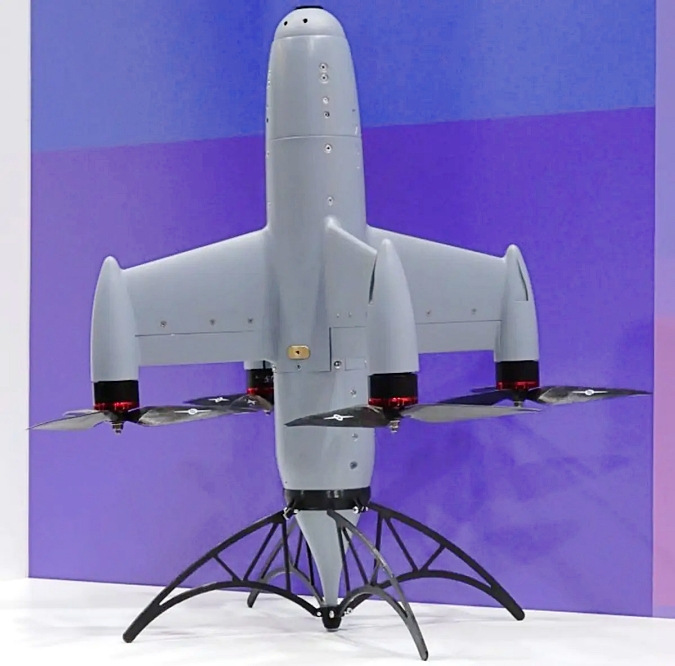
Hunter Eagle was shown at full scale. It is a small strike VTOL drone with a fuselage height of about 0.4–0.5 m and a mass in the 5–10 kg range. The fuselage is cylindrical. An electro-optical guidance channel is mounted in the nose, and the wings form a cruciform pattern with suspended gondolas at the tips that house electric motors and three-blade propellers.
The drone climbs, is guided toward the target, and in the terminal phase of the attack operates autonomously after activating its seeker. Hunter Eagle is described as a “safe” platform – it contains no explosive components, which allegedly reduces the risk of collateral damage and makes it more acceptable for use in urban or densely populated areas. If the attack misses or the mission is cancelled the drone can return to its launch site and perform a vertical landing. Hunter Eagle can operate as a single effector or be deployed in swarms to neutralise multiple threats. A live demonstration is expected in late 2025, with delivery readiness targeted for 2026.
Ghost Hunter is a significantly larger platform with turbojet propulsion. A 1:4 scale model was shown at DSEI, so its designed height may be 1.4–1.6 m, with a takeoff mass of roughly 50–60 kg. The model has a cylindrical fuselage and four delta wings arranged in a cruciform layout. A radio-frequency search radar is housed in the nose under a radome. Two small engines sit at the rear of the fuselage, giving Ghost Hunter a speed roughly twice that of the Hunter Eagle. Ghost Hunter can carry a larger payload, but details on range, speed, and endurance are currently unknown.
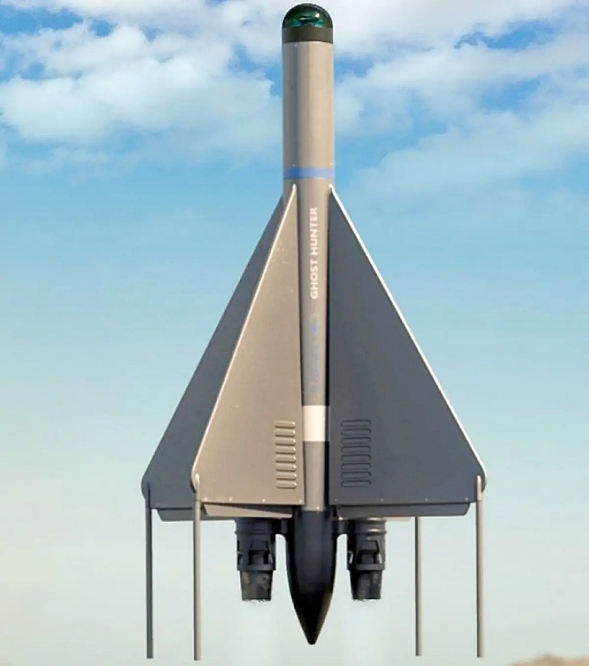
According to information from DSEI, development of the Ghost Hunter is about a year behind the Hunter Eagle. The first public demonstration of this drone is expected at the end of 2026, with mass deliveries planned for 2027.
Source: Aeronaut Media