Q-53 Radar Upgrade Counters Drone Strikes
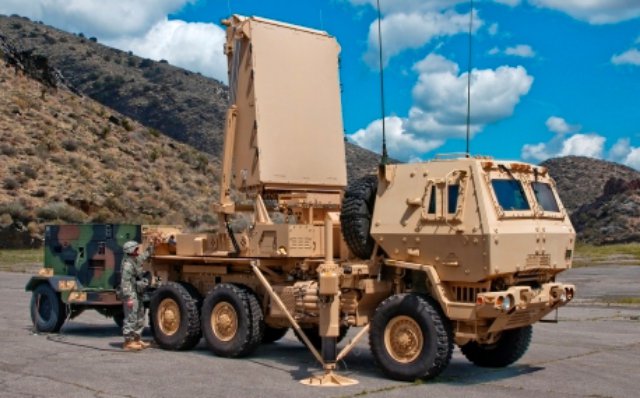
The US Army has awarded a $27.8 million contract to Lockheed Martin to provide quick reaction capability to the counter-unmanned aerial system (UAS) on the AN/TPQ-53 radar system, also called the Q-53.
Q-53 radar system
Prior to this development, the solid-state phased array radar system only functioned as a counter target acquisition system. Adding the anti-UAS capabilities and having both capacities operating simultaneously will significantly enhance the Army’s air surveillance capabilities.
The system deployed earlier this year as part of Operation Inherent Resolve. According to Col. John Rafferty, speaking to reporters at the Pentagon in July, the radar proved "exceptionally reliable” to his unit while they were deployed in Iraq.
It replaces the aging AN/TPQ-36 and AN/TPQ-37 medium-range radars the Army currently uses. The Q-53 mounts onto a five-ton truck, or prime mover, that increases battlefield mobility and adaptability. It only needs four soldiers to operate, while the older systems require six and twelve soldiers, respectively.
Lockheed first successfully demonstrated the radar’s ability to simultaneously identify and track unmanned aerial systems (UAS) and incorporate counter target acquisition at the recent U.S. Army Maneuver-Fires Integrated Experiment held at Fort Sill, Oklahoma.
Work will be performed in Syracuse, New York, with an estimated completion date of Nov. 2018. $4 million in Army funds were obligated at the time of the award. The contracting activity is the Army Contracting Command, Aberdeen Proving Ground, Maryland.
Source: Press Release