Pyka Awarded US Air Force Contract for DropShip, Long-Range Multi-Mission UAS Platform
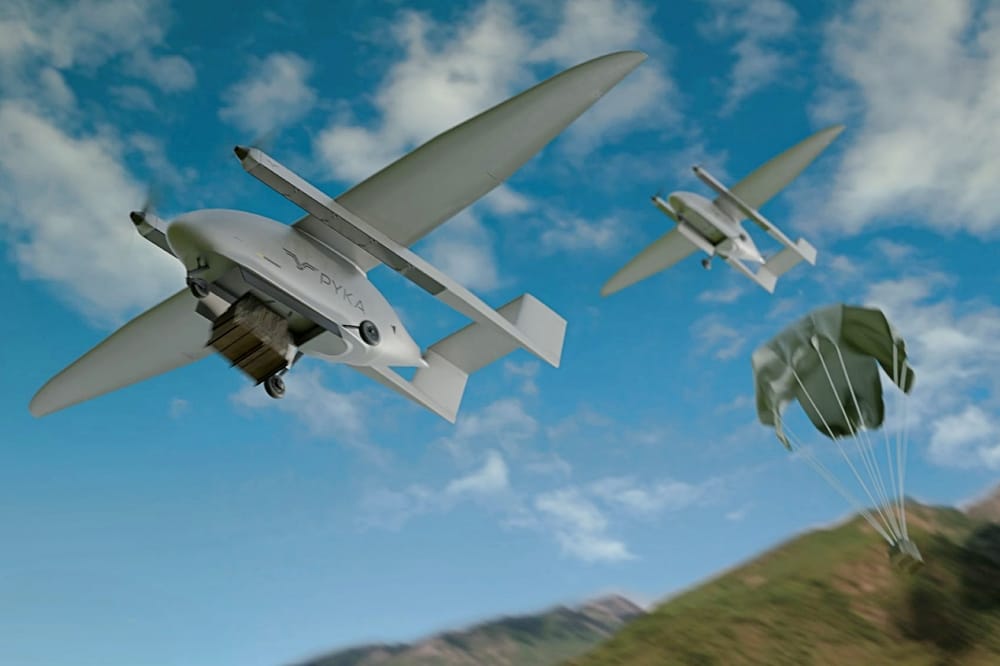
- Pyka announced that it has been selected by AFWERX for a Direct-to-Phase II (D2P2) SBIR focused on DropShip, a long-range, multi-mission cargo UAS platform, to address the most pressing challenges in the Department of the Air Force (DAF).
The Air Force Research Laboratory and AFWERX have partnered to streamline the Small Business Innovation Research (SBIR) and Small Business Technology Transfer (STTR) process by accelerating the small business experience through faster proposal to award timelines, changing the pool of potential applicants by expanding opportunities to small business and eliminating bureaucratic overhead by continually implementing process improvement changes in contract execution.
The DAF began offering the Open Topic SBIR/STTR program in 2018 which expanded the range of innovations the DAF funded and now on September 25, 2025, Pyka will start its journey to create and provide innovative capabilities that will strengthen the national defense of the United States of America.
“We see this award as a catalyst to push the boundaries of what autonomous aircraft can deliver for national defense,” said Michael Norcia, CEO of Pyka. “Building on Pyka’s proven commercial technology, we’re excited to develop new capabilities that strengthen operational reach and resilience for the Air Force.”
A Multi-Mission Aircraft for a New Era
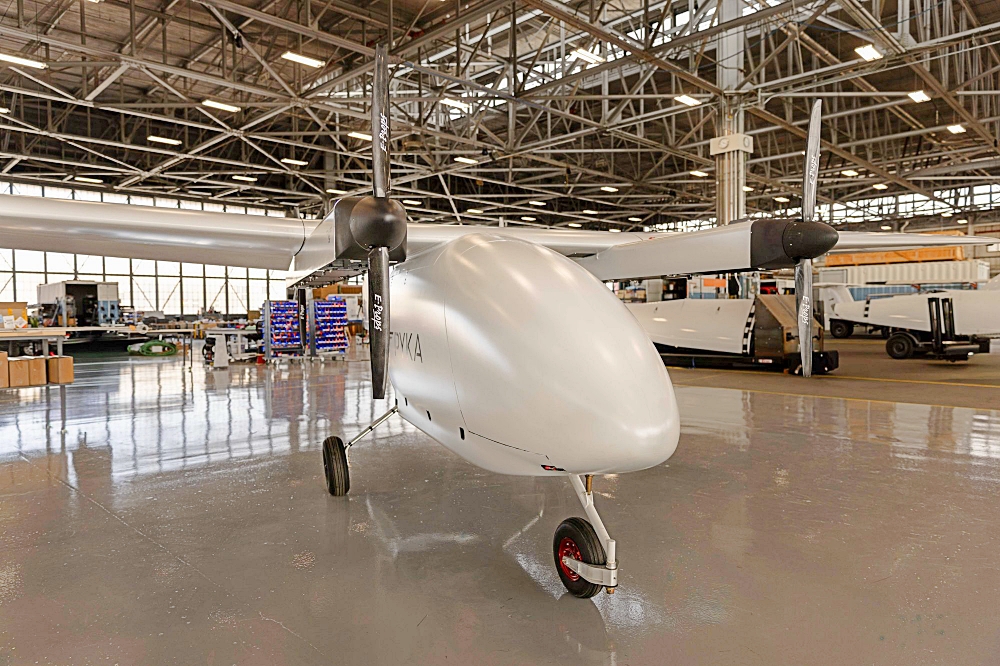
DropShip is engineered for missions that demand long-range, heavy-lift capability, with modular payload configurations and precision airdrop at its core. With a ferry range of more than 3,500 miles, a payload capacity of up to 550 pounds, and a precision airdrop system that can deliver supplies within 150 feet of target, DropShip provides a reliable way to get critical material into austere or contested environments. It supports both theater-scale operations and tactical resupply. It can fly up to 45 minutes in all-electric, low-signature mode for covert or noise-sensitive missions and is designed for rapid deployment—going from a standard 20-foot shipping container to flight-ready in under an hour and executing flight missions with a single operator. Together, these capabilities establish a new benchmark for long-range, multi-mission UAS performance.
“DropShip answers the urgent demand for a flexible, attritable platform that can extend logistics, ISR, and communications deep into contested or difficult to reach environments at a fraction of the cost of exquisite assets,” said Michael Norcia, CEO of Pyka. “We see this as a critical step in expanding Pyka’s proven commercial technology into defense and humanitarian missions where adaptability and affordability matter most.”
Modular Mission Systems
DropShip’s reconfigurable mission system capabilities include precision airdrop, ISR (intelligence, surveillance, and reconnaissance) sensors, waveform-agnostic communications suites, mothership support for small unmanned ISR or comms vehicles, and expeditionary power supply. All of these are enabled by an open-architecture secondary mission computer that supports rapid, plug-and-play integration.
Expanding Pyka’s Opportunity
DropShip builds on Pyka’s proven autonomy stack and the success of Pelican 2, its flagship crop-protection UAS. Pelican 2 has flown more than 8,500 missions and stands as the largest UAS certified for commercial use by the FAA. With DropShip, Pyka extends that track record into defense, logistics, and humanitarian response, providing a single platform that can take on missions once out of reach for autonomous aircraft.
The aircraft’s inaugural flight is scheduled for early 2026.
Source: Pyka