Pentagon Creates Amazon-Like Shopping Portal for Counter-Drone Equipment
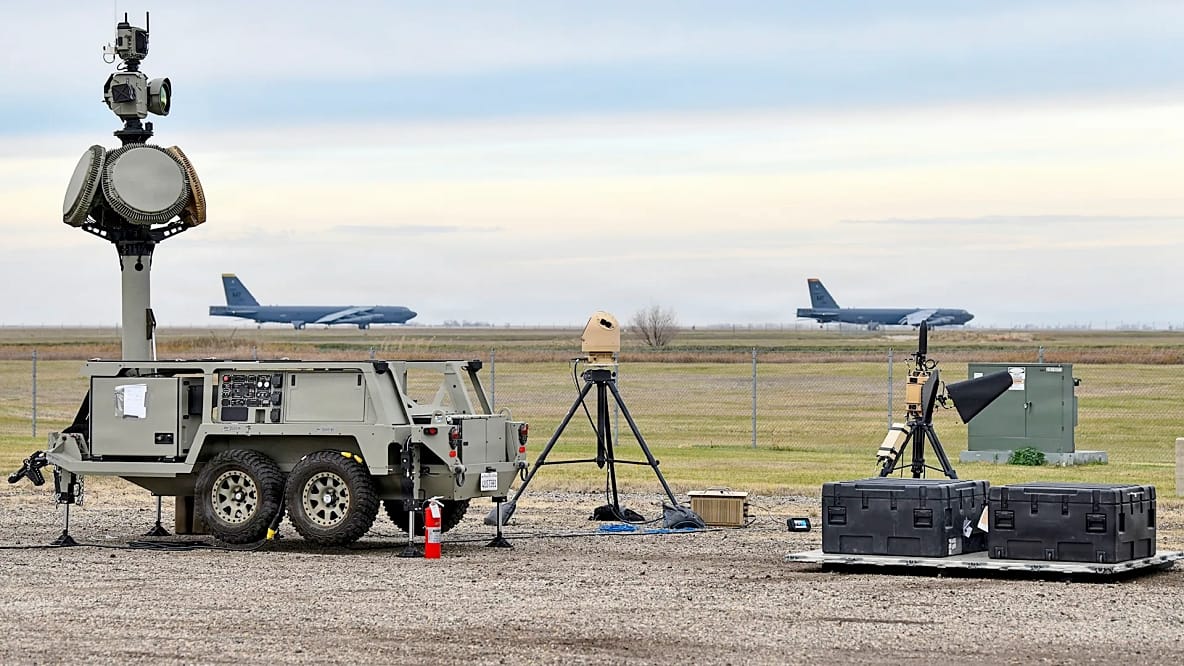
The new Pentagon task force established to counter threats posed by small drones on Friday announced the creation of a hub for agencies to purchase counter-drone equipment and ways to improve how these systems work together. The effort comes as the U.S. faces an increasing number of incursions over these facilities, and about a year after a spate of them began popping up across the continent.
“We’re going to use all the tools at our disposal to be able to acquire new technology as quickly as possible to get it into the hands of the warfighter,”
Brig. Gen. Matt Ross, director of the newly created Joint Interagency Task Force-401 (JIATF-401). Ross spoke on Friday to a small group of reporters, including from The War Zone.
The Army-led task force is creating what Ross calls a “UAS and counter-UAS marketplace” that will allow the installation commanders and interagency partners like the FBI, Department of Homeland Security and local law enforcement to shop for equipment and components.
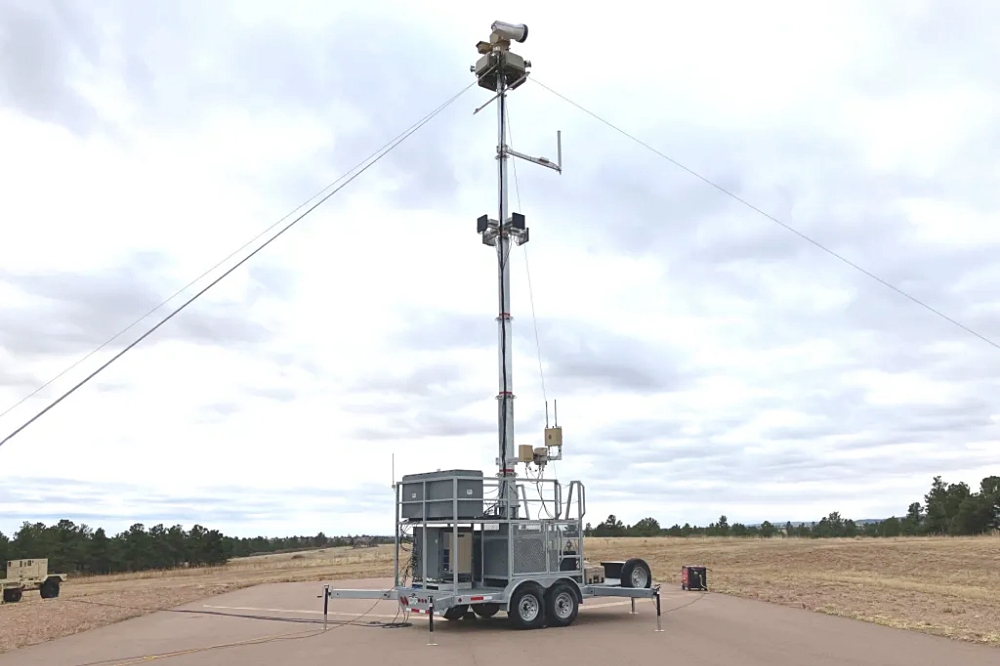
A task force spokesman described the effort as “an Amazon-like marketplace for the procurement of counter-drone technology and equipment where people can go online, look for capabilities and user feedback.” It will be similar to one being launched by the Army for the procurement of drones.
The marketplace “will provide authoritative data on how each of these systems performs under varying conditions and allow users or customers to select the tool that’s right for them,” Ross explained. “We’ve got a wide variety of counter-UAS tools, and I actually think that we need all of them, because depending on where you are or what threat you’re focused on, your requirements will be slightly different. So we want to ensure that we provide a range of options both to the Department of War and to our interagency partners.”
The task force is looking at systems and components already on the market as well as working with industry partners to develop new ones. There are “hundreds of components of counter-UAS systems that could go on to the marketplace today, and we need to start thinking about these counter-UAS systems as components that are interchangeable.”
Providing individual components in addition to complete systems allows individual purchasers to better obtain what they need, Ross noted.
“When you look at a full-stack system, you may settle for a less-than-optimal configuration of your radar, your EO/IR camera, and your layered effectors,” Ross explained. “If I only need to sense 20 kilometers and not 40 kilometers and I could change out that radar, put a lower-cost radar on there, then I could put more systems out into the field. As we look at that marketplace, I really want it to be components, similar to what you would see on any other online marketplace, that are plug-and-play as part of a counter-UAS system.”
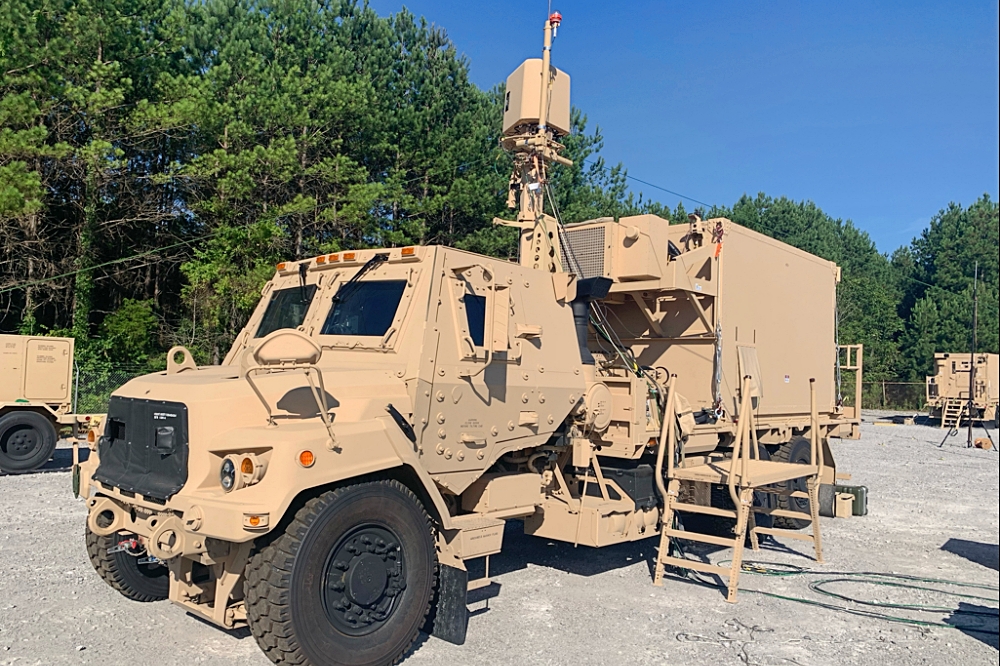
Beyond offering equipment, the task force is streamlining the command and control of the wide array of systems being used by the military and its agency partners.
“For too long, we’ve struggled with integration,” Ross suggested. “And as people use different mission command systems, they had to specifically integrate a new component. And just like when you buy something to put on your Wi-Fi network at home, you know it’s going to work because the communication protocols are already established. We want to do the exact same thing for counter-UAS systems, both internal to the Department of War and for our interagency partners.”
The task force has yet to settle on a specific system.
“We evaluated every service’s mission command system last month in Operation Clear Horizon,” the task force director explained. “We did that specifically to assess their quantitative performance and then qualitatively how the workflows affected the outcome of those mission command systems. And we’re evaluating that now.”
While the task force is creating a more unified mission command system, Ross said it is important for individual installations to be able to act quickly on their own.
“It’s important that we remain decentralized,” he said. “If you look at the speed at which these systems can present a threat, you have to have operators that are empowered, trained, and they understand their authorities to be able to counter those threats, because they just don’t have time to go up to a higher level for approval.”
On Nov. 25, JIATF-401 is going to hold what Ross calls “a counter-UAS summit” attended by subject matter experts from interagency partners. The summit will focus on intelligence gathering, policy, science and technology, and operations.
“We want to make sure that we’ve got an enduring partnership with each of those agencies because we know this problem is going to continue to evolve,” said Ross, “and we want to be able to move at the speed of relevance.”
Top Photo: Department of Defense - John Ingle
Source: The War Zone