P 61 Black Widow - Unlike Anything America Had Ever Built
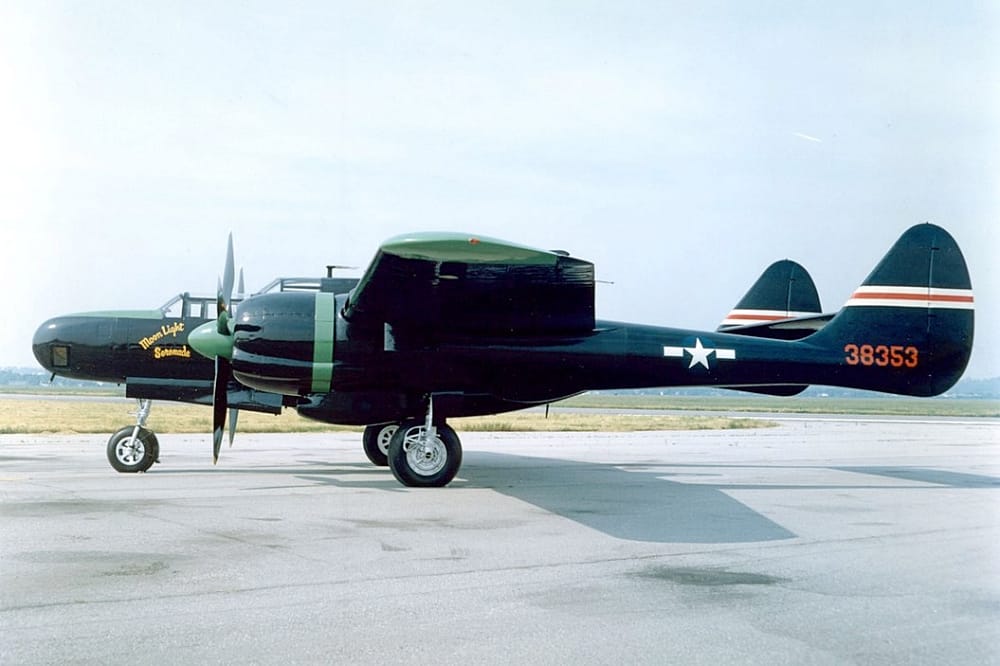
The Northrop P-61 Black Widow is a twin-engine United States Army Air Forces fighter aircraft of World War II. It was the first operational U.S. warplane designed specifically as a night fighter.
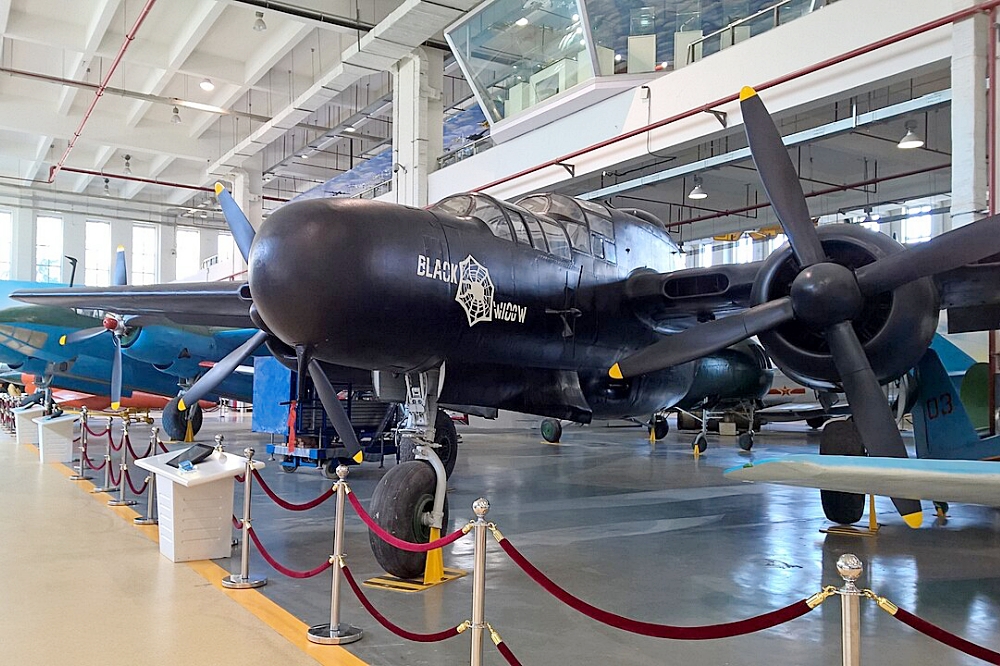
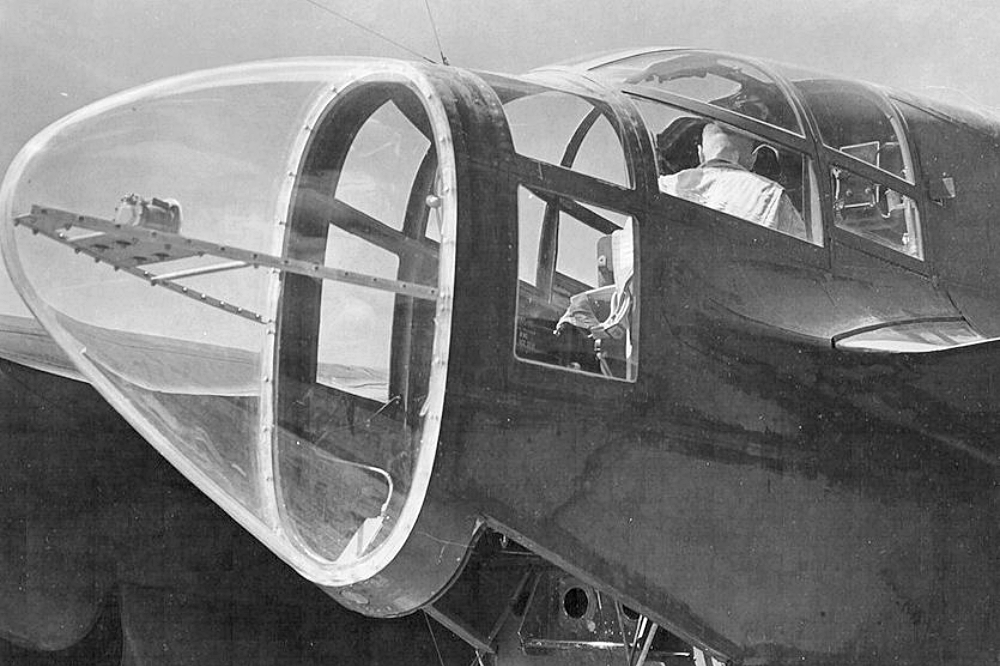
Named for the North American spider Latrodectus mactans, it was an all-metal, twin-engine, twin-boom design armed with four forward-firing 20 mm (.79 in) Hispano M2 autocannon in the lower fuselage, and four .50 in (12.7 mm) M2 Browning machine guns in a dorsal gun turret. It was developed during the war, and the first test flight was made on 26 May 1942. The first production aircraft rolled off the assembly line in October 1943.
Although not produced in the large numbers of its contemporaries, the Black Widow was operated effectively as a night fighter by United States Army Air Forces squadrons in the European Theater, Pacific Theater, China Burma India Theater, and Mediterranean Theater during World War II. It replaced earlier British-designed night-fighter aircraft that had been updated to incorporate radar when it became available. After the war, the P-61 was redesignated as the F-61, and served in the United States Air Force as a long-range, all-weather, day/night interceptor for Air Defense Command until 1948, and for the Fifth Air Force until 1950. The last aircraft was retired from government service in 1954.
On the night of 14 August 1945, a P-61B of the 548th Night Fighter Squadron named Lady in the Dark was unofficially credited with the last Allied air victory before VJ Day. The P-61 was also modified to create the F-15 Reporter photo-reconnaissance aircraft for the United States Army Air Forces and subsequently the United States Air Force.
Origins
In August 1940, sixteen months before the United States entered the war, the U.S. Air Officer in London, Lieutenant General Delos C. Emmons, was briefed on British research in radar ("Radio Detection And Ranging" as it was then known), which had been underway since 1935, and had played an important role in the nation's defense against the Luftwaffe during the Battle of Britain. General Emmons was informed of the new Airborne Intercept radar (AI for short), a self-contained unit that could be installed in aircraft, and operated independently of ground stations. In September 1940, the Tizard Mission traded British research, including the cavity magnetron that would make self-contained interception radar installations practicable, for American production.
Simultaneously, the British Purchasing Commission tasked with evaluating US aircraft declared their urgent need for a high-altitude, high-speed aircraft to intercept the Luftwaffe bombers attacking London at night. The aircraft would need to patrol continuously over the city throughout the night, requiring at least an eight-hour loiter capability. The aircraft would carry one of the early, heavy AI radar units, and mount its specified armament in "multiple-gun turrets."
The British conveyed the requirements for a new fighter to all of the aircraft designers and manufacturers they were working with. Among those contacted by the British was Jack Northrop, who realized that the speed, altitude, fuel load, and multiple-turret requirements demanded a large aircraft with multiple engines.
General Emmons returned to the U.S. with details of the British night-fighter requirements, and stated in his report that the design departments of the American aviation industry's firms could possibly produce such an aircraft. The Emmons Board developed basic requirements and specifications, and handed them over to the Air Technical Service Command (ATSC) at Wright Field, Ohio towards the end of 1940.
After considering the two biggest challenges—the heavy weight of the AI radar, and the very long (by fighter standards) loiter time of eight hours minimum—the board, including Jack Northrop, realized the aircraft would need the considerable power and resulting size of twin engines, and recommended such parameters.
The United States had two twin-row radials of at least 46 liters displacement in development since the late 1930s: the Double Wasp and the Duplex Cyclone. These engines had been airborne for their initial flight tests by the 1940/41 timeframe, and were each capable, with more development, of exceeding 2,000 hp (1,500 kW).
Vladimir Pavlecka, Northrop Chief of Research, was present on unrelated business at Wright Field. On 21 October 1940, Colonel Laurence Craigie of the ATSC phoned Pavlecka, explaining the U.S. Army Air Corps' specifications, but told him to “not take any notes, ‘Just try and keep this in your memory!’” What Pavlecka did not learn was radar's part in the aircraft; Craigie described the then top-secret radar as a “device which would locate enemy aircraft in the dark,” and which had the ability to “see and distinguish other airplanes."
“The mission, Craigie explained, was ‘the interception and destruction of hostile aircraft in flight during periods of darkness or under conditions of poor visibility.’”
Pavlecka met with Jack Northrop the next day, and gave him the USAAC specifications. Northrop compared his notes with those of Pavlecka, saw the similarity between the USAAC's requirements and those issued by the RAF, and pulled out the work he had been doing on the British aircraft's requirements. He was already a month along, and a week later, Northrop pounced on the USAAC proposal.
On 5 November, Northrop and Pavlecka met at Wright Field with Air Materiel Command officers, and presented them with Northrop's preliminary design. The Douglas XA-26A night fighter proposal was the only competition; Northrop's design was selected.
Top Photo: P-61C 42-8353 painted in the livery of 550th Squadron's Moonlight Serenade (was P-61B 42–39468) at the National Museum of the United States Air Force
Sources: YouTube; Wikipedia