Northrop Grumman Reveals ‘Project Talon’: the Autonomous Wingman
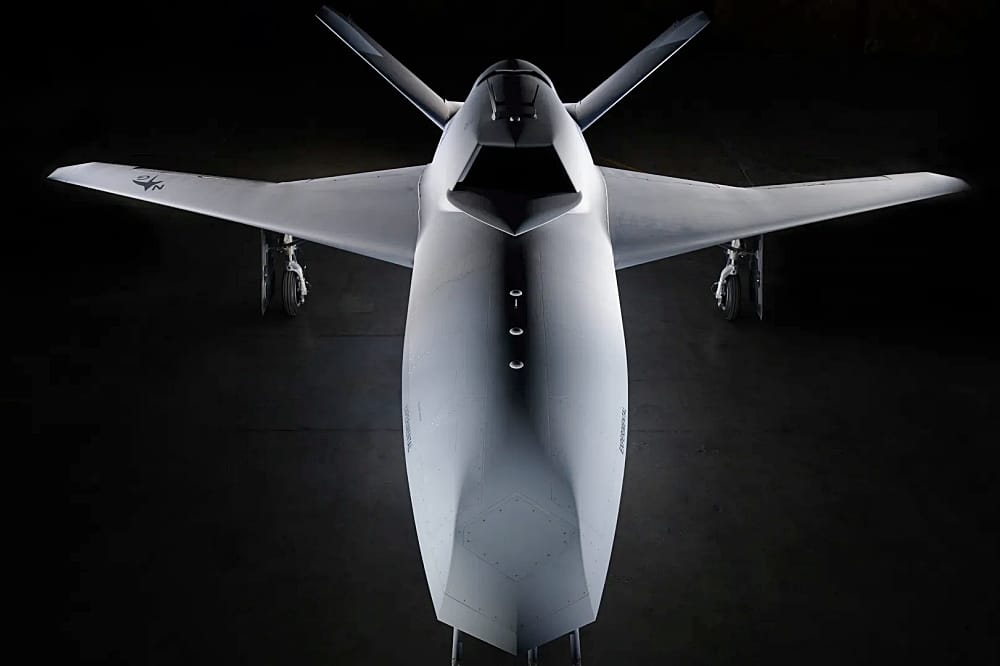
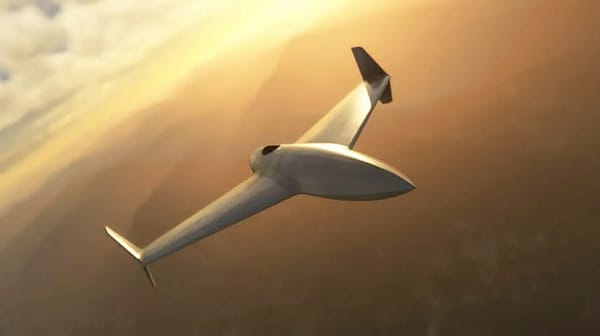
- Northrop Grumman unveiled Project Talon, an autonomous aircraft built to fly alongside manned fighters. As the latest addition to the company’s elite autonomous portfolio, Project Talon represents a paradigm shift in air dominance as an adaptive, collaborative teammate for combat missions.
Project Talon combines greater mission versatility with the most advanced modular manufacturing techniques. This disruptive approach shortens timelines, emphasizing speed and simplicity.
Project Talon advances collaboration between manned and unmanned aircraft, acting as a force multiplier to enhance lethality, adaptability and mission effectiveness.
Project Talon expands previous boundaries of collaborative aircraft technology to give U.S. and international customers the ability to project power in dynamic threat environments.
Northrop Grumman has more than 500,000 autonomous flight test hours across seven decades of experience in autonomy. Along with the release of Beacon earlier this year, Northrop Grumman continues to demonstrate it is advancing autonomy with speed and decisive action.
Details on Project Talon
- Project Talon was designed, built and on track to fly in under 24 months.
- The Northrop Grumman autonomous testbed ecosystem, Beacon, accelerated Project Talon, testing its avionics software in real-world environments.
- Project Talon builds on Northrop Grumman’s seven decades of advanced, battle-tested autonomous systems across every domain.
The new plane is a bid by Northrop to rethink its loyal wingman concept after losing out on a contract for Increment 1 of the Air Force’s CCA program last year. The company’s original design proposal was highly capable but appears to have been judged too costly to win the Air Force’s initial design awards.
Project Talon is “significantly different” from that design, Tom Jones, vice president of Northrop’s aeronautics division, said during its unveiling at the Mojave Air and Space Port, where Scaled is based.
“The idea was to see if we could build an aircraft that had all the same capability of our original offering, and do it faster,” Jones said. “So the outcome was an aircraft, but the outcome we’re shooting for was the process: How do we design and build things that perform at a high level, but that we can build quickly now and can do affordably?”
Northrop officials said they achieved that goal, but were sparing in sharing details; the company did not disclose performance specifications, cost, or details on most aspects of the design, including the aircraft’s engine.
Jones also demurred when asked whether he believes Project Talon would have won an award for Increment 1 of CCA, which instead went to Andruil and General Atomics.
“All I can say about what could have happened is we would have had a better offering,” he said.
Northrop said the Project Talon aircraft is around 1,000 pounds lighter than its Increment 1 design, uses around 50 percent fewer parts, and has a 30 percent faster construction time.
The aircraft was developed and built by a joint team of Northrop and Scaled Composites. Scaled, a small team of around a couple of hundred employees, designs and builds unique test or one-off aircraft, often very quickly.
The time between when the aircraft was conceived and when it had “weight on wheels” was roughly 15 months, and it is expected to fly around nine months from now, around fall 2026.
“We’re still extremely good at making something very complex,” Jones said. “So this was really about broadening that paradigm to what it means to be a high-performing engineering, aviation, development, and manufacturing organization to encompass all aspects of it.”
The aircraft, Northrop said, is not the company’s entrant for Increment 2 of the Collaborative Combat Aircraft program, which is expected but not confirmed to have different requirements than Increment 1. Secretary of the Air Force Troy Meink has suggested the service may be seeking a cheaper option than the Increment 1 aircraft. The YFQ-42 and YFQ-44 aircraft could cost around $30 million each.
“I’d like to see it come in substantially less than that, like maybe half,”
Meink told Air & Space Forces Magazine earlier this fall.
Jones said multiple U.S. military services and international partners are interested in the Project Talon drone, and that some of those potential customers have visited the aircraft in Mojave.
Jones said the aircraft could perform “multiple missions” and has “payload space,” though he sidestepped questions about its internal weapons bay and did not list which missions it could perform.
“You need that exquisiteness in some things. But the whole concept behind Collaborative Combat Aircraft, it’s all about affordable mass, which means you need to keep the cost down,” Jones said. “And then the other thing is, because you would use affordable mass ostensibly in a war of attrition, you’re going to lose these. So not only do you want it to be affordable, you want to be able to replenish that mass at rate.”
Being able to develop a project quickly, however, often does not translate to a cheaper product. When asked how the company approached the challenge, Northrop and Scaled executives acknowledged the tension.
“I think the debate has been ongoing, continues to rage, on affordability versus performance,” Jones said. “This was an experiment on a new methodology for designing aircraft faster that would enable us to scale manufacturing faster, which we believe is going to be a key requirement. … We need to be able to ramp up manufacturing quickly. This was built to be produced quickly, not just to be affordable.”
Northrop is not the only company that has built a CCA in-house instead of waiting for a specific contract or program, such as the Air Force’s Increment 2 or the Navy’s future CCA. Lockheed Martin is also developing a semi-autonomous drone called Vectics which could be used as a CCA. It plans to fly that aircraft in 2027.
Sources: Northrop Grumman; Air & Space Forces Magazine;