Nine F-111F’s Flew 6,400 Miles for REVENGE
The General Dynamics F-111 Aardvark is a retired supersonic, medium-range fighter bomber
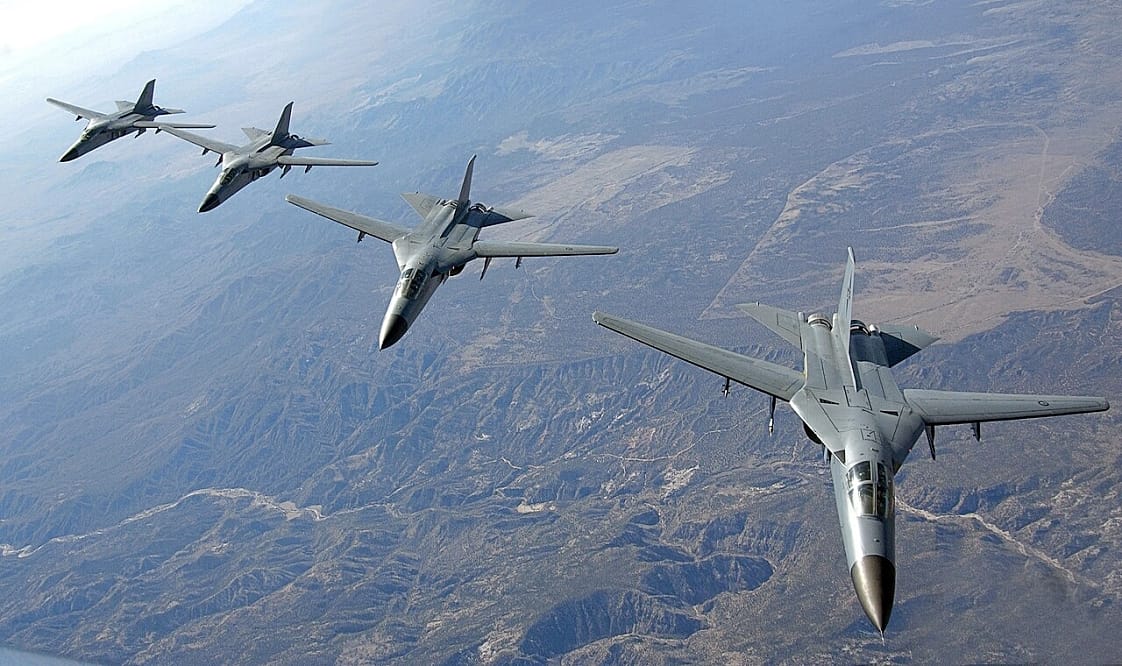
On April 14, 1986, Karma 52 checked in over the Mediterranean, its radar altimeter steady just a few hundred feet above the sea. The F-111F was part of an 18-ship U.S. Air Force strike package bound to hit the literal beating heart of Libya—each jet armed with two 2,000-pound Pave Way II laser-guided bombs.
Ten days earlier, a Libyan bomb in a West Berlin nightclub had taken the lives of two American airmen and wounded dozens of civilians. Karma 52 was now inbound with Washington’s response—low, fast, deadly, and supposedly unseen.
Yet in Libya, a telephone rang inside a government compound that changed the fate of the world. Who made the call—and how—was never established. What happened next to Karma 52 is still not entirely known…
F-111F
The F-111F was the final variant of the General Dynamics F-111 Aardvark produced for Tactical Air Command, with a modern, but less expensive, Mark IIB avionics system, more powerful TF30-P-100 engine, and strengthened wing carry-through box. Crandall described it as “the Cadillac of the F-111 force”. The USAF approved its development in 1969. 106 F-111Fs were produced between 1970 and 1976.
The F-111F could reach Mach 1.2 at sea level on full afterburner. It had the Triple Plow II intakes along with the substantially more powerful TF30-P-100 turbofan with 25,100 lbf (112 kN) afterburning thrust, 35% more thrust than the F-111A and E. An adjustable engine nozzle was added to decrease drag. The P-100 engine greatly improved performance.The engines were upgraded to the TF30-P-109 version between 1985 and 1986.
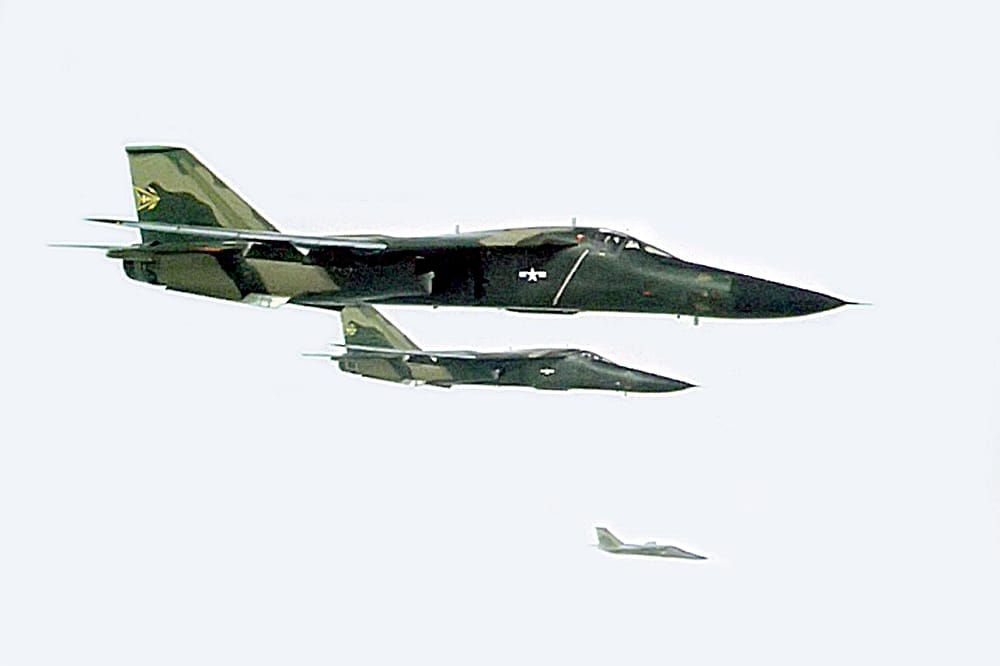
The F-111F’s Mark IIB avionics suite used a simplified version of the FB-111A’s AN/APQ-144 radar, which lacked some operating modes but added a new 2.5 mi (4.0 km) display ring. Although tested with digital moving-target indicator (MTI) capacity, it was not used in production sets.
The Mark IIB avionics combined some Mark II components with FB-111A components, such as the AN/APQ-146 terrain-following radar. The F-111E’s weapon management system was also included. In the early 1980s, the F-111F began to be equipped with the AVQ-26 Pave Tack forward looking infrared (FLIR) and laser designator system, which enabled the use of precision laser-guided munitions and was mounted in the internal weapons bay.
The Pacer Strike avionics update program replaced analog equipment with new digital equipment and multi-function displays.The last USAF F-111s were withdrawn from service in 1996, replaced by the McDonnell Douglas F-15E Strike Eagle.
Sources: YouTube; Wikipedia