New US Tactical Drone Requires Only Two Seconds to Take Off
XDOWN presents the drone as a multi-role platform. Mission labels in the presentation include ISR, hard strike, counter-UAS, and electronic warfare, while another slide lists CUAS, CUGV, CUSV, EW / ISR, and anti-personnel roles.
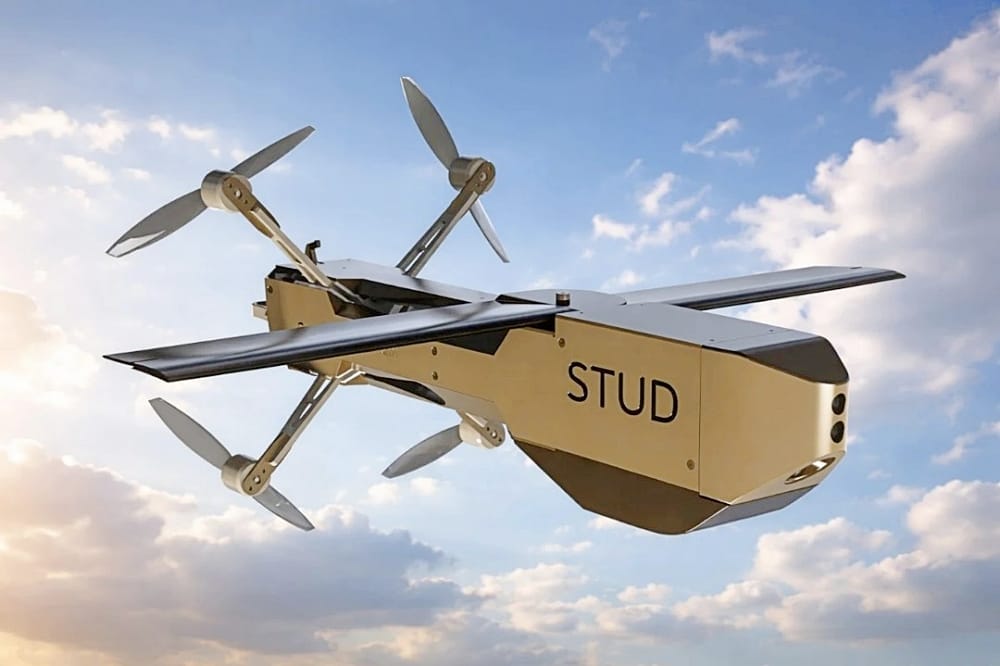
American defence startup XDOWN has introduced a new compact drone aimed at frontline troops, positioning the STUD as a low-cost, rapidly deployable unmanned system built for multiple battlefield roles.
Founder and chief executive Alexander Balan unveiled the platform alongside newly released images and footage showing a prototype in testing. In a statement posted with the material, Balan described the system as a tool built around the changing realities of modern warfare.
“STUD – designed to be the modern warfighter’s best friend. We believe tomorrow’s military gear will rely less on guns, rifles, and magazines, making room for compact, low-cost, portable unmanned systems. That’s why we designed STUD so every soldier/operator can carry 8-12 units in a tactical backpack and deploy each one in ~ 2 seconds – just throw it into the air, delivering speed, range, and payload versatility. Stay tuned – crazy launches coming soon!”
he said.
Known as STUD (Small Tactical Unmanned Drone), the system allows a single operator to carry 8 to 12 units in a standard tactical backpack using a quick-release interceptor setup.
Once powered on, the UAV is launched by hand, after which its onboard rotors immediately engage to stabilize and guide it into controlled flight.
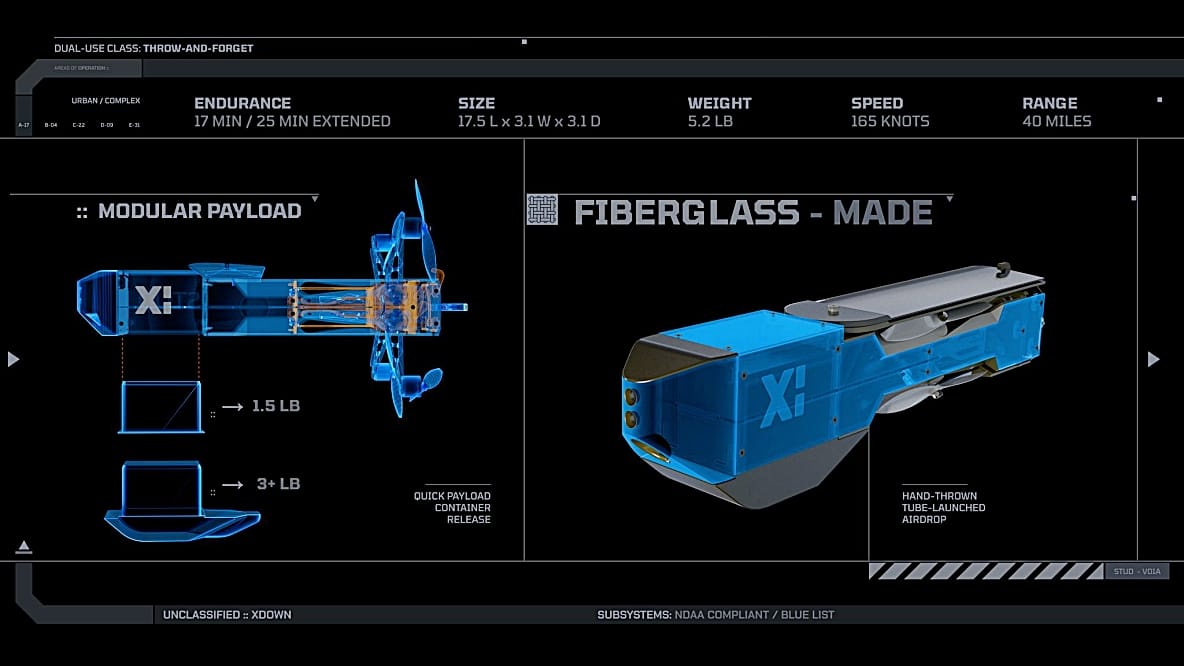
Based on available information, the STUD measures 17.5 inches (44.5 centimeters) in length, with a width and depth of 3.1 inches (8 centimeters). It weighs 5.2 pounds (2.7 kilograms) and has a payload capacity of up to 1.7 pounds (0.77 kilograms).
The drone can reach speeds of up to 165 knots (190 miles/ 305 kilometers per hour), with an operational range of 40 miles (64 kilometers) and an endurance of 17 minutes in standard configuration.
Multi-Role by Design
The STUD’s modular architecture supports multiple payload configurations, allowing it to adapt to diverse mission profiles without requiring separate specialized platforms.
It can perform a range of roles, including intelligence, surveillance, and reconnaissance, precision strike, counter-unmanned aerial vehicle missions, and electronic warfare.
For anti-personnel and anti-armour applications, the platform can engage infantry, as well as unmanned ground and surface systems.
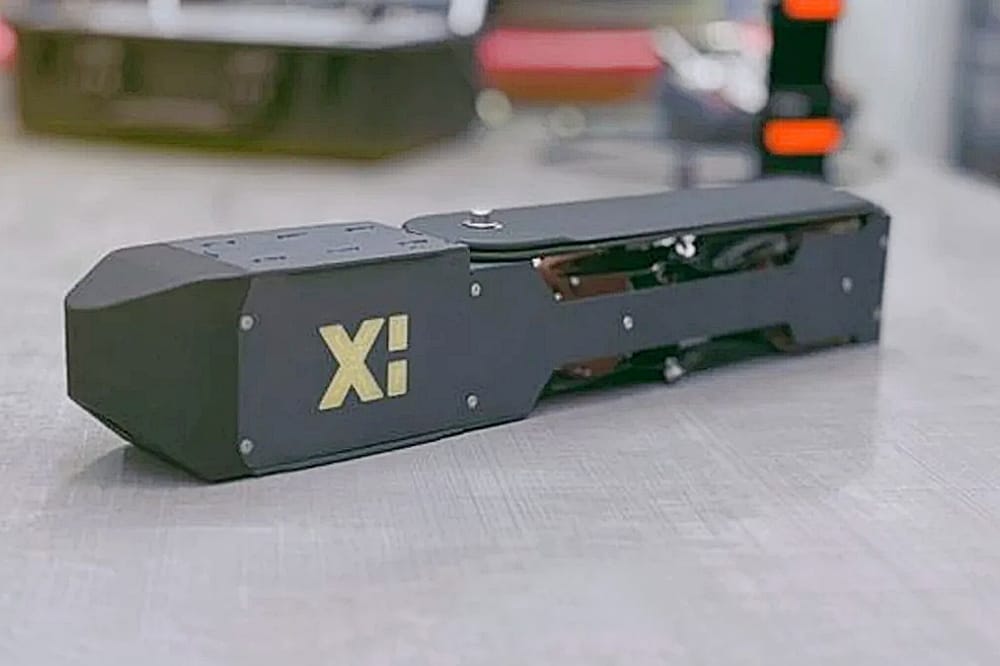
The company stated that it will have production capacity of up to 6,000 units per month, an aggressive target for a recently established defence startup.
If the company’s performance and manufacturing claims are borne out in further testing, the STUD points to a battlefield model in which portable unmanned systems become a routine part of every soldier’s kit.
Sources: Defence Blog; NextGenDefense