New Chinese Flying Wing Drone Design Emerges
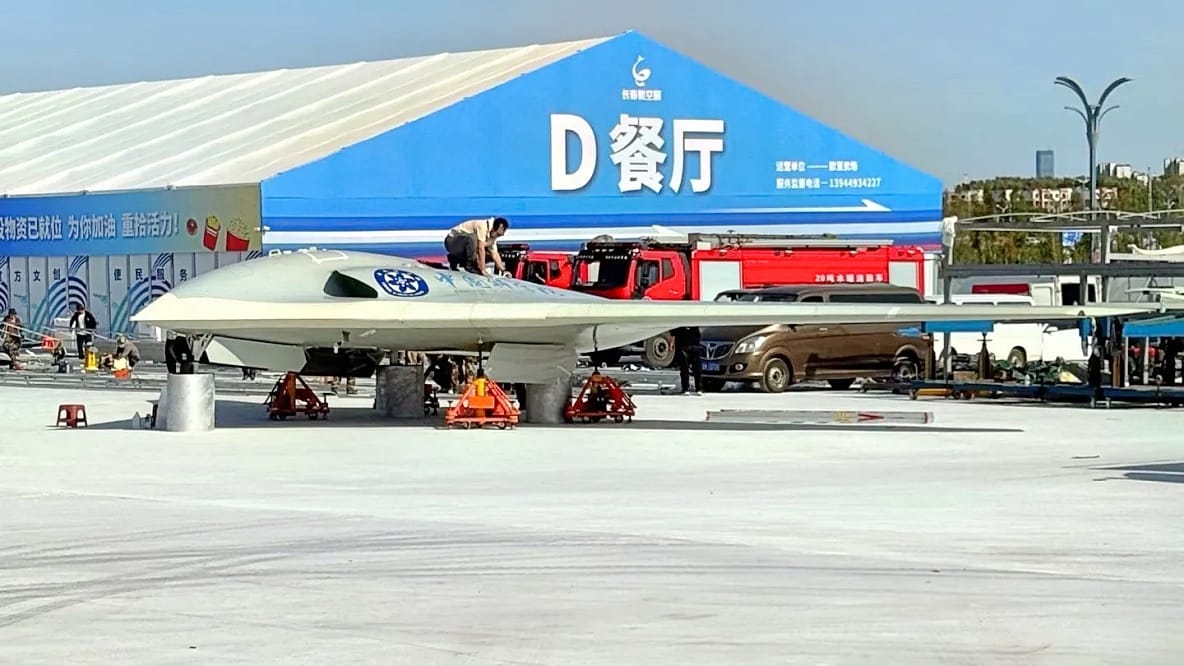
A new twin-jet engine flying-wing drone design has emerged in China. While details are currently limited, the Chinese aviation industry has been developing an expanding array of flying-wing unmanned aircraft, including as unmanned combat air vehicles (UCAV) and high-altitude intelligence-gathering platforms, often in cooperation with state-run research institutions.
TWZ assessed years ago that there was likely to be an explosion of investment in flying-wing drones in China and that the academic side of the Chinese weapons development ecosystem would be deeply involved.
Pictures of the drone have been circulating online since at least yesterday. The images are said to have been taken recently in the city of Changchun in Jilin province in northeastern China amid preparations for the Changchun Air Show, which is scheduled to officially open this week. Local authorities say the show will also mark the first “full activation” of the Changchun International Aviation Expo City, a sprawling aviation-themed venue in Changchun that contains a theme park and other attractions.
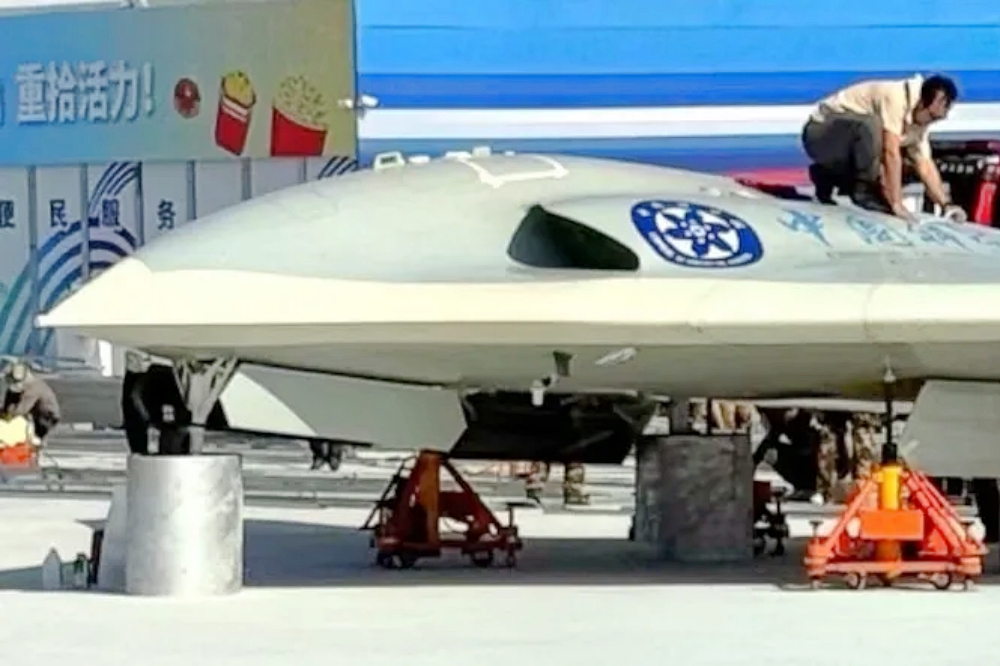
From what we have seen so far of the drone, which is emblazoned on at least one side with the logo of the Chinese Academy of Sciences (CAS), it looks to be more of a developed test article, rather than a mock-up. It has a notable dorsal hump in the center of its body with air intakes nestled up against it on either side. A look at the unmanned aircraft from the rear also shows two separate exhausts. The intakes and exhausts might point to engines buried in the upper hemisphere of the center body.
The unmanned aircraft has some features that are broadly in line with a stealthy design, including a chine along the leading edge of the center body and shaping of the engine intakes. At the same time, the exhausts are inset into the body, but are hardly concealed. The rear view also shows rivets or other fasteners that are not fully flush, as well as various seams and protrusions along the body and wings, all of which would have negative impacts on its radar cross-section. If what is seen is a test article, various aspects of the design and its construction may not be indicative of the expected final configuration.
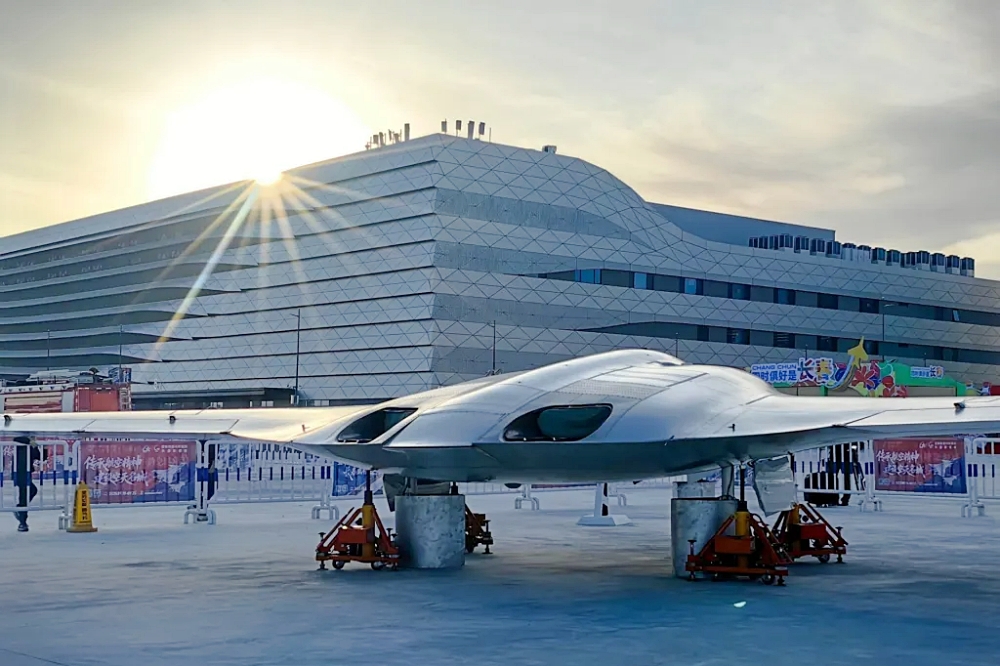
The core design, with two engines situated relatively high up on either side of the center of the body, would create more space to work with in the middle. That space could potentially be configured to hold various payloads, including more fuel, sensors, communications arrays, and/or even a weapons bay.
Source: The War Zone