NATO Jets Down Russian Drones as Poland's Airports Closed
Poland shot down drones in its airspace on Wednesday with the backing of military aircraft from its NATO allies, the first time a member of the Western military alliance is known to have fired shots during Russia's war in Ukraine.
Polish Prime Minister Donald Tusk told parliament it was "the closest we have been to open conflict since World War Two", although he also said he had "no reason to believe we're on the brink of war".
Moscow denied responsibility for the incident, with a senior diplomat in Poland saying the drones had come from the direction of Ukraine.
Poland said 19 objects had entered its airspace during a large Russian air attack on Ukraine, and that it had shot down those that posed a threat. Tusk called the incident a "large-scale provocation" and said he had activated Article Four of NATO's treaty, under which alliance members can demand consultations with their allies.
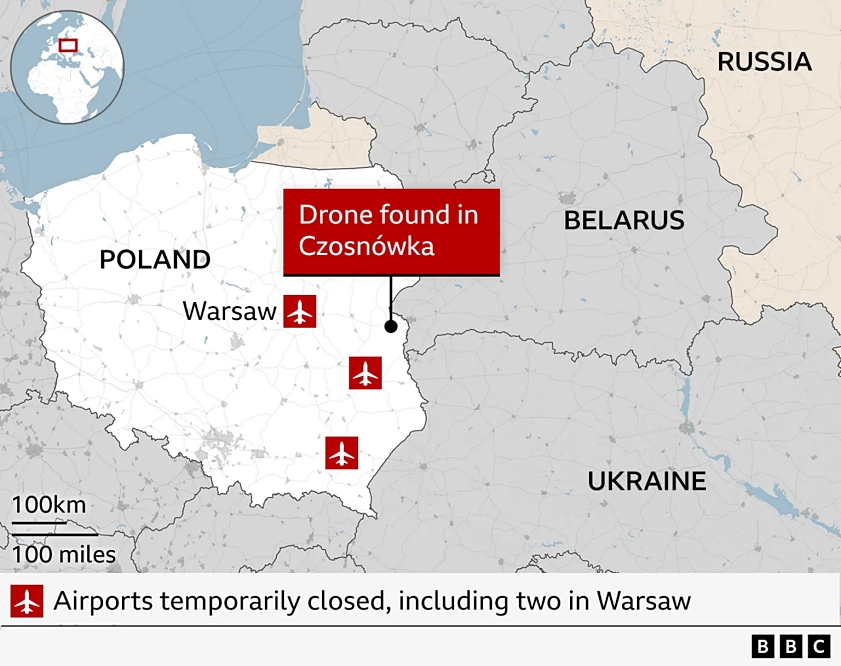
Authorities in Poland have found seven drones and the remains of an unidentified object in sites across the country, an interior ministry spokeswoman has said. Karolina Galecka told a news conference that five of the drones and the remains of the unidentified object were found in different locations in Lublin province in eastern Poland, bordering Belarus and Ukraine.
Two of the drones were discovered in central and northern Poland, much further from the borders, she said. One was discovered in a field in Mniszków, in Łódź province in central Poland, about 250 km (155 miles) from the Belarusian border. Another was discovered near the city of Elbląg in northern Poland.
A source said NATO was not treating the incident as an attack but as an intentional incursion. Polish F-16 fighter jets, Dutch F-35s, Italian AWACS surveillance planes and mid-air refueling aircraft jointly operated by NATO were involved in the overnight operation, according to the source.
Andrey Ordash, Russia's charge d'affaires in Poland, was cited by RIA state news agency as calling accusations of an incursion "groundless" and said Poland had not given any evidence that the drones shot down were of Russian origin. The Kremlin declined comment to comment directly on the downing of the drones but spokesperson Dmitry Peskov said:
"The leadership of the EU and NATO accuse Russia of provocations on a daily basis. Most of the time, without even trying to present at least some kind of argument."During the incident, the Operational Command of the Polish Armed Forces urged residents to stay at home, with three eastern regions at particular risk.
Several Polish airports were temporarily closed, including one that has been used as the main access point for Western officials and supplies travelling to Ukraine over land. Flight operations were suspended for hours at Warsaw's Chopin and Modlin airports, as well as at Rzeszów–Jasionka and Lublin.
A number of flights which had been due to land at Chopin airport were diverted to Gdansk, Katowice, Wroclaw, Poznan and Copenhagen.
After airspace over the the capital was re-opened, Chopin airport said disruptions and delays may last throughout the day and warned passengers to expect delays.
NATO's Rutte said that a full assessment of the incident had not yet been made but added that,
"whether it was intentionally or not, it is absolutely reckless, it is absolutely dangerous."Countries bordering Ukraine have reported occasional Russian missiles or drones entering their airspace in the past during the war, but not on such a large scale, and they are not known to have shot them down. Two people were killed in Poland in 2022 by a Ukrainian air defence missile that went astray.
'Intentional'
"Russia's war is escalating, not ending. We must raise the cost on Moscow, strengthen support for Ukraine, and invest in Europe's defence,"
the EU's top diplomat Kaja Kallas said. Early indications suggested the entry of Russian drones into European airspace was intentional, not accidental, she added in her post on X.
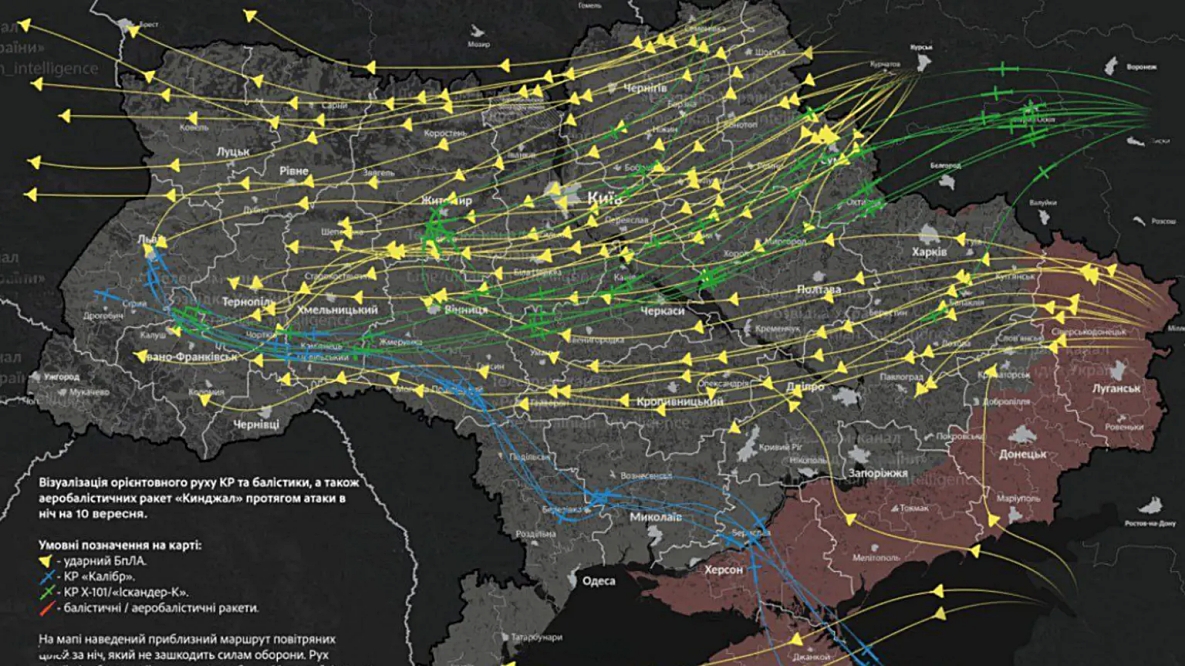
Ukrainian President Volodymyr Zelenskiy said Russia used 415 drones and 40 missiles in attacks on Ukraine overnight, adding that at least eight Iranian-made shahed drones had been aimed towards Poland.
"An extremely dangerous precedent for Europe," he said. "A strong response is needed – and it can only be a joint response by all partners: Ukraine, Poland, all Europeans, the United States."Russia has long said it has no intention of stoking a war with NATO and that Western European countries suggesting it is a threat were trying to worsen relations.
Analysts Identify Images of Drones used in Polish Incursion
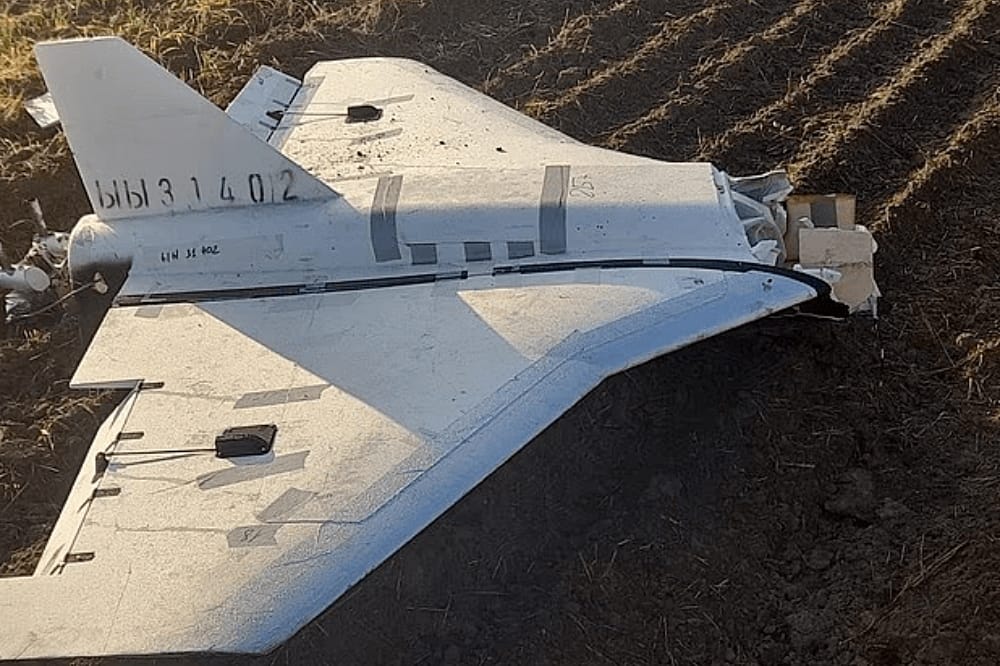
Three analysts contacted by BBC Verify have identified images of a largely intact drone in a field close to the eastern Polish village of Czosnówka as a Gerbera - a cheap multi-purpose unmanned aerial vehicle (UAV) widely used by Russia as a decoy to distract air defence systems during large-scale attacks on Ukraine.
Polish officials said this morning that 19 Russian drones entered the country’s airspace overnight.
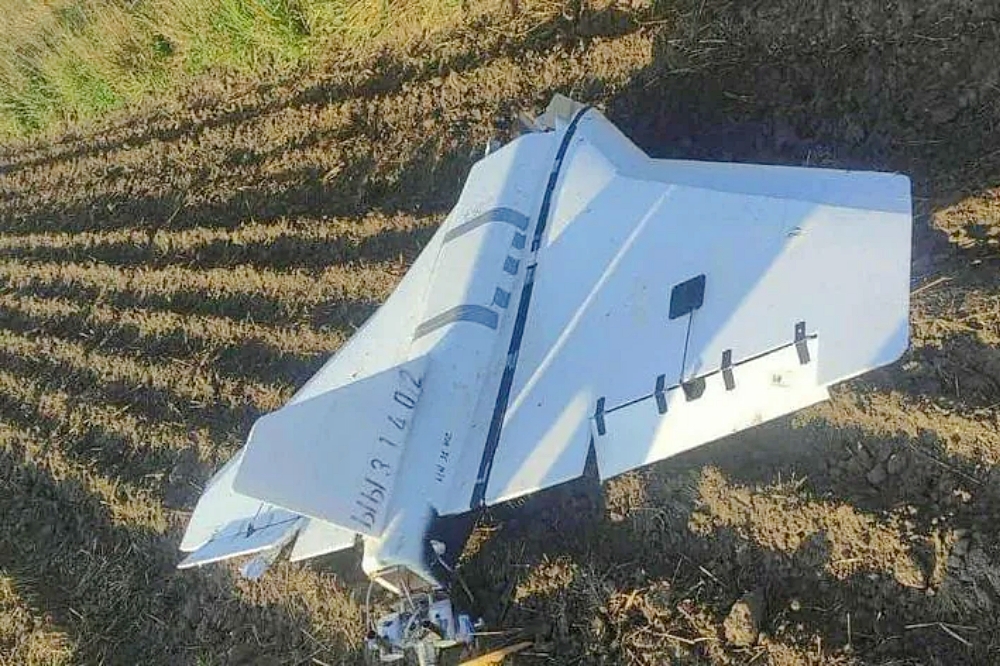
Justin Crump, CEO of the risk and intelligence company Sibylline, says the Gerbera is “a cheap way to increase the capability of other drones”.
He says that Moscow typically uses it in conjunction with Shahed/Geran-2 drones when launching attacks on Ukrainian troops and cities.
Meanwhile, Justin Bronk - an analyst with the Royal United Services Institute (Rusi) think-tank - tells BBC Verify that the drones remained largely intact as they likely ran out of fuel having flown a significant distance rather than being shot down by Polish air defences or Nato jets.
Both analysts say that the scale of the incursion suggests it was almost certainly a deliberate act on Russia’s part.
Crump suggests that Moscow hoped to conduct “reconnaissance for weak points in Nato/Polish air defences” or to “generate intelligence” on how European powers would react to the breach of Polish airspace.
“The likely lack of warheads on these variants - which would otherwise appear exactly like more threatening and deadly attack drones - also allows Russia to play down the action and confuse our response,” Crump adds.NATO Secretary General Mark Rutte said:
The North Atlantic Council met this morning and discussed the situation in light of Poland’s request for consultations under Article 4 of the Washington Treaty. Allies expressed solidarity with Poland and denounced Russia’s reckless behaviour. A full assessment of the incident is ongoing. What is clear is that the violation last night is not an isolated incident.
And let me conclude by saying that Russia is waging a dangerous war of aggression against Ukraine that continually targets civilians and civilian infrastructure. Allies are determined to step up their support for Ukraine in the face of Russia's escalating campaign.
Sources: BBC; Reuters