MQ-1C Gray Eagle Tests Hellfire Missiles
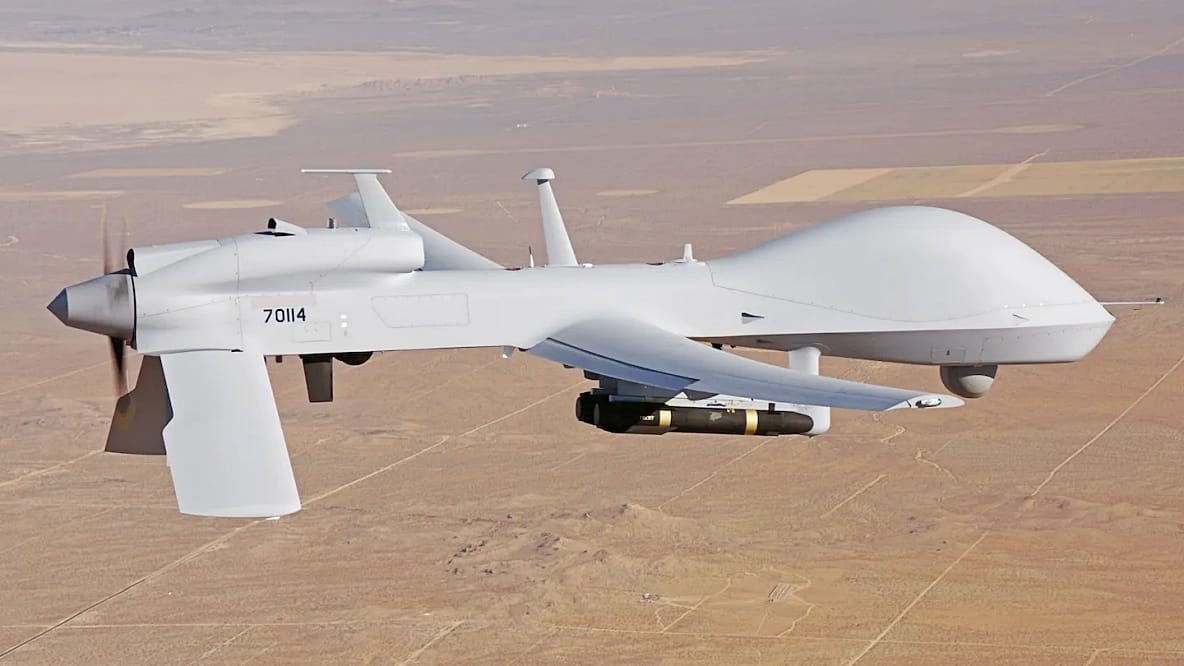
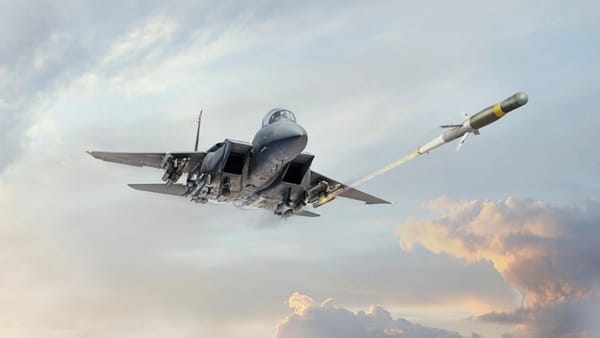
The MQ-1C Gray Eagle unmanned aerial system has used the AGM-114L Longbow Hellfire missile, in conjunction with its onboard radar, to shoot down a drone in live-fire tests, General Atomics Aeronautical Systems has confirmed to TWZ. While there is currently a major drive in the development of different counter-UAS systems involving kinetic and non-kinetic solutions, using the Gray Eagle to bring down drones using Hellfire missiles is a new and intriguing development.
GA-ASI has “demonstrated live-fire takedown using Longbow Hellfire from Gray Eagle to eliminate a small UAS,” C. Mark Brinkley, a company spokesman, told TWZ. Arming the adaptable Gray Eagle with Hellfire missiles is not the only counter-UAS option that GA-ASI is currently pursuing with this platform.
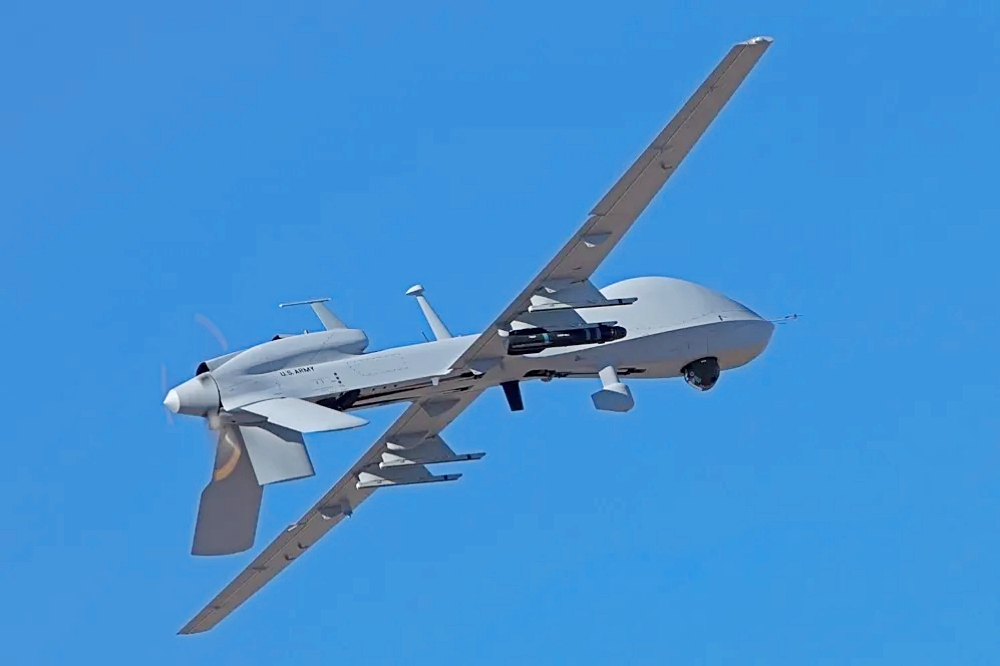
live-fire demo of podded miniguns from Gray Eagle STOL
This is a reference to the Dillon Aero DAP-6 Minigun pods, a weapon system that has been live-fire tested from the GA-ASI Mojave demonstrator drone at the U.S. Army’s Yuma Proving Ground.
General Atomics’ Brinkley said the company plans to unveil a new kinetic option for Gray Eagle STOL “in the next few months that would further lower the price tag for C-UAS response, while also increasing accuracy and flexibility.” It’s unclear if this is a reference to the aforementioned Longbow Hellfire, although the reference to reduced costs would seem to point to another, cheaper option, perhaps a laser-guided rocket.
As well as kinetic and non-kinetic means of bringing down hostile drones, GA-ASI has also adapted onboard sensors to allow its drones to detect, track, and then engage the UAS in the first place.
“We have conducted numerous flight tests using our Lynx and EagleEye radar systems for target acquisition and tracking of small UAS,” Brinkley confirmed.
The EagleEye synthetic aperture radar can detect and track ground targets out to 50 miles and maritime targets out to 124 miles, although its capability against aerial threats is not presently known. However, with a new active electronically scanned array (AESA) antenna and associated software for EagleEye being developed, this will further increase its range and add to its multi-mode performance.
These flight tests are especially significant in that they have utilized the proprietary GA-ASI radars in an air-to-air mode to provide detection, including in the critical look-down mode, and onboard weapons cueing.
Source: The War Zone