MiG-23 - Jet So Fast the US Had to Steal One
In a secret base buried deep within the Nevada desert, a pilot climbs into a jet unlike anything ever built on American soil. The controls are alien, scattered with no apparent logic, covered in strange, foreign letters. No ordinary pilot could ever decipher the maze of dials and switches.
Yet somehow, the man in the cockpit knows exactly what to touch, twist, and ignite to send the machine surging skyward at an impossible rate of 45,000 feet per minute.
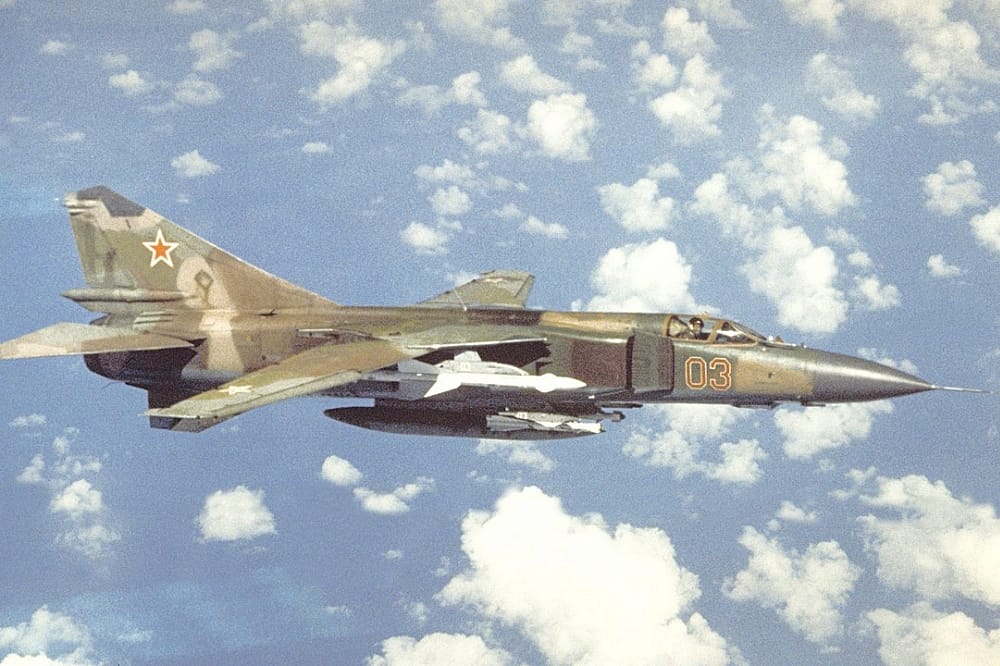
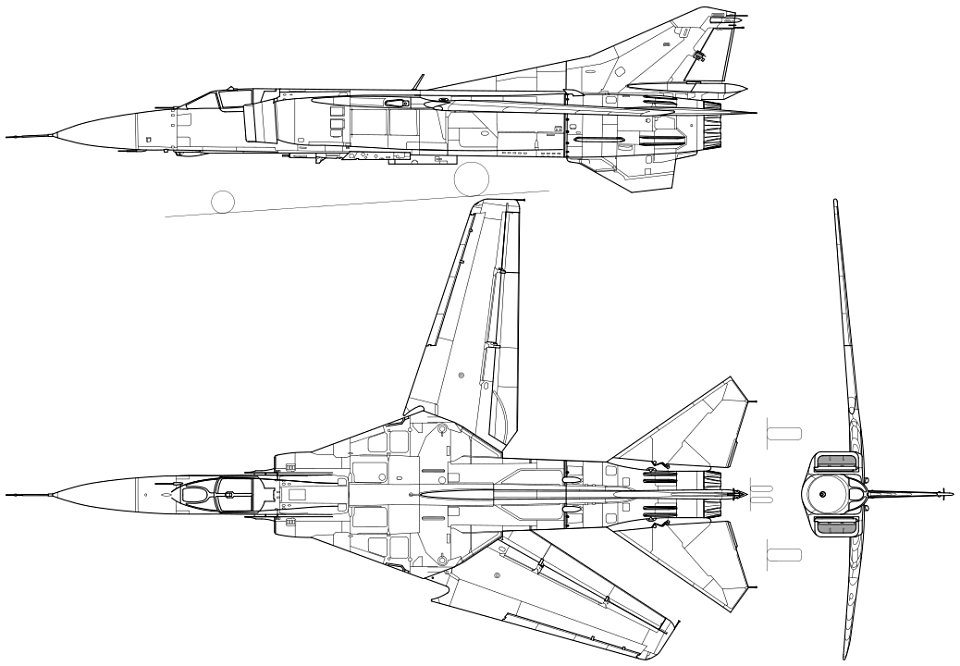
The Mikoyan-Gurevich MiG-23 (Russian: Микоян и Гуревич МиГ-23; NATO reporting name: Flogger) is a variable-geometry fighter aircraft, designed by the Mikoyan-Gurevich design bureau in the Soviet Union. It is a third-generation jet fighter, alongside similar Soviet aircraft such as the Su-17 "Fitter".
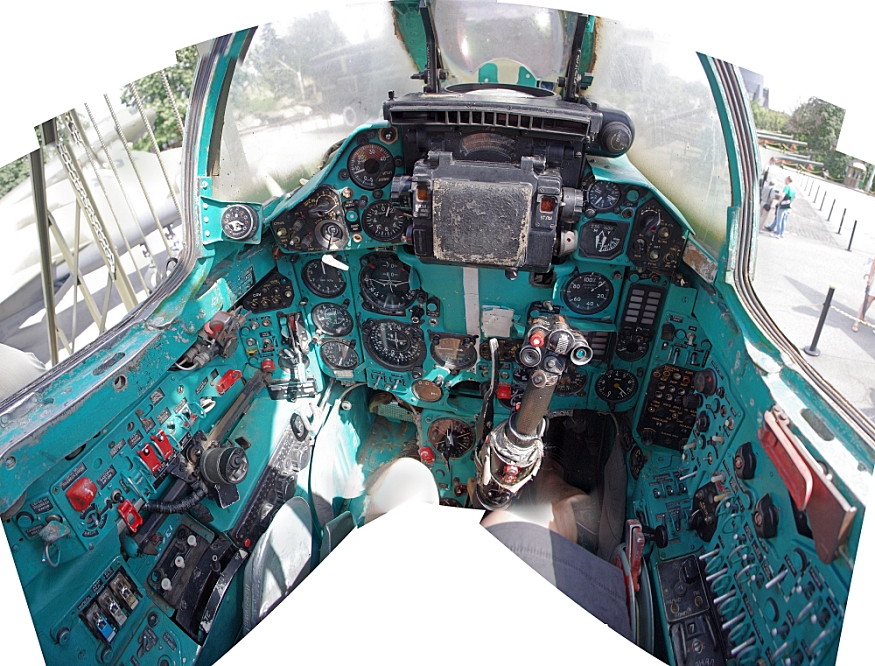
It was the first Soviet fighter to field a look-down/shoot-down radar, the RP-23 Sapfir, and one of the first to be armed with beyond-visual-range missiles. Production started in 1969 and reached large numbers with over 5,000 aircraft built, making it the most produced variable-sweep wing aircraft in history. The MiG-23 remains in limited service with some export customers.
The basic design was also used as the basis for the Mikoyan MiG-27, a dedicated ground-attack variant. Among many minor changes, the MiG-27 replaced the MiG-23's nose-mounted radar system with an optical panel holding a laser designator and a TV camera.
Development
The MiG-23's predecessor, the MiG-21, was fast and agile, but limited in its operational capabilities by its primitive radar, short range, and limited weapons load (restricted in some aircraft to a pair of short-range R-3/K-13 (AA-2 "Atoll") air-to-air missiles). Work began on a replacement for the MiG-21 in the early 1960s. The new aircraft was required to have better performance and range than the MiG-21, while carrying more capable avionics and weapons including beyond-visual-range (BVR) missiles.
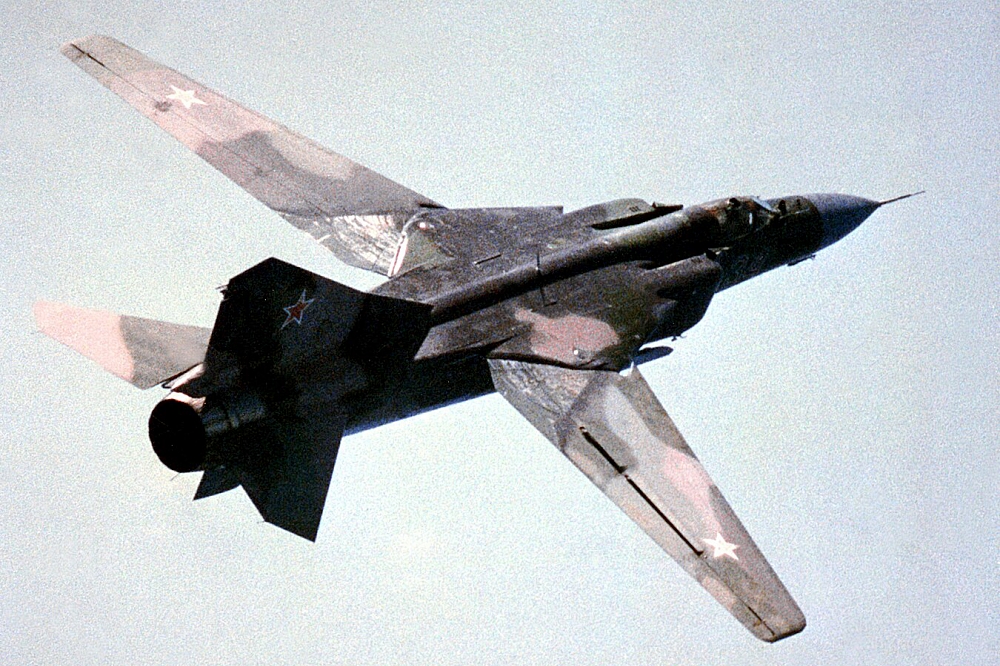
A major design consideration was take-off and landing performance. The Soviet Air Force (VVS) demanded the new aircraft have a much shorter take-off run. Low-level speed and handling was also to be improved over the MiG-21. Manoeuvrability was not an urgent requirement. This led Mikoyan to consider two options: lift jets, to provide an additional lift component; and variable-geometry wings, which had been developed by TsAGI for both "clean-sheet" aircraft designs and adaptations of existing designs.
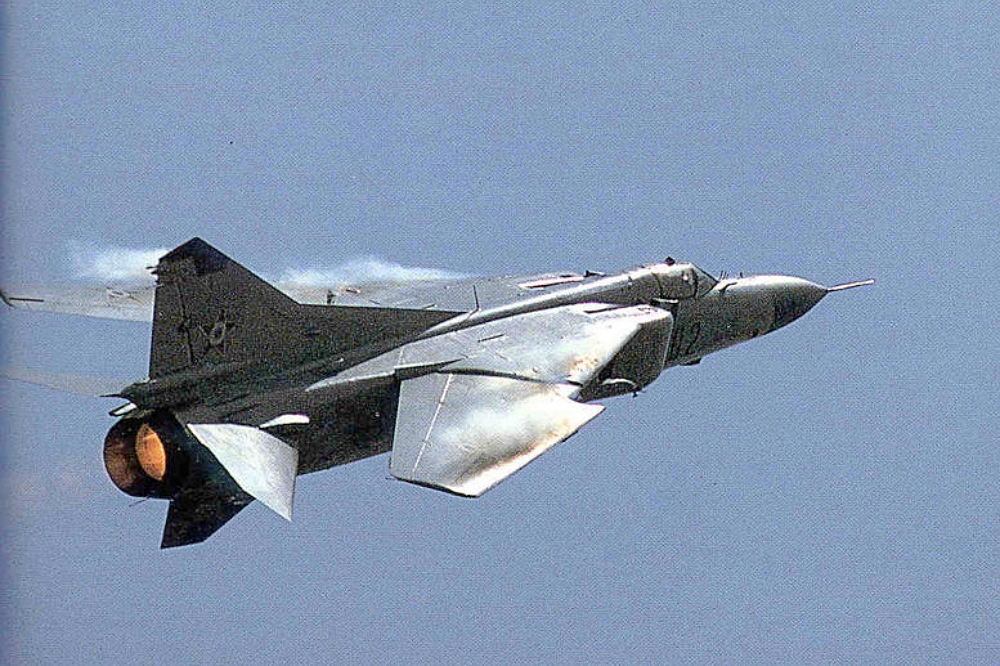
The first option, for an aircraft fitted with lift jets, resulted in the "23-01", also known as the MiG-23PD (Podyomnye Dvigatyeli – lift jet), was a tailed delta of similar layout to the smaller MiG-21 but with two lift jets in the fuselage. This first flew on 3 April 1967, but it soon became apparent that this configuration was unsatisfactory, as the lift jets became useless dead weight once airborne. Work on the second strand of development was carried out in parallel by a team led by A.A Andreyev, with MiG directed to build a variable-geometry prototype, the "23-11" in 1965.
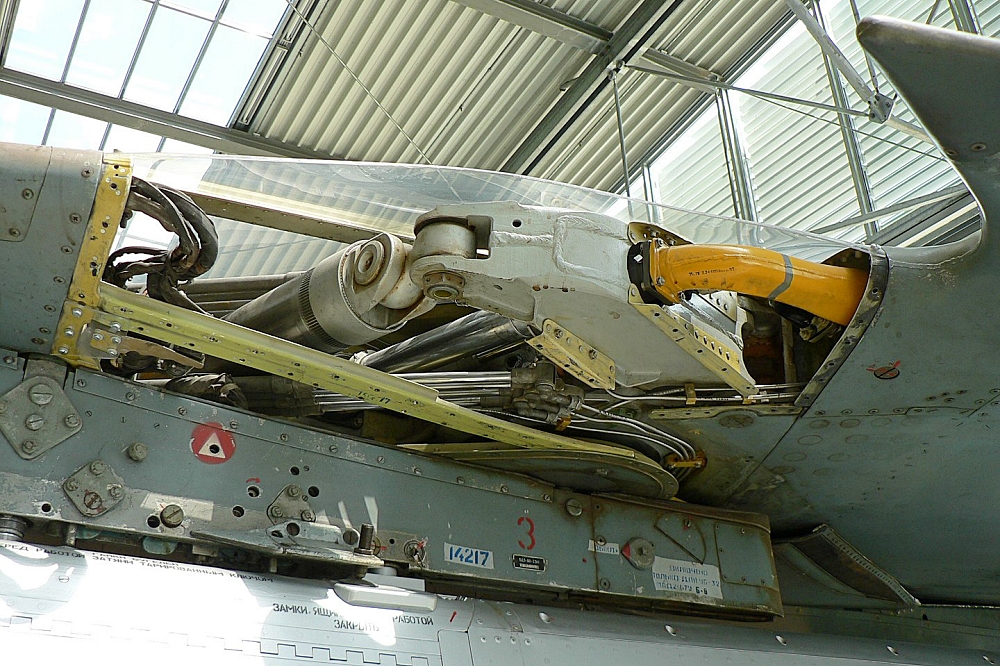
The 23-11 featured variable-geometry wings which could be set to angles of 16, 45 and 72 degrees, and it was clearly more promising. The maiden flight of 23–11 took place on 10 June 1967, flown by the famous MiG test pilot Aleksandr Vasilyevich Fedotov. Six more flight prototypes and two static-test prototypes were prepared for further flight and system testing. All featured the Tumansky R-27-300 turbojet engine with a thrust of 77 kN (17,300 lbf). The order to start series production of the MiG-23 was given in December 1967. The first production "MiG-23S" (NATO reporting name 'Flogger-A') took to the air on 21 May 1969, with Fedotov at the controls.
The General Dynamics F-111 and McDonnell Douglas F-4 Phantom II were the main Western influences on the MiG-23. The Soviets, however, wanted a much lighter, single-engined fighter to maximize agility. Both the F-111 and the MiG-23 were designed as fighters, but the heavy weight and inherent stability of the F-111 turned it into a long-range interdictor and kept it out of the fighter role. The MiG-23's designers kept the MiG-23 light and agile enough to dogfight with enemy fighters.
Top Photo: An air-to-air right side view of a Soviet MiG-23 Flogger aircraft. Exact Date Shot Unknown. You can see a loadout of 2x R-24R Semi-Active Radar Homing (SARH) missiles under the wing pylons, 2x R-60M all-aspect Infra Red homing missiles under the belly pylons as well as an external fuel tank under the belly.
Sources: YouTube; Wikipedia