Lockheed C-5 Galaxy - America’s $8 Billion Disaster that Refused to Die
Cost overruns and technical problems of the C-5A were the subject of a congressional investigation in 1968 and 1969. The C-5 program was the first development program with a $1‑billion (equivalent to $8.6 billion today) overrun.
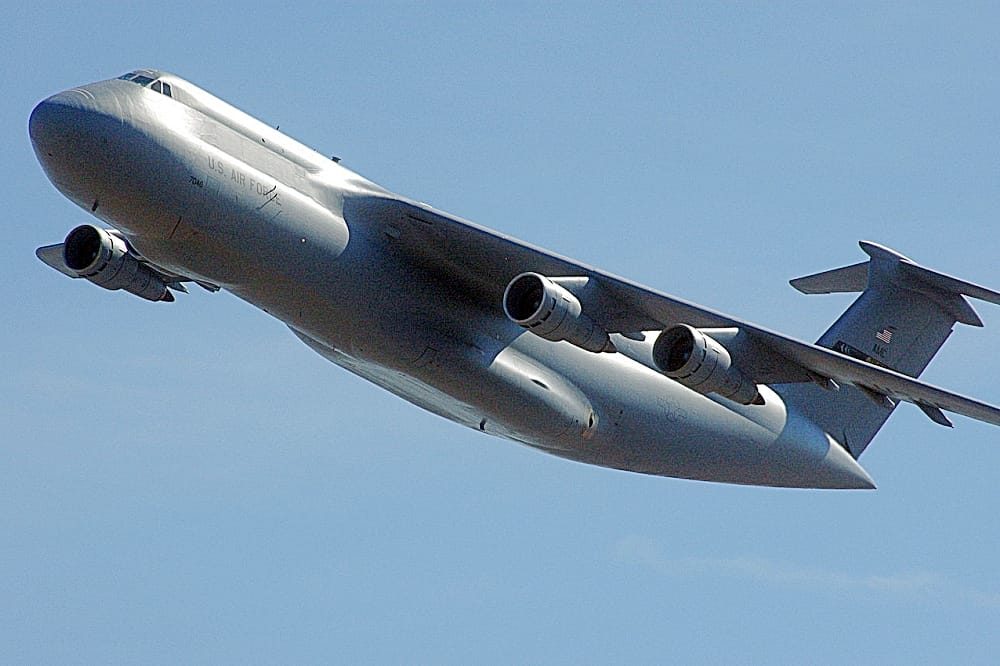
Test pilot Leo Sullivan straps in and pushes the throttles, bringing the massive C-5A Galaxy’s TF39 turbofans to life. It’s taken years of painstaking engineering just to get here. It needed wings strong enough to carry two battle tanks and six helicopters across the world. Its landing gear and structural frames have been redrawn from scratch just to ensure this titan can stand on its own. But the result has been worth it.
With a wingspan stretching longer than a football field and a silhouette that towers over the runway like a building, this is the largest aircraft America has ever built. The giant slowly picks up speed. Sullivan pushes the throttles at maximum capacity; engines burning 80 gallons of fuel a minute as it nears the end of the runway.
Time to see if America can get 380,000 pounds of metal into the sky.
The Lockheed C-5 Galaxy is a large military transport aircraft designed and built by Lockheed, and now maintained and upgraded by its successor, Lockheed Martin. It provides the United States Air Force (USAF) with a heavy intercontinental-range strategic airlift capability, one that can carry outsized and oversized loads, including all air-certifiable cargo. The Galaxy has many similarities to the smaller Lockheed C-141 Starlifter and the later Boeing C-17 Globemaster III.
The C-5 is among the largest military aircraft in the world. All 52 in-service aircraft have been upgraded to the C-5M Super Galaxy with new engines and modernized avionics designed to extend its service life to 2040 and beyond.
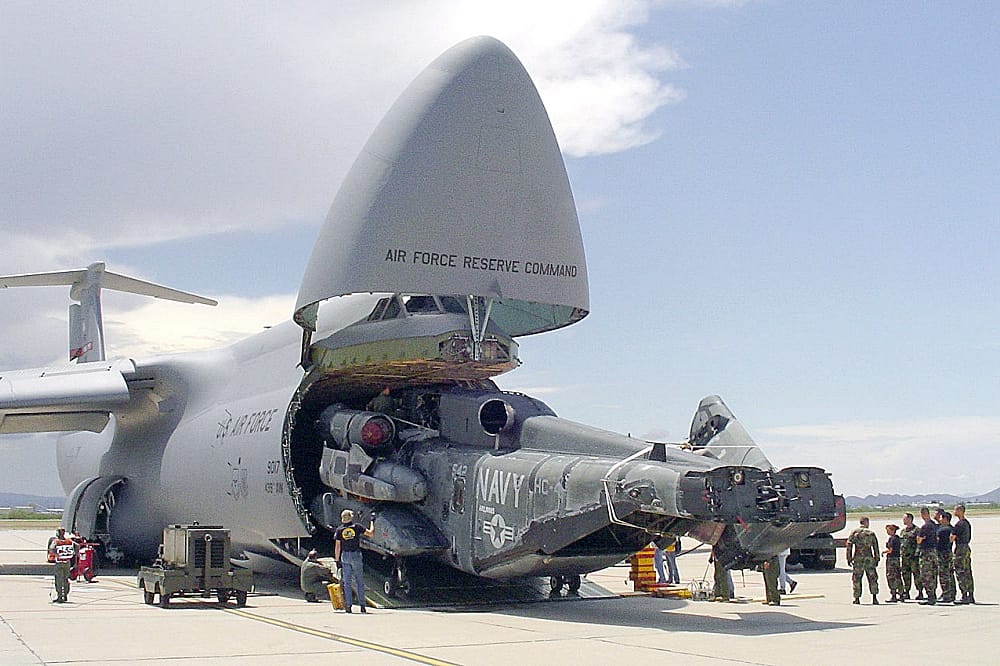
The C-5 Galaxy's development was complicated, including significant cost overruns, and Lockheed suffered significant financial difficulties. Shortly after entering service, cracks in the wings of many aircraft were discovered and the C-5 fleet was initially restricted in capability until corrective work was completed.
The USAF has been operating the C-5 since 1969. In that time, the airlifter supported US military operations in all major conflicts including Vietnam, Iraq, Yugoslavia, and Afghanistan, as well as allied support, such as Israel during the Yom Kippur War and operations in the Gulf War. The Galaxy has also distributed humanitarian aid, provided disaster relief, and supported the US space program.
Sources: YouTube; Wikipedia