Joby Hydrogen-Powered Autonomous Aircraft Emerges After Apparent 9-Hour Flight
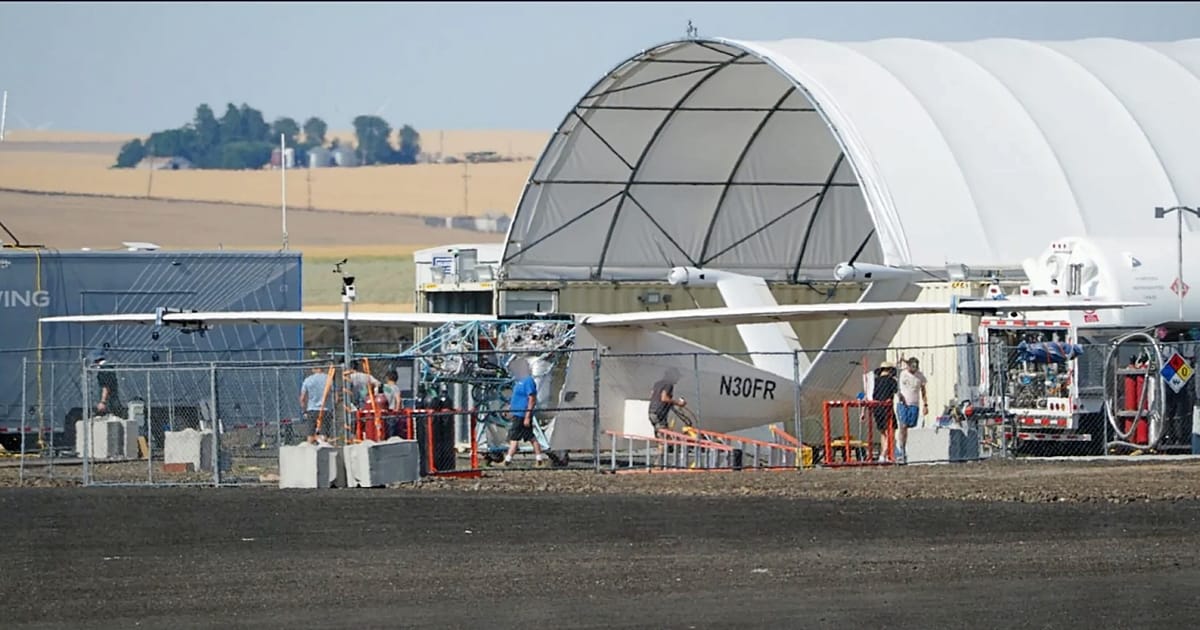
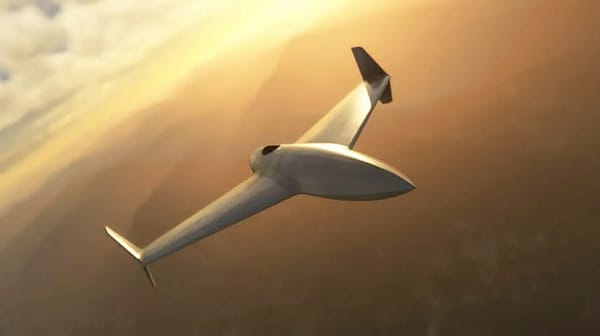
On a scorching summer afternoon on a windswept airport tarmac in Eastern Oregon, an unusual aircraft became the center of bustling activity. Its shape was distinctive: squat and bulbous, almost egg-like, yet balanced by gracefully extended wings. It sat quietly amid a hive of ground crew members who hurried around it.
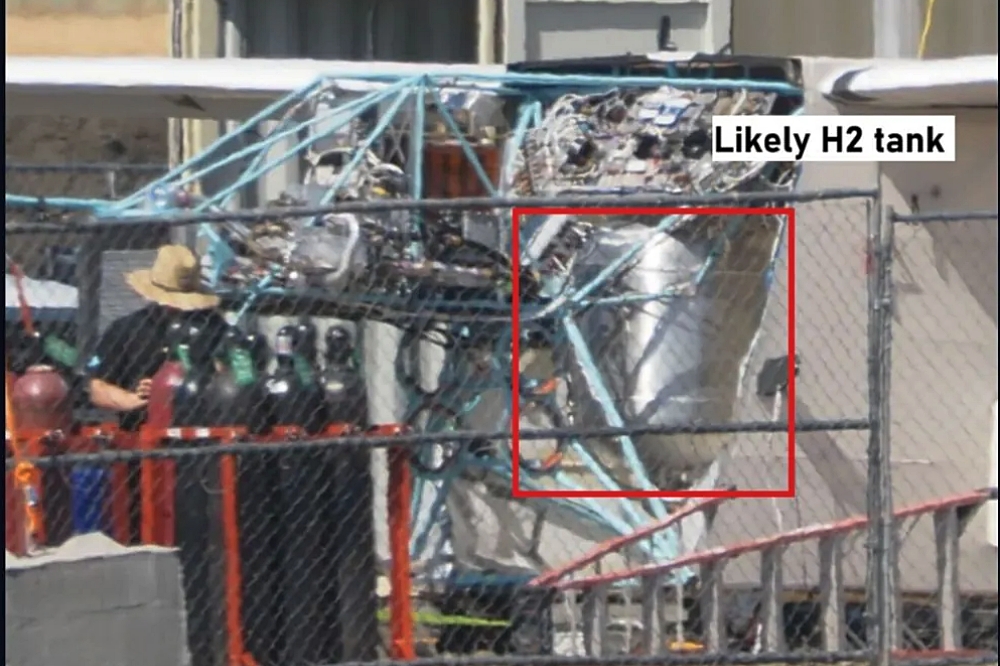
Nearby, a hydrogen tank vented into the air as technicians detached its line from the aircraft. Additional ground personnel maneuvered the aircraft, dragging it with what appeared to be nylon straps.
This massive unmanned aircraft — powered by hydrogen-electric drivetrain — is believed to be Joby’s new JAI 30, based on FAA registration records. ADS-B flight data, publicly available for only a brief window before being quietly removed, reveals that on one of its initial flights, the JAI 30 remained airborne for more than nine hours.
This flight duration places it among the longest-endurance hydrogen-powered UAVs ever developed. Asked about this flight, the Toyota-backed Joby declined to provide a comment to Hunterbrook Media. But a reporter was able to book a hotel room with a view of the hanger — and saw the JAI 30 firsthand.
The JAI 30 has not yet broken the 30-hour hydrogen-powered fixed-wing endurance record set by the state-owned Aviation Industry Corporation of China (AVIC) earlier this year. Notably though, AVIC’s aircraft weighed just 50 kg (110 lb.). Based on the respective sizes of both aircrafts, that’s likely an order of magnitude less than Joby’s JAI 30.
Joby Aviation ($JOBY) is a California-based aerospace company developing electric vertical takeoff and landing (eVTOL) aircraft. Joby initially pursued air taxi and short-range passenger flights, which it continues to develop. Joby absorbed Uber’s Elevate division in 2020. The founding pitch by JoeBen Bevirt: redefine regional mobility with zero-emission vertical flight.
Now, Joby is increasingly positioned not only as a commercial air taxi provider — but as a broader vertically integrated aerospace company. The company is collaborating closely with the U.S. Department of Defense (DOD), with contracts potentially worth over $160 million.
Joby has expanded and made significant investments in its hydrogen portfolio. In 2021, Joby acquired the hydrogen-electric flight company H2FLY. By 2024, a Joby JAS4 eVTOL-based hydrogen-electric technology demonstrator aircraft completed a 523-mile flight above Marina, California.
It was a big step for Joby.
“Imagine being able to fly from San Francisco to San Diego, Boston to Baltimore, or Nashville to New Orleans without the need to go to an airport and with no emissions except water. That world is closer than ever, and the progress we’ve made towards certifying the battery-electric version of our aircraft gives us a great head start as we look ahead to making hydrogen-electric flight a reality,” Bevirt said in a press release at the time. That vision now appears to extend to autonomous systems as well.
The DOD has expressed interest in hydrogen-powered aircraft under its AFWERX program. According to Jacob Wilson, acting branch chief of the Air Force’s program to accelerate the commercial market for advanced air mobility aircraft:
“Agility Prime has been very supportive of hydrogen-powered aircraft development and testing as it aligns with the program’s goals to advance transformative vertical lift technologies and broader Department of Defense operational energy goals of energy substitution and diversification, and energy demand reduction.”
John Ridge, a weapons systems and national security observer, explained the potential reasoning to Hunterbrook.
“The USAF and other DoD components, such as DARPA, have been exploring alternative aircraft propulsion technologies, particularly in UAS applications, for many years now. … Hydrogen combustion or fuel cells offer greater specific energy compared to other non-hydrocarbon energy sources like chemical batteries.” He added, “While UAS like these certainly would not replace existing airlifters, there are potentially many opportunities for them to supplement sustainment for small forces operating on islands or in other isolated conditions.”
In June 2024, Joby acquired the autonomy division of Xwing, bringing in what Joby described as an industry leader in autonomous, unmanned operations. Xwing has a deep relationship with the AFWERX program, conducting hundreds of flight hours across numerous tests in what the Air Force called “an operationally relevant environment.”
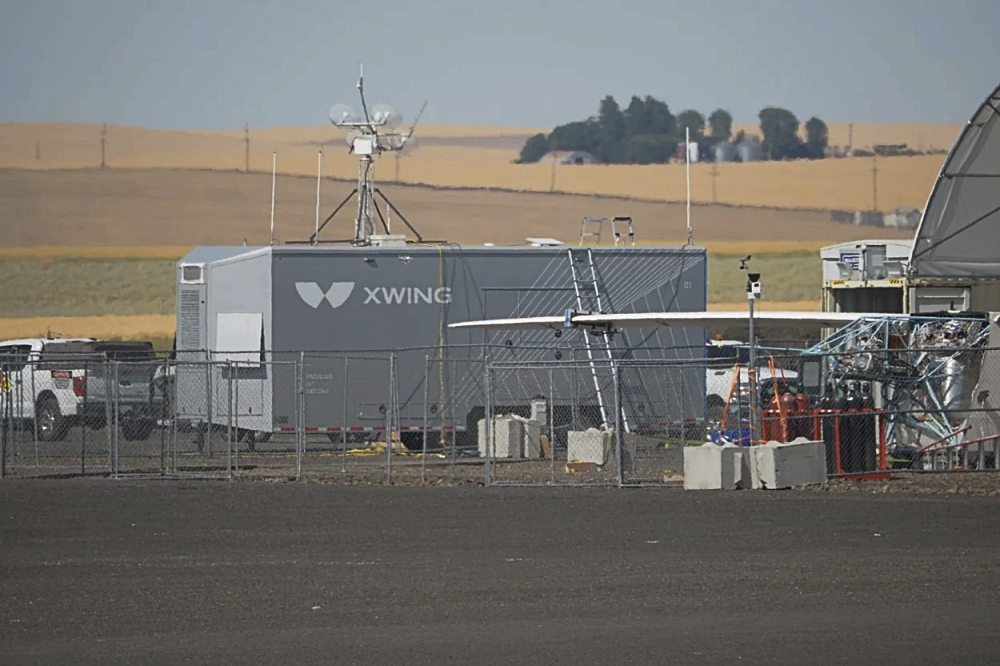
Sitting adjacent to Joby’s JAI 30 at Pendleton Airport? An Xwing ground control station.
The Site
Joby’s location choice is unsurprising. The Pendleton UAS Range is based at Eastern Oregon Regional Airport and operated by the City of Pendleton under the FAA-designated Alaska Test Site via the University of Alaska–Fairbanks. It’s one of the largest and most capable unmanned aircraft testing centers in the U.S.
Reportedly spanning over 14,000 square miles of low-traffic airspace with operational ceilings up to 15,000 feet, the range has hosted 65,000 flights since its founding in 2013. The range is reportedly able to handle BVLOS flights where pilots can’t see their aircraft, as well as swarming and advanced air mobility programs.
Anchored by Pendleton Airport, the range hosts customers including — as Hunterbrook found — the UAV defense giant Anduril.
Joby appears to be a new operator at Pendleton, setting up its hangar and JAI 30 operations between late May and early June of this year, according to satellite imagery reviewed by Hunterbrook.
Source: Hunterbrook