Jammed and Confused: Alaska Trial Shows Pitfalls of Fielding US Drones
During the last few weeks of June, dozens of aircraft gathered on the flight line at Eielson Air Force Base in Alaska as part of Red Flag — a premier, multinational exercise the base hosts each year. The event offers a venue for the U.S. and its allies to demonstrate advanced, tactical air combat and prepare military units for wartime operations.
About 20 miles to the northwest of Eielson on a sparse, dirt range just outside the Army’s Fort Wainright, a very different kind of testing and training demonstration overlapped with the latter half of Red Flag. The Defense Innovation Unit, the Pentagon’s commercial technology hub, chose a handful of companies to trial small, long-range attack drones designed to navigate and hit targets amid attempts to jam their signals.
While much smaller in size and scope than the venerable Red Flag drill nearby, DIU’s tests hit on themes that may be just as consequential for the future of aerial warfare — the role of drones in modern combat, and whether the Pentagon can help stimulate the expansion of the domestic industrial base and transform its own internal bureaucracy in a way that allows it to buy those systems in meaningful quantities.
DIU’s testing offered a snapshot, though incomplete, of the current readiness of the military’s acquisition system and the U.S. drone industry’s ability to meet the moment.
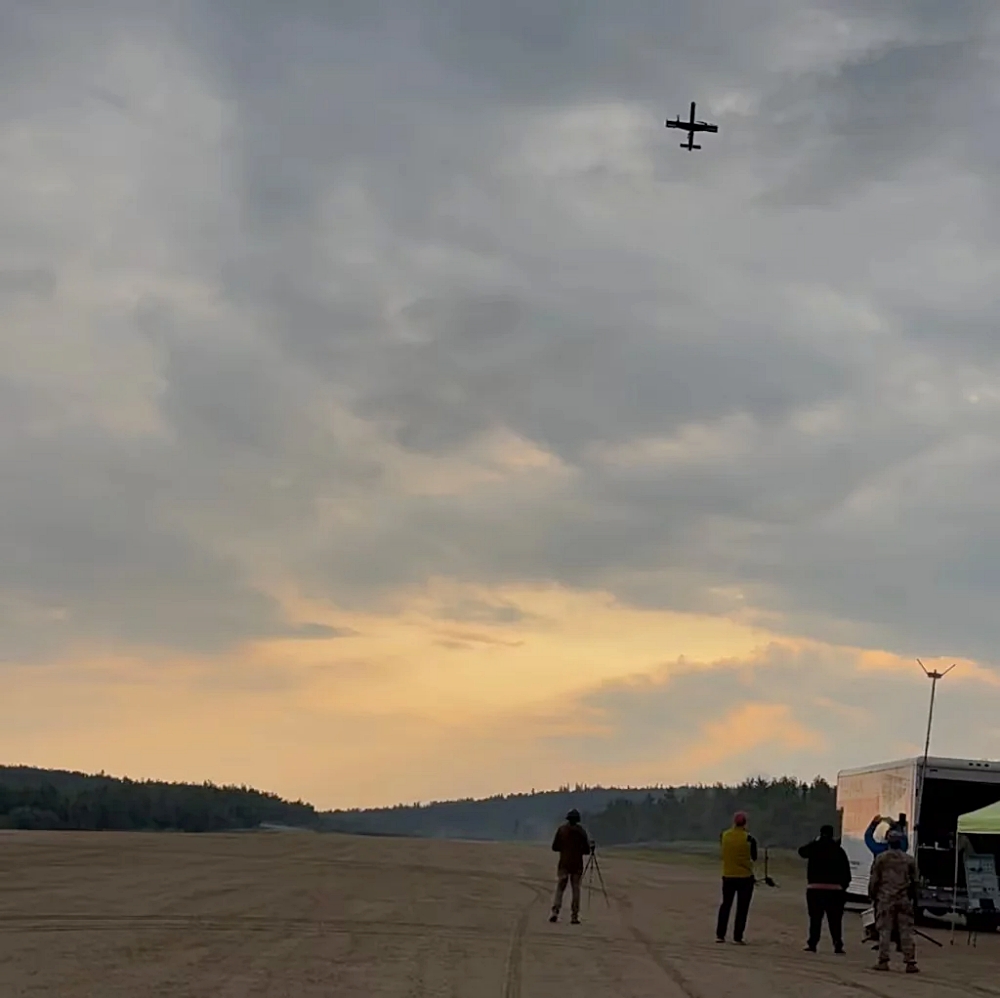
Defense News traveled to Alaska to observe the testing, which DIU officials said highlighted the challenges of moving fast in a stovepiped bureaucracy that wasn’t designed for speed.
Trent Emeneker, who leads several autonomy projects for DIU, said the event underscored a reality that many in the national security community are already grappling with — the U.S. military’s aerial-drone capabilities are lagging behind its competitors.
“There is so much that we need to do right now in the uncrewed systems space,” Emeneker told reporters. “We are just really far behind, and we have to catch up.”
A Project without a Partner
Staged over four days, the drone testing was part of a DIU project called Artemis, which aims to identify — and then buy en masse — low-cost commercial UAS that can fly at long ranges, strike enemy targets and operate through electronic warfare countermeasures like signal jamming and spoofing.
On the range in Alaska, DIU officials wanted to see if the Artemis drones could acquire and maintain targets and then hit them with some degree of accuracy when their navigation and communication signals were disrupted.
Four companies are on contract for the project: AV —previously AeroVironment — Dragoon and two Ukrainian firms that are each paired with a U.S.-based software firm, one with Swan and the other with Auterion.
Only AV and Dragoon were in Alaska for testing. The Ukrainian firms, which haven’t been disclosed due to security concerns, are flying their drones in operations at home. One of the firms has already met its contractual testing requirements, Emeneker said. The second was recently targeted in a Russian attack that destroyed its production facilities and is now working to rebuild. It hopes to start testing in the coming weeks.
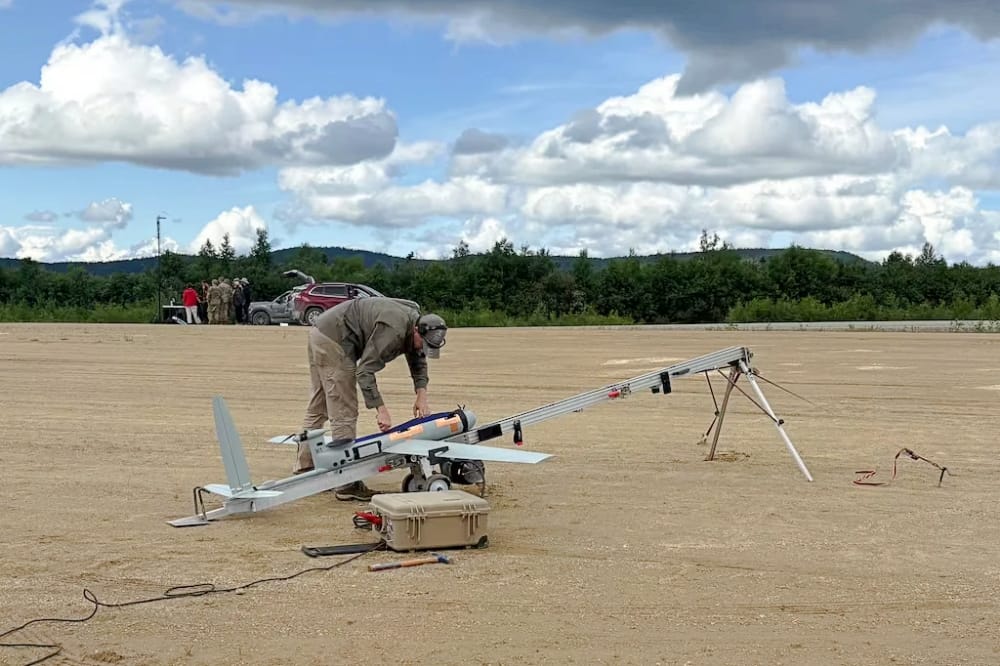
AV brought its Red Dragon UAS, which it rolled out in May as a system “designed for manufacturing at scale.” The rail-launched drone, built for the one-way attack mission, uses a navigation system that isn’t dependent on satellites like GPS.
Dragoon’s Artemis offering is a vertical take-off-and-landing drone called Sender, which it initially designed under a small contract with the Defense Advanced Research Projects Agency. The aircraft was designed to balance affordability and flexibility with the ability to fly longer-duration missions.
Like most DIU projects, Artemis was created to rapidly test and validate capabilities that military users have said they need in the field.
The effort originated as part of a supplemental spending package for Ukraine that Congress approved last year. In response to requests from operators in Europe and the Indo-Pacific, lawmakers gave DOD around $16 million to quickly identify a solution.
In just seven months, DIU solicited proposals, reviewed submissions and put four companies on contract to build prototypes — much faster than a traditional DOD acquisition program.
A key feature of the organization’s approach is that it partners with acquisition offices in the military services and combatant commands to buy and field the commercial capabilities it validates. Without an acquisition partner, projects flounder, victims to the infamous “valley of death” — the often-terminal phase between when an effort begins and when it’s adopted by an end user.
Despite the heavy use of cheap attack drones in Ukraine and the Middle East and the Pentagon’s stated desire to increase its inventory of uncrewed systems, DIU has struggled to find an acquisition partner in the services for Artemis.
Emeneker and his team have been pitching the project to program offices since last year but have come up short. Services are hesitant to buy in and put time and resources toward a system that isn’t tailored to their specific requirements, he said.
“We continue to make phone calls every day and talk to program offices, talk to people who are interested that theoretically have money. I don’t have a great answer. We don’t have a partner,” he said. “That’s what I have spent the most time on with this project.”
The hope going into testing was that the systems’ performance would help DIU make its case, but the results were not what Emeneker envisioned. If DIU can’t find an office that wants to take over the effort, companies that meet the contract’s requirements will still receive what’s called a “success memo” that allows them to quickly enter into a production contract if a DOD office wants to buy their system.
Testing Troubles
While the companies made progress throughout the test event, neither performed as well as DIU expected.
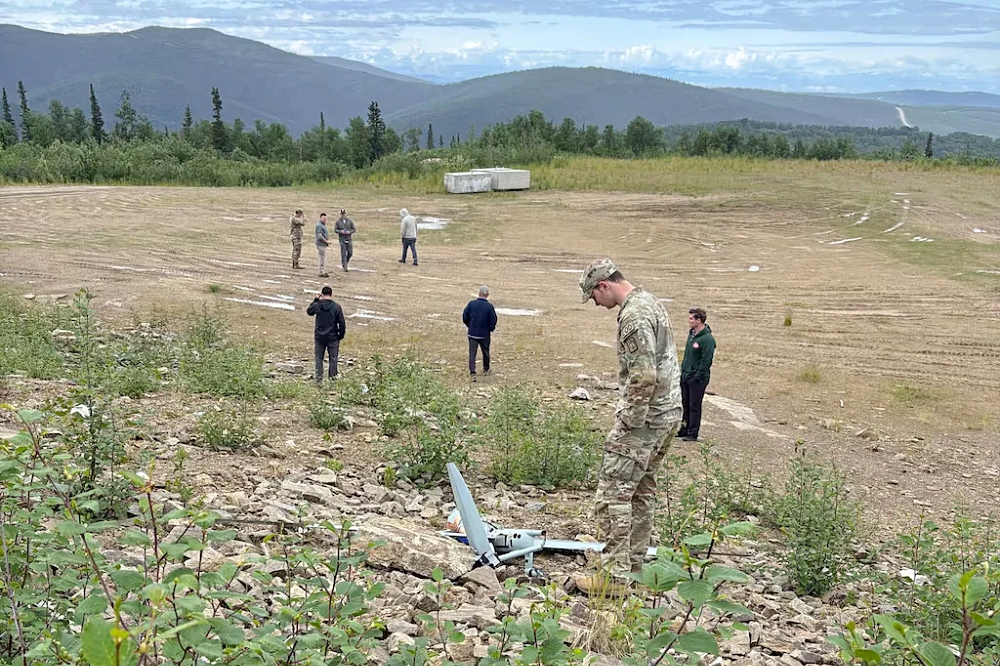
In one scenario during the second day of testing, AV’s drone failed repeatedly to find its target when jammed and ultimately crashed into a hill. In another run on the same day, Dragoon’s system flew past its target, made impact and went up in flames.
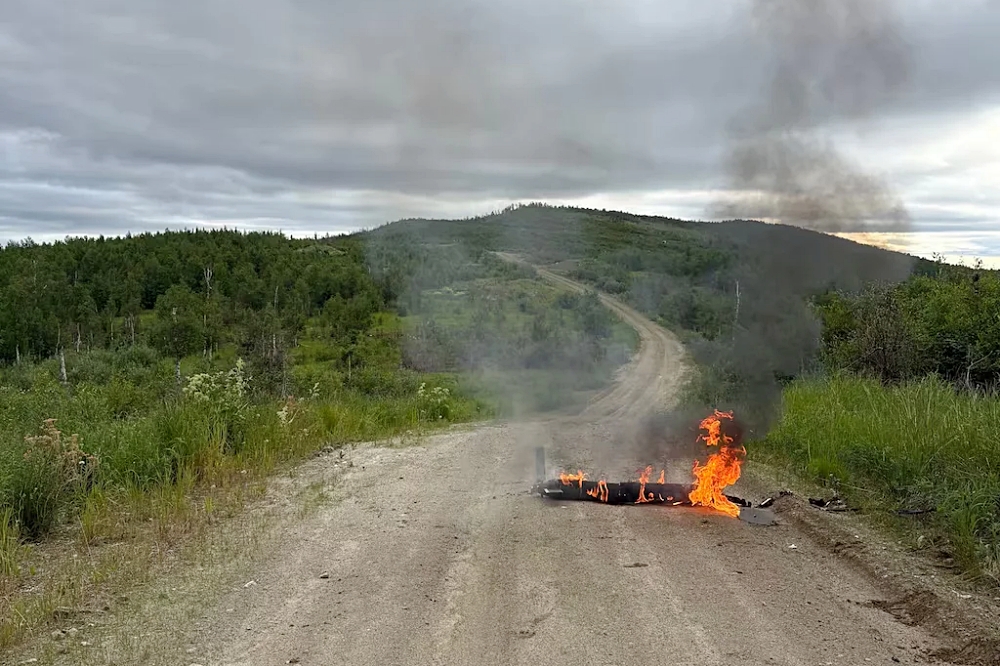
Critically, neither system performed well under EW conditions.
Emeneker said it’s too early to diagnose why the drones underperformed or to declare the project a failure.
“Without looking at the data and analyzing it, it’s really hard to know because understanding the interplay of the jamming… software bugs, it gets complex,” he said. “I don’t want to jump to conclusions but it was not what I would have hoped for or wanted to see.”
He also noted that while the platforms weren’t perfect, that’s not the goal. The objective of Artemis is to identify a baseline throw-away drone capability that offers a more affordable option than high-end munitions. By the end of testing, the systems had both made impacts and were closer to hitting their targets.
Still, Emeneker is concerned about what the preliminary outcome says about the state of the U.S. drone industrial base.
“If we had to go to war tomorrow, do we have what we need?” he posited. “No. So, how do we fix that? That’s what we’re trying to do is fix that capability.”
Top Photo: AV gets ready to launch its Red Dragon uncrewed air system during Defense Innovation Unit flight testing in Fairbanks, Alaska - Courtney Albon, Defense News
Source: Defense News