Italy’s Leonardo to Co-Produce Turkey’s Baykar Tactical UAVs and Jet-Powered Combat Drones
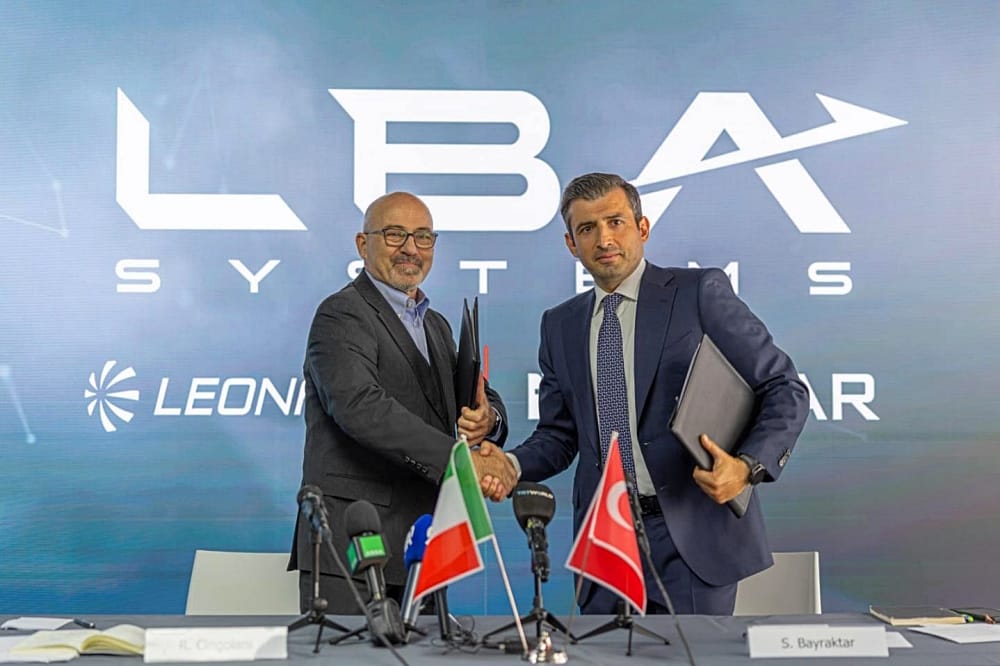
Leonardo detailed plans to co-produce Baykar unmanned aircraft in Italy, adding final assembly lines for TB2, TB3, Akinci and the jet-powered Kizilelma under the LBA Systems venture. The move builds an EU-based supply chain and marries European certification and sensor-weapon integration with Baykar’s platforms.
In its 3Q/9M 2025 Results Presentation on 5 November 2025, Leonardo outlined its alliance with Baykar. The plan shifts part of Baykar’s UAV production to Italy and pairs it with European certification and systems integration. The move elevates Italy from buyer and maintainer to co-producer across multiple classes, from tactical UAVs to jet-powered UCAVs.
It matters because it creates an EU-based supply line at a time of sustained demand and regulatory tightening around uncrewed operations. It also positions Italian sites to deliver not only airframes but compliant, export-ready systems with integrated payloads.
The move elevates Italy from buyer and maintainer to co-producer across multiple classes, from tactical UAVs to jet-powered UCAVs. It matters because it creates an EU-based supply line at a time of sustained demand and regulatory tightening around uncrewed operations. It also positions Italian sites to deliver not only airframes but compliant, export-ready systems with integrated payloads.
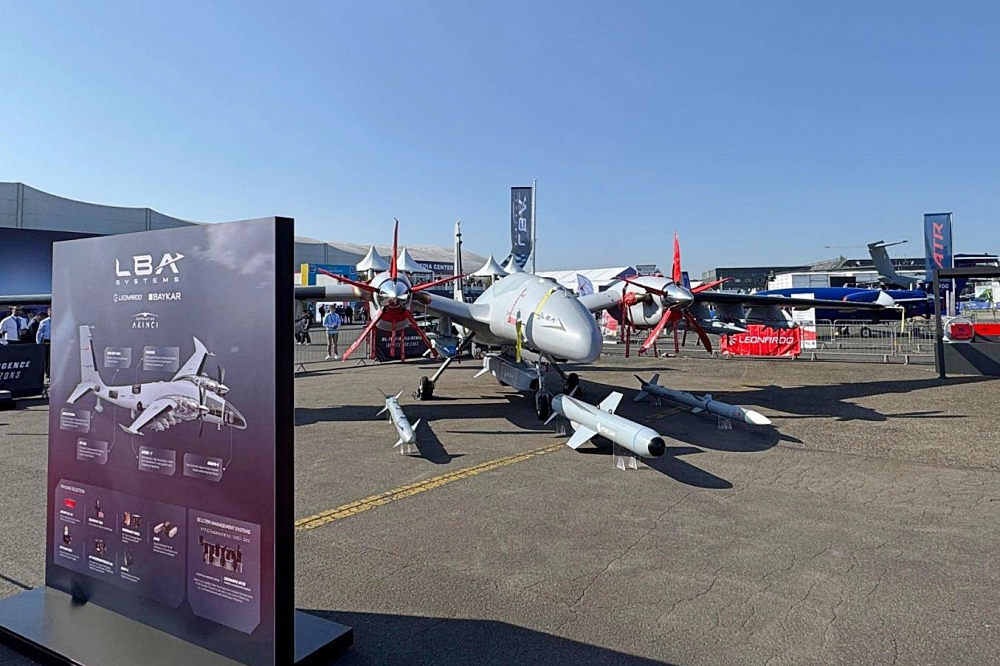
Leonardo and Baykar have structured their joint venture, LBA Systems, to combine platform manufacturing with certification and mission-system integration. While regulatory approval proceeds, teams are already aligning payloads and platforms across classes, including surveillance, strike and a future loyal-wingman segment. The plan covers five lines of effort: serial production and final assembly of specific platforms, composite aerostructures, engineering certification, multi-domain command-and-control, and sustainment. The intent is to field machines that are certificable and marketable across Europe and beyond, rather than bespoke variants tied to a single national regime
Production and engineering responsibilities are distributed across Italian cities with distinct roles. Ronchi dei Legionari, historically the cradle of Italian drones, continues Mirach target-drone work and adds TB3 naval-variant final assembly with on-site integration of sensors and weaponry.
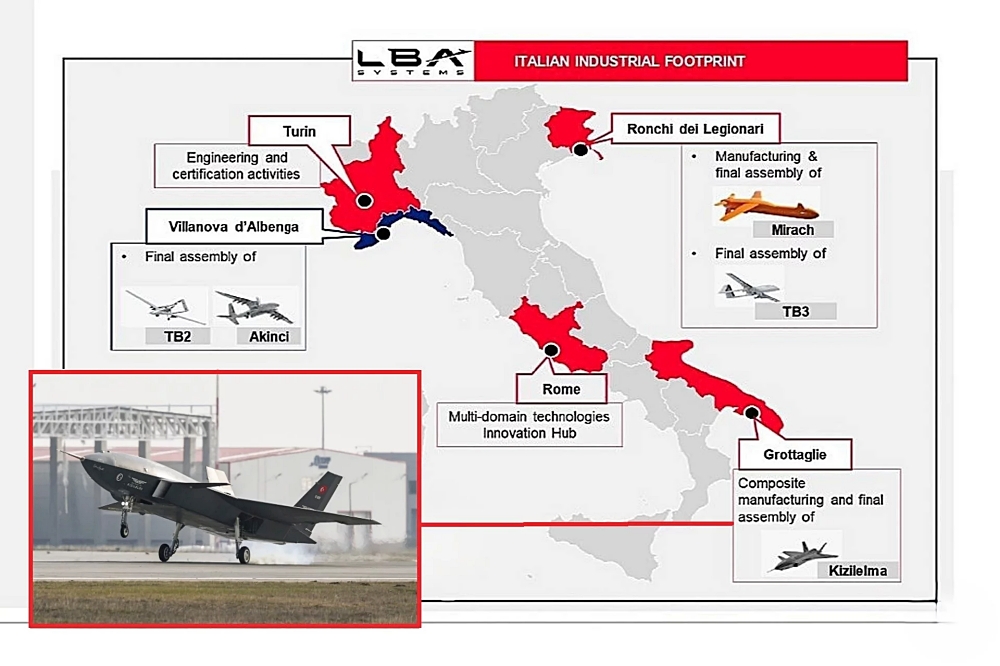
Villanova d’Albenga, within the Piaggio Aerospace perimeter incorporated into Baykar since 30 June 2025, becomes the assembly base for TB2 and Akinci, turning Liguria into a European hub for combat-proven MALE platforms. Turin concentrates engineering and certification to interface with European regulators and airspace initiatives, while Rome hosts a multi-domain innovation facility focused on C2, ISR networking, autonomy and data-links.
Grottaglie, leveraging its composite manufacturing pedigree, is assigned composite fabrication and final assembly of Kizilelma, the jet UCAV aligned with loyal-wingman concepts and intended to interoperate with sixth-generation fighters such as GCAP.
This alliance structure offers clear industrial advantages. Baykar contributes a mature portfolio and rapid development cycle across TB2, TB3, Akinci and Kizilelma, alongside supply-chain scale and operational feedback from multiple user communities. Leonardo contributes European certification pathways, composite aerostructures, mission-system integration, and long-term sustainment networks inside the EU market.
Local assembly shortens lead times, reduces licensing friction, and enables Europeanised variants that meet EASA and U-space rules where applicable, improving dual-use flexibility for training, logistics support and emergency response. By spreading work across Friuli Venezia Giulia, Liguria, Piedmont, Lazio and Apulia, the plan embeds skilled jobs and builds political durability around a national UAV ecosystem.
The strategic implications are broad. Geopolitically, Italy consolidates a sovereign UAV supply chain within the EU, offering allies a procurement path less exposed to extra-regional export constraints. Geostrategically, an Italian network covering certification, composites, C4ISR and autonomy aligns with NATO’s push toward distributed sensing and integrated fires, supporting national and coalition readiness with interoperable platforms.
Militarily, adding Kizilelma to Grottaglie signals Europe’s entry into higher-performance UCAV classes, bridging from propeller MALE drones to jet-powered teammates designed to operate alongside future fighters.
The Rome hub’s focus on multi-domain C2 and combat-cloud experimentation indicates that the value proposition extends beyond airframes to networking and mission-software, where operational advantage increasingly resides.
Source: Army Recognition