Interceptor Drone Fitted onto Russian MiG-29 with Zip Ties
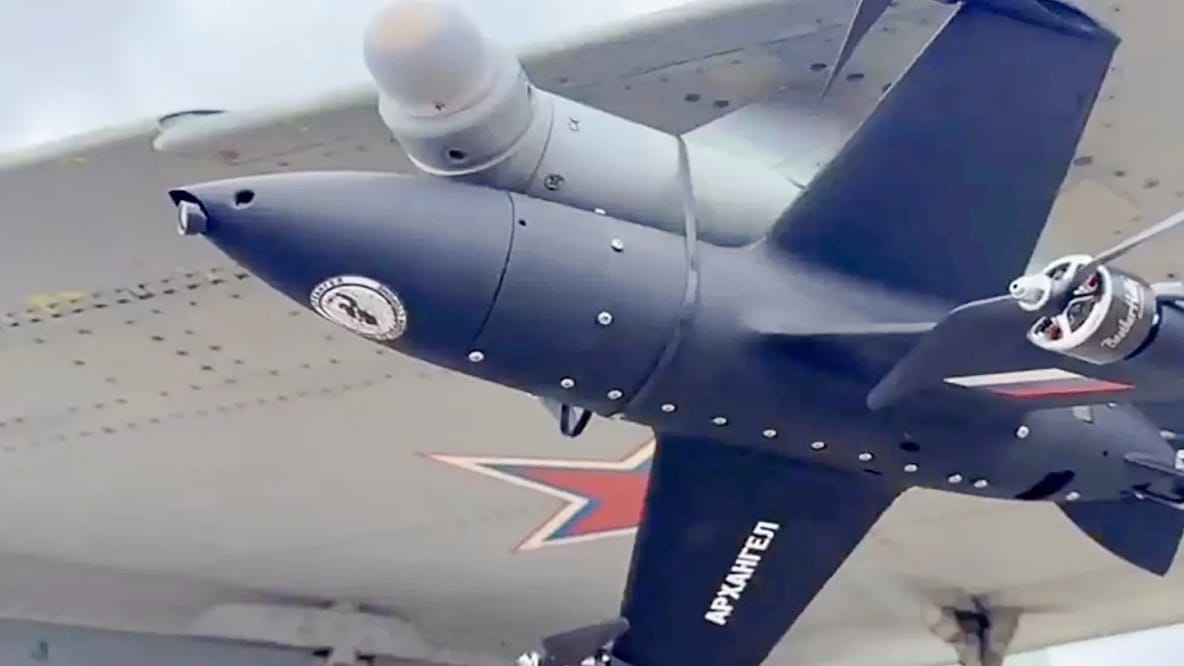
Bizarre footage has emerged from Russia and is circulating on social media showing what’s claimed to be part of an experiment to integrate a counter-uncrewed aerial system (CUAS) interceptor drone on a MiG-29 Fulcrum fighter.
On closer inspection, the quadcopter drone is lashed to the fighter using zip ties and, even if that weren’t the case, the practicality of the solution is extremely questionable — to say the least.
The video was made by Project Archangel, a Russian volunteer group that has dedicated itself to “the creation of UAVs,” mostly of the first-person view (FPV) type.
[embed]https://vimeo.com/1109335816?fl=pl&fe=sh[/embed]
The footage shows one of Archangel’s quadcopter interceptor drones mounted under the outer wing of a Russian Aerospace Forces MiG-29SMT (izdeliye 9.19R). The jury-rigged installation involves the drone being attached to a sensor housing the jet’s radar warning receiver system, held secure there by commercial-type zip ties. Clearly, there is no way for the jet to actually launch the drone with this kind of setup, and clearing a drone for air-launch would require extensive trials, regardless.
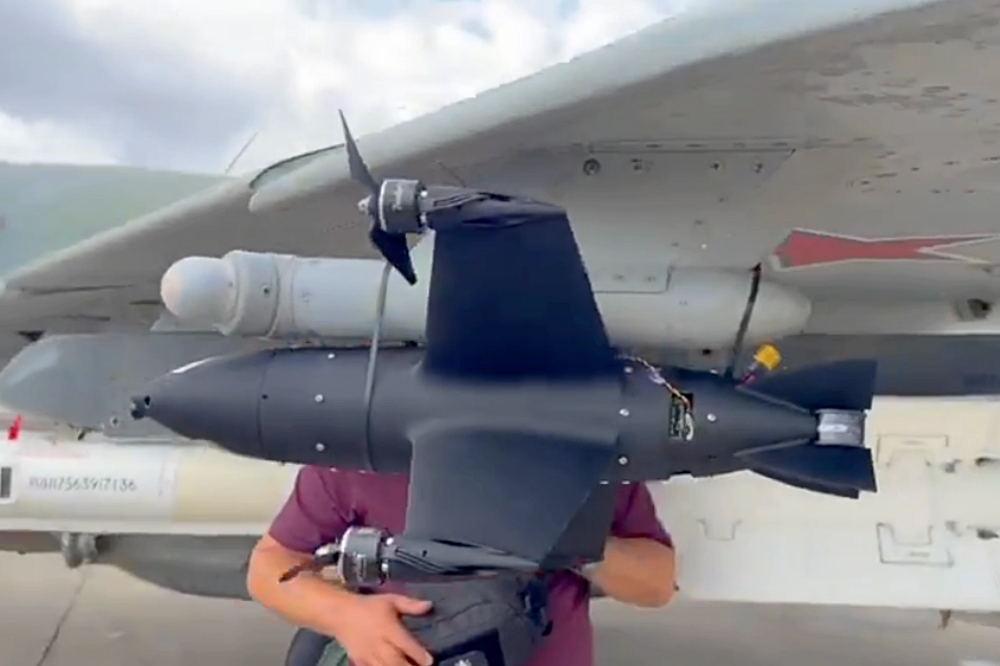
There is nothing to indicate the drone would survive the rigors of high-speed jet flight — especially given that it’s fitted with four vulnerable propellers. In fact, it’s doubtful if the jet would even be able to safely take off with a drone fixed to it in this manner. Then there is the very real possibility that it might interfere with the host aircraft’s self-protection system, which it is attached to.
Otherwise, the video shows a member of the Archangel team sitting in the cockpit of the Fulcrum. It concludes with a takeoff by a Flanker-series fighter, with no evidence that this aircraft is fitted with an interceptor drone.
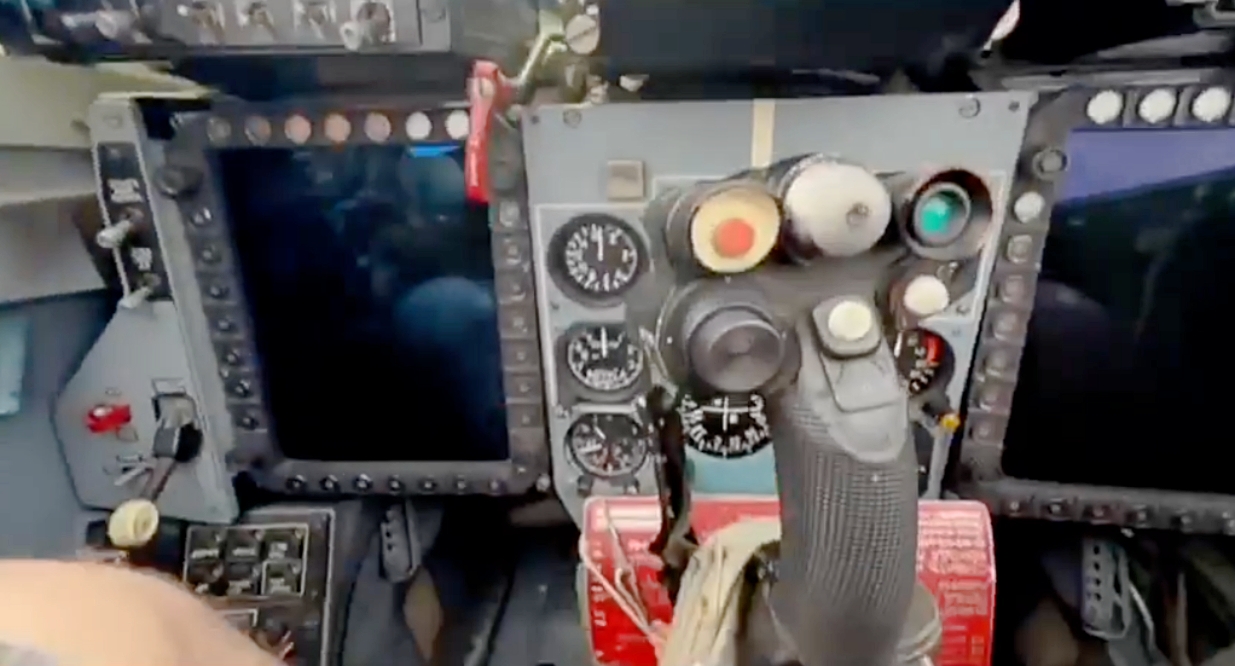
The date and location of the video are not disclosed, but it’s worth noting that the Russian Ministry of Defense ordered a batch of just 14 MiG-29SMT (9.19R) fighters in 2014, making use of uncompleted airframes at Mikoyan’s Moscow factory. They were delivered to the training base at Privolzhsky near Astrakhan and are not known to have seen any combat use in Ukraine.
Source: The War Zone