Inside Russia's Iranian Drone Factory
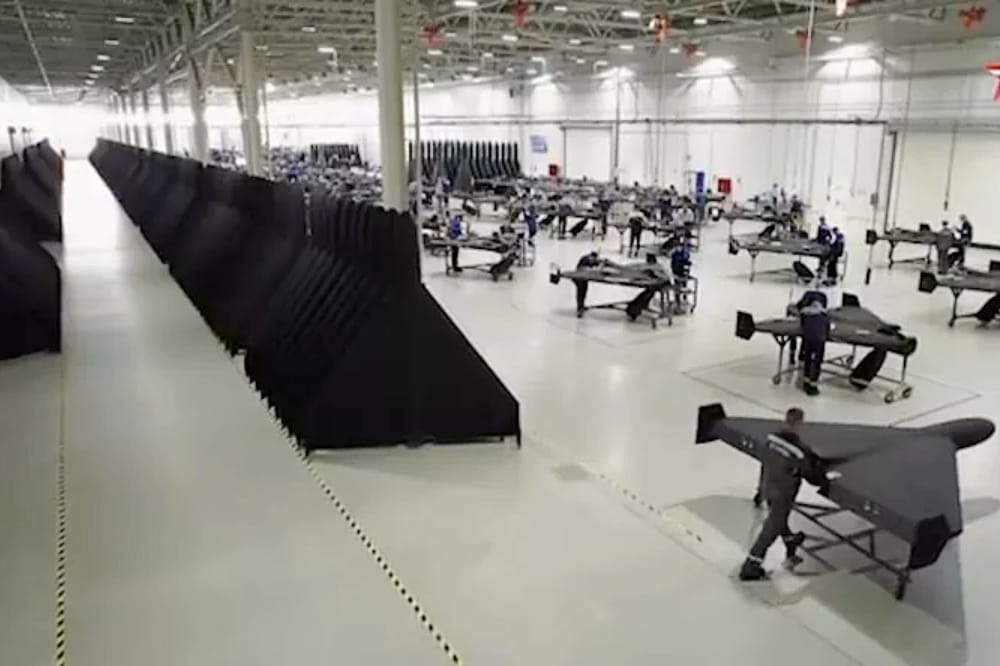
Russian state media has aired footage from a major drone production facility in Yelabuga, Tatarstan, where Moscow is domestically manufacturing Iranian-designed Shahed drones under the name Geran-2.
The video, released by the Ministry of Defense's Zvezda TV channel, offers a detailed view of one of Russia's key drone assembly centers that is helping fuel the country's ongoing war against Ukraine.
Newsweek has reached out to the State Department as well as the foreign ministries of Russia, Ukraine and Iran for comment.
Why It Matters
Russia's shift from importing Iranian drones to mass-producing has marked an escalation in its war strategy. The Geran-2, modeled on Iran's Shahed-136, is cheap, easy to assemble, and effective at swarming Ukrainian defenses, especially at night. As Russia ramps up output, Ukraine's costly Western air defense systems face mounting pressure. Meanwhile, Iran's recent use of similar drones against Israel underscores their broader relevance. Even when intercepted, Shaheds can overwhelm advanced defense networks, reinforcing the logic behind mass deployment.
What to Know
Located near Kazan, the Yelabuga facility has emerged as the centerpiece of Russia's fast-growing drone program. New footage aired on state media shows an expansive assembly line producing thousands of Geran-2 drones each month—long-range, explosive-laden unmanned aerial vehicles (UAVs) based on Iran's Shahed design. These drones have become a core component of Russia's strategy to pressure Ukraine with relentless, low-cost aerial attacks. According to Zvezda TV, President Vladimir Putin has endorsed scaling the Yelabuga model nationwide to increase domestic output and reduce reliance on direct imports from Iran.
Drone Usage
This push aligns with recent trends in Russia's drone usage. According to a new assessment from the Washington-based Institute for the Study of War, Russia's per-night use of Shahed-type drones rose by 31 percent in both June and July. If the current pace continues, it is estimated that Russia could potentially launch up to 2,000 drones in a single night by November 2025; a dramatic increase from the fall of 2024, when roughly 2,000 drones were deployed across an entire month.
Russia and Iran Partnership
The expansion of drone warfare has been underpinned by closer coordination between Moscow and Tehran. In January, Presidents Putin and Masoud Pezeshkian signed a 20-year "Comprehensive Strategic Partnership" treaty in Moscow. The agreement spans 47 articles covering defense, trade, energy, and technology. While it stops short of establishing a formal mutual defense pact, the treaty institutionalizes expanded military-technical cooperation, intelligence sharing, joint exercises, and weapons development.
Shahed Drones in Iran-Israel Conflict
Iran has also employed Shahed drones in its own military operations. During its recent conflict with Israel, Tehran launched more than 100 Shahed-type UAVs in retaliation for Israeli airstrikes on Iranian targets. Although the majority were intercepted before entering Israeli airspace, the attack underscored Iran's growing reliance on drone salvos as a retaliatory tactic and illustrated how its UAV doctrine is increasingly mirrored by Russia's own battlefield strategy.
What People Are Saying
Institute for the Study of War (ISW) "Russia may be able to launch up to 2,000 drones in one night by November 2025, should this current growth trend in drone usage continue."
Israeli military spokesperson: "Most of the drones launched by Iran were intercepted before entering Israeli airspace, demonstrating the effectiveness of our air defense systems."
Source: Newsweek