Hawker Hurricane - the Most Unexpected Plane of WW2
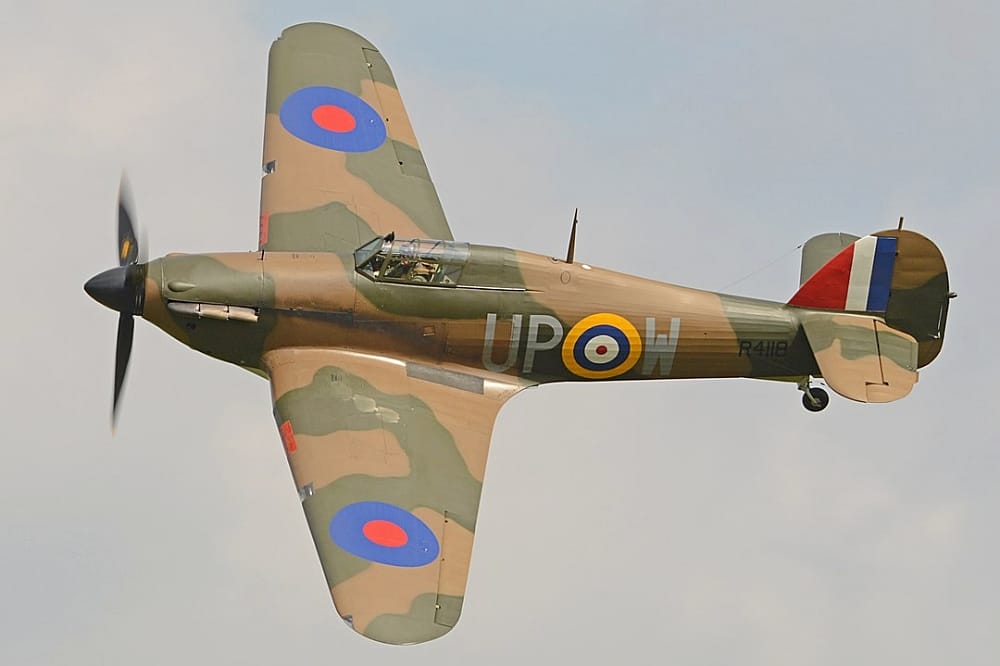
British Flight Sergeant James “Ginger” Lacey stared in horror from his Hawker Hurricane. A German Heinkel He 111 had just bombed Buckingham Palace—smoke still coiling into the sky.
Ginger’s rage surged, and his Hurricane matched his intensity with a deafening roar from its 1,030-horsepower Rolls-Royce Merlin engine. Moments earlier, Ginger had missed the Heinkel before it released its bombs. Now, he swore it would not escape.
The Hurricane entered a dive at 340 miles per hour while unleashing the combined hell of its eight 7.7 millimeter Browning machine guns toward the fleeing German formation.
Ginger clung to his target as the Heinkel’s defensive guns shredded the Hurricane’s wings, punctured its cooling system, and blew oil across its windscreen.
His plane may not have been the fastest or most powerful fighter in the skies over Britain, but Ginger was about to find out why the Hurricane was the most unexpectedly important…
The Hawker Hurricane is a British single-seat fighter aircraft of the 1930s–40s which was designed and predominantly built by Hawker Aircraft Ltd. for service with the Royal Air Force (RAF). It was overshadowed in the public consciousness by the Supermarine Spitfire during the Battle of Britain in 1940, but the Hurricane inflicted 60% of the losses sustained by the Luftwaffe in the campaign, and fought in all the major theatres of the Second World War.
The Hurricane originated from discussions between RAF officials and aircraft designer Sir Sydney Camm about a proposed monoplane derivative of the Hawker Fury biplane in the early 1930s. Despite an institutional preference for biplanes and lack of interest by the Air Ministry, Hawker refined its monoplane proposal, incorporating several innovations which became critical to wartime fighter aircraft, including retractable landing gear and the more powerful Rolls-Royce Merlin engine. The Air Ministry ordered Hawker's Interceptor Monoplane in late 1934, and the prototype Hurricane K5083 performed its maiden flight on 6 November 1935.
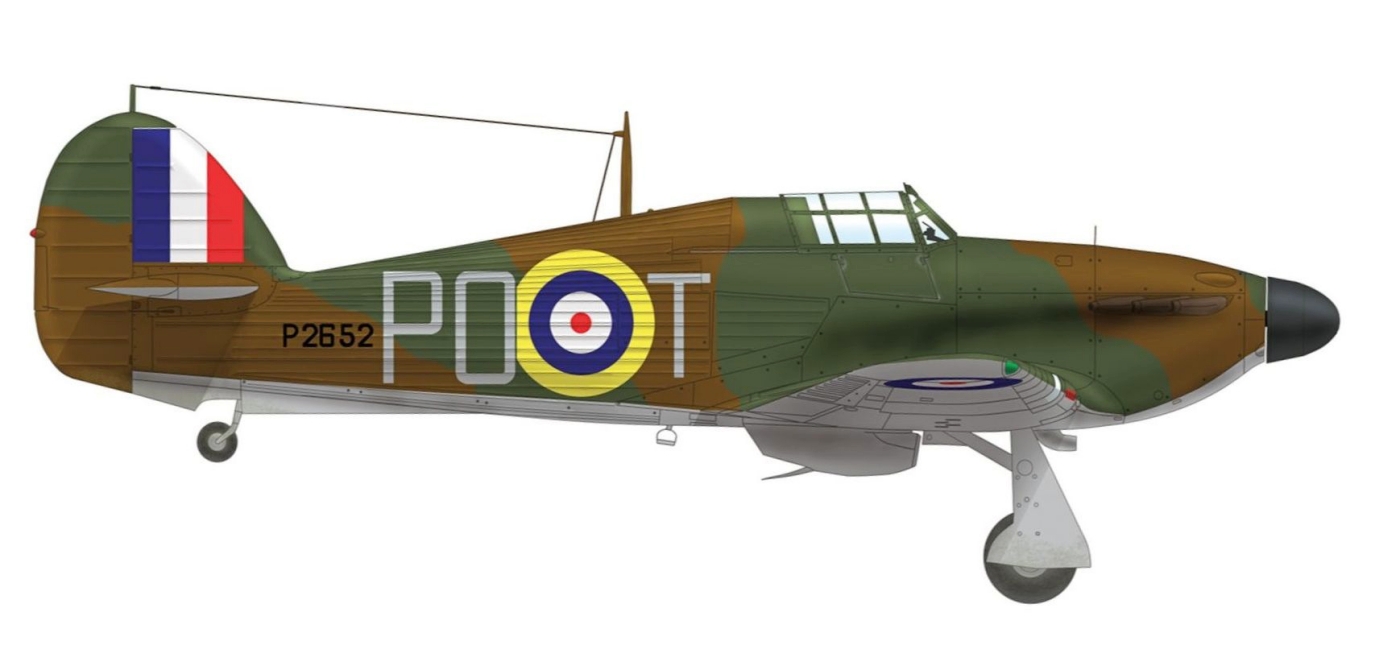
The Hurricane went into production for the Air Ministry in June 1936 and entered squadron service in December 1937. Its manufacture and maintenance were eased by using conventional construction methods so that squadrons could perform many major repairs without external support. The plane was rapidly procured prior to the outbreak of the Second World War; in September 1939, the RAF had 18 Hurricane-equipped squadrons in service. It was relied upon to defend against German aircraft operated by the Luftwaffe, including dogfighting with Messerschmitt Bf 109s in multiple theatres of action.
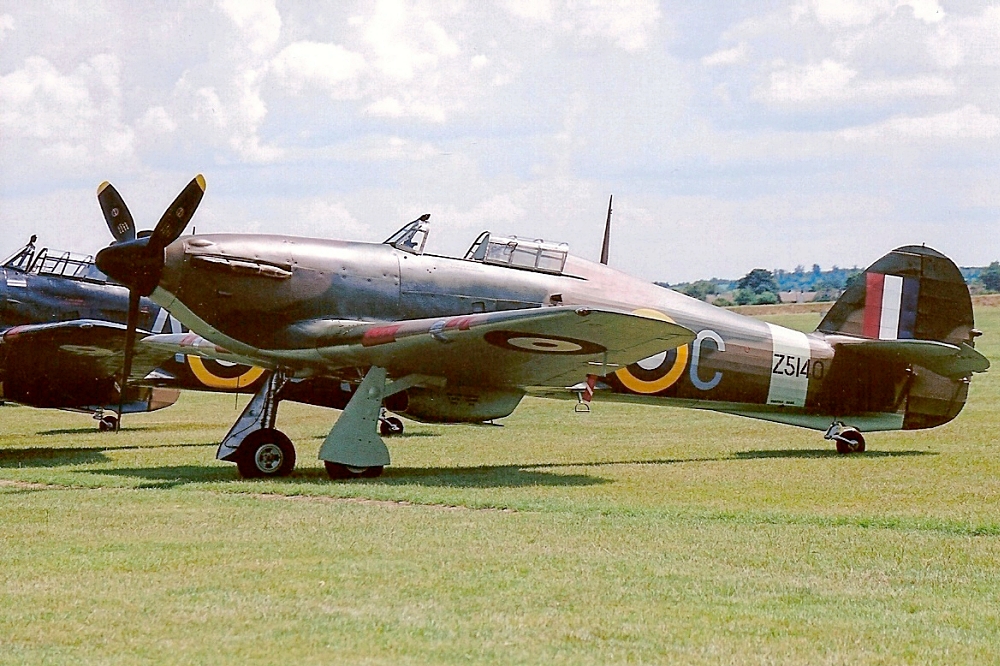
The Hurricane was developed through several versions: bomber interceptors, fighter-bombers, and ground support aircraft as well as fighters. Versions designed for the Royal Navy known as the Sea Hurricane had modifications including an arrestor hook near the tail, enabling operation from ships. Some were converted as catapult-launched convoy escorts. By the end of production in July 1944, 14,487 units had been completed in Britain and Canada, with others built in Belgium and Yugoslavia.
Top Photo: c/n G5-92301. This is the only airworthy Hurricane with a genuine Battle of Britain history. Since 2015 she has lodged with the Shuttleworth Collection and is seen displaying at the 2017 Season Premier Airshow at Old Warden, Bedfordshire, UK. 7th May 2017
Sources: YouTube; Wikipedia