Germany Boosts C-UAS Capabilities with Massive $9 Billion Skyranger 30 Order
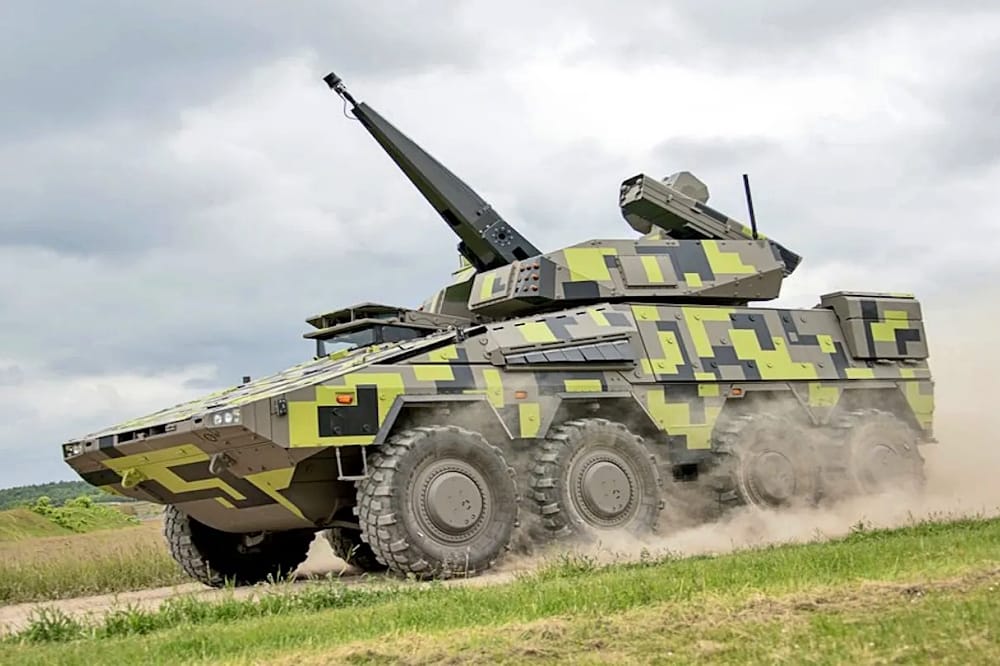
German arms manufacturer Rheinmetall is poised to secure up to $9 billion in a massive contract from the German Armed Forces for its Skyranger 30 anti-aircraft gun system, with deliveries expected by 2035.
The announcement, made by Rheinmetall CEO Armin Papperger during a recent earnings call, signals a significant investment in short-range air defense (SHORAD) capabilities. The new development reflects the growing threat of drone warfare.
A $9 Billion Skyranger 30 Order
The Skyranger 30 order falls under Germany’s Nah- und Nächstbereichsschutz (NNbS) program, which is focused on short- and very short-range air defense.
According to defense sources cited by German outlet Hartpunkt, the deal could involve 500 to 600 Skyranger 30 systems, marking a major step in Germany’s air defense modernization.
The new Skyranger 30 order follows a $695-million contract awarded to Rheinmetall in February 2024 for one prototype and 18 production Skyranger 30 systems, with an option for 30 more.
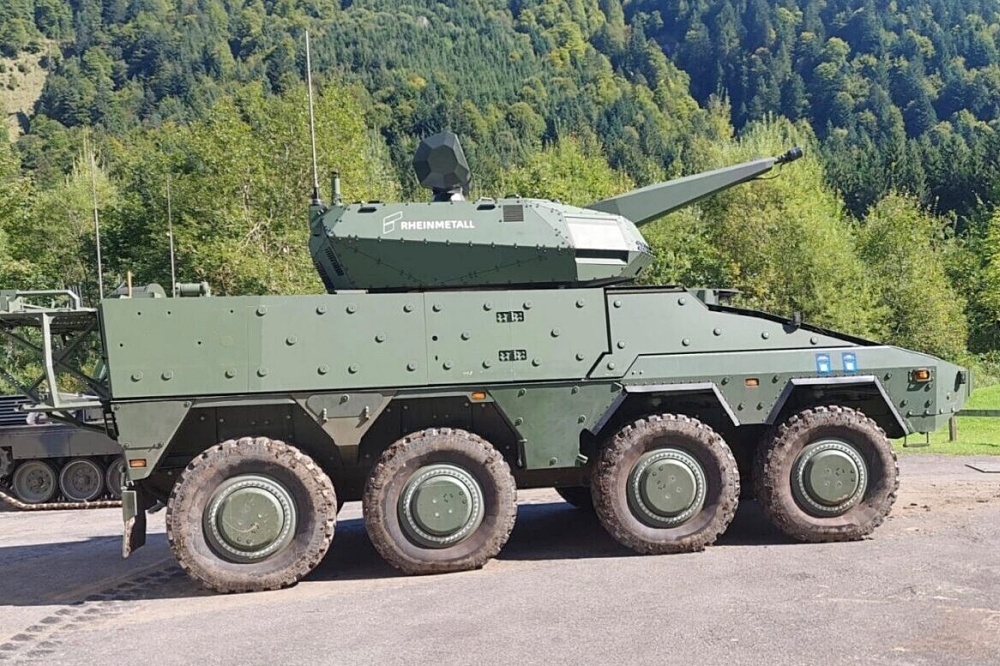
Germany’s Skyranger 30 is integrated into an 8×8 Boxer wheeled armored vehicle. The system features a 30mm x 173 KCE revolver gun and short-range surface-to-air missiles. Germany uses FIM-92 Stinger missiles, which are well-suited to downing drones, cruise missiles, and low-flying aircraft.
The tank’s primary sensor is the Spexer 2000 3D MKIII X-band pulse-Doppler radar developed by German firm Hensoldt. This sensor is particularly effective when it comes to detecting and tracking small drones, as it can detect a target up to 25 miles (40 km) away.
Before Skyranger 30, Germany largely relied on the Gepard tank to meet its SHORAD requirements. According to a report from The War Zone, Skyranger 30 is less armored but offers improved deployability and cost-efficiency.
The Growing Threat of Drone Warfare
Germany retired the Gepard in 2010, though it has recently earned praise for its performance during ongoing conflicts. The Gepard has proven effective against Shahed/Geran-type one-way attack drones in Ukraine.
Drones have become a mainstay of the modern battlefield. In May 2024, Ukrainian military officials claimed that “drones kill more soldiers on both sides than anything else.” Meanwhile, an EU Institute for Security Studies report recently noted that Russia procures 100,000 low-tier drones monthly from multiple sources.
The rise of drone warfare—spanning large-scale conflicts to non-state actors—has prompted nations, including Germany, to reassess their air defense needs.
During a panel on Marine Corps modernization, Lt. Gen. Benjamin Watson, head of the Training and Education Command, described the growing need for these counter-drone systems.
“We may never fight again with air superiority in the way we have traditionally come to appreciate it,” he explained.
Source: Interesting Engineering;