General Dynamics F-111 Aardvark - America’s Ultimate War Machine
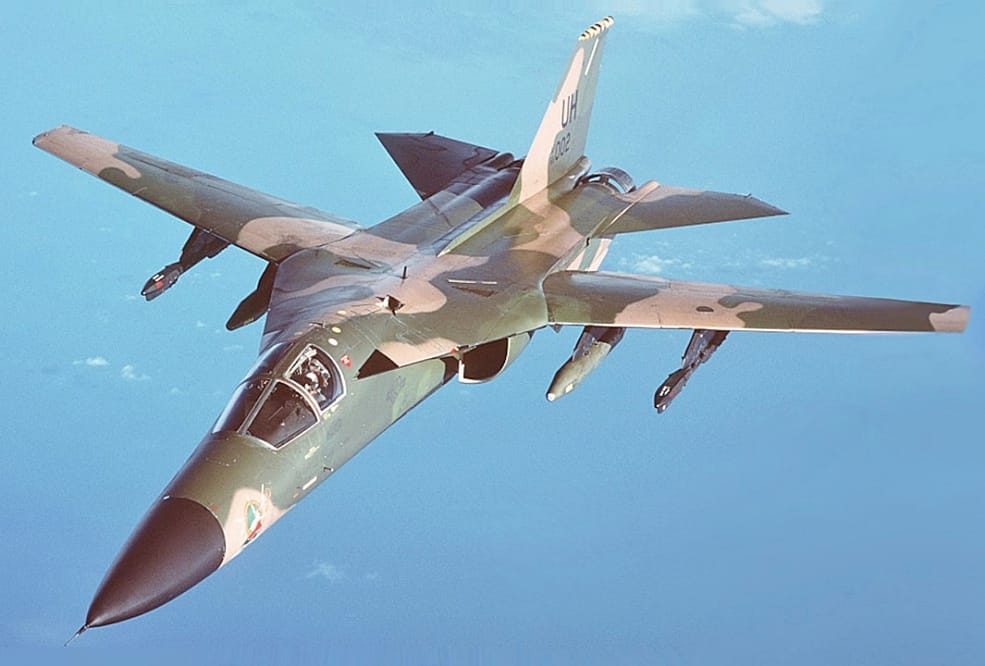
On a US Air Force base, something unimaginable is happening: the Americans are giving a group of Soviet military officials a tour of some of their most dangerous frontline aircraft. With the Cold War as good as over, the Americans proudly show off the technology that helped them win.
But as they begin the tour, the Soviets’ attention is immediately grabbed by one particular aircraft in a distant corner of the hangar. Oblivious to this fixation, the Americans position the tour group beside the majestic F-16 - the most agile combat jet of its generation. But the Soviets couldn’t care less.
Confused by their disinterest, the Americans move to their crown jewel: the mighty F-15, the USAF's undefeated air superiority fighter. But the Soviets won’t stop nudging each other and pointing at the strange-looking aircraft in the corner.
For decades, this was the machine that had fuelled their nightmares. Of all the aircraft in the Western arsenal, this was the one they considered the greatest threat of all: the infamous “Whispering Death”...
The General Dynamics F-111 Aardvark is a retired supersonic, medium-range, fighter-bomber. Production models of the F-111 had roles that included attack (e.g. interdiction), strategic bombing (including nuclear-weapons capabilities), reconnaissance, and electronic warfare. Its name "Aardvark" comes from a long-nosed, insect-eating South African animal.
Developed in the 1960s by General Dynamics under Robert McNamara's TFX Program, the F-111 pioneered variable-sweep wings, afterburning turbofan engines, and automated terrain-following radar for low-level, high-speed flight. Its design influenced later variable-sweep wing aircraft, and some of its advanced features have become commonplace. The F-111 suffered problems during initial development, largely related to the engines. A multirole carrier-based fighter/long-range interception variant intended for the United States Navy, the F-111B, was canceled before production. Several specialized models, such as the FB-111A strategic bomber and the EF-111A electronic warfare aircraft, were also developed.
The F-111 entered service in 1967 with the United States Air Force (USAF). In the meantime, the Australian government had ordered the F-111C, to replace the English Electric Canberra then used by the Royal Australian Air Force (RAAF). The F-111C entered service with the RAAF in 1973.
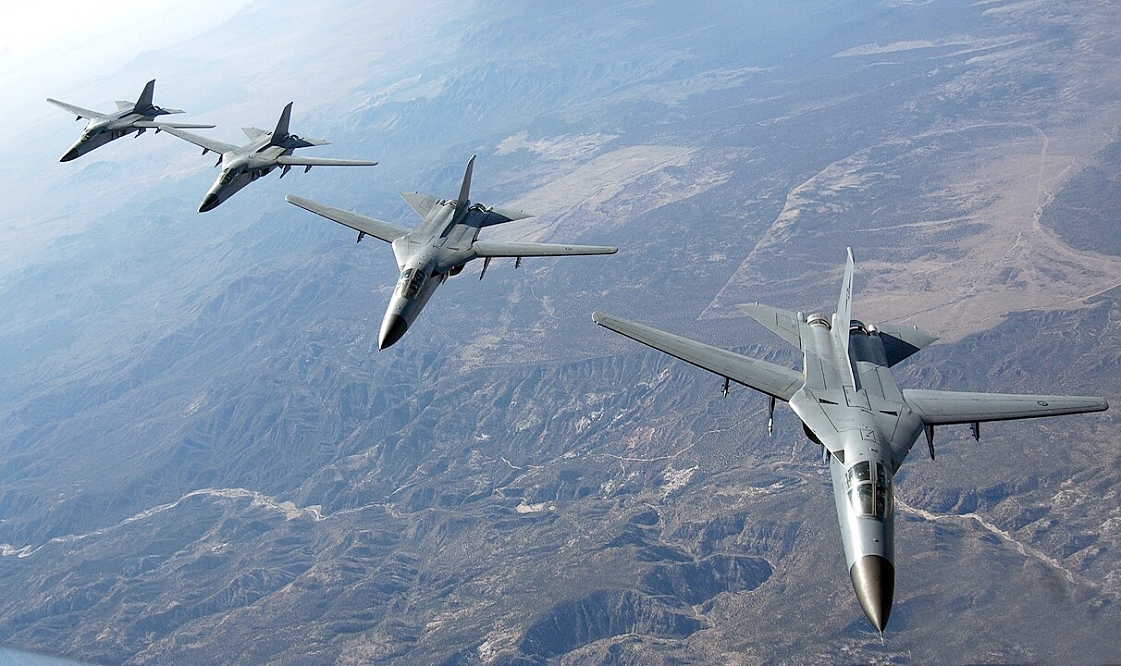
As early as March 1968, the USAF was deploying F-111s into active combat situations; the type saw heavy use during the latter half of the Vietnam War to conduct low-level ground-attack missions, flying in excess of 4,000 combat missions while incurring only six combat losses in the theatre. The F-111s also participated in the Gulf War (Operation Desert Storm) in 1991; the F-111Fs completed 3.2 successful strike missions for every unsuccessful one, better than any other US strike aircraft used in the operation. RAAF F-111s never saw offensive action, but were deployed periodically as a deterrent, such as for the Australian-led International Force East Timor.
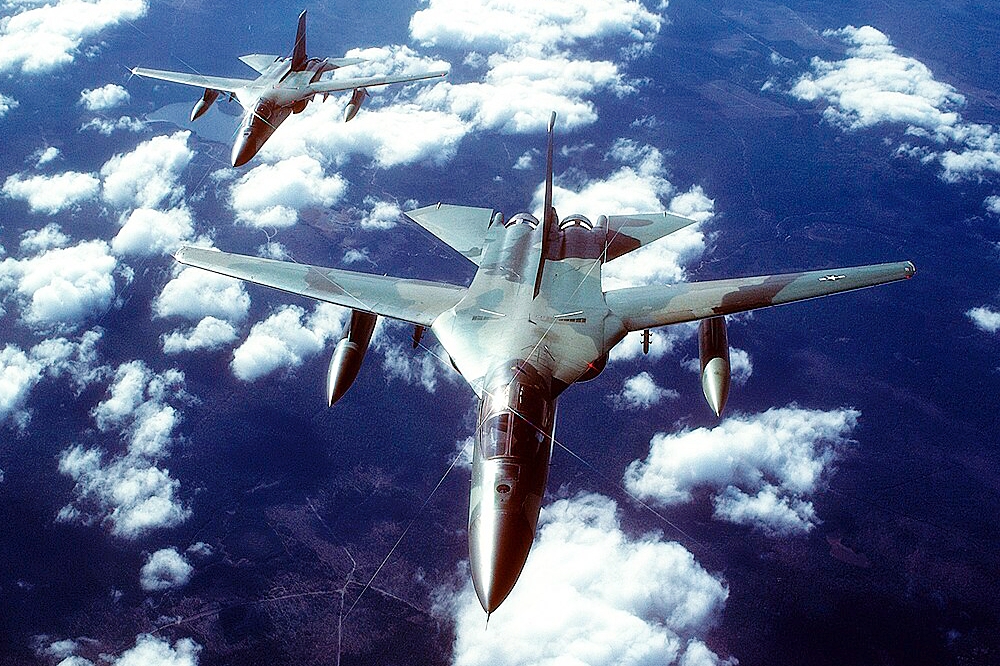
Being relatively expensive to maintain amid post-Cold War budget cuts, the USAF elected to retire its F-111 fleet during the 1990s; the last F-111Fs were withdrawn in 1996, while the remaining EF-111s also departed in 1998. The F-111 was replaced in USAF service by the F-15E Strike Eagle for medium-range precision strike missions, while the supersonic bomber role has been assumed by the B-1B Lancer. The RAAF continued to operate the type until December 2010, when the last F-111C was retired; its role was transitioned to the Boeing F/A-18E/F Super Hornet as an interim measure until the Lockheed Martin F-35 Lightning II became available.
Top Photo: An F-111 flying over the North Sea in 1989
Sources: YouTube; Wikipedia