GE Aerospace Pursues Small Turbofan Development for CCA
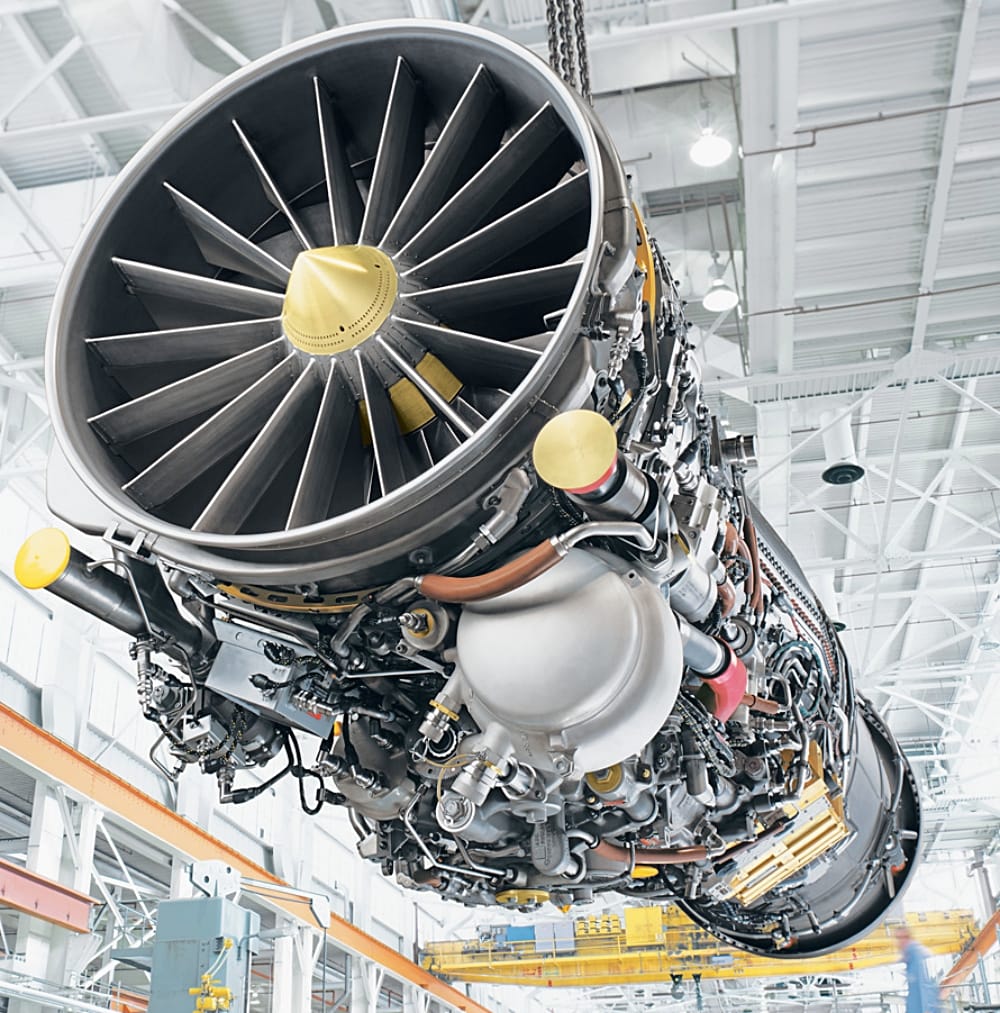
- GE Aerospace is developing a small turbofan engine for midsized Collaborative Combat Aircraft (CCA) that are now in high demand by militaries worldwide, Chief Financial Officer Rahul Ghai said on November. 11.
The new engine would fill a gap between the 800-1,500-lb.-thrust family of engines now being developed under a GE joint venture with Kratos Turbine Technologies (KTT) and GE’s own portfolio of large turbofans for the commercial aircraft market, which can be adapted for military applications.
After mentioning the joint venture and commercial engine derivatives, Ghai told the Baird Global Industrial Conference that GE is working on another engine development.
“And then we are working in the middle range,” Ghai said. “We’re developing our own engine that goes from like 1,500- to 5,000-lb. thrust.”
GE is currently developing the GEK800 and GE-K1500 turbofans for cruise missiles and CCAs in a joint venture with Kratos Turbine Technologies, seeking to field a family of engines between around 800- 1,500-lb.thrust.
But the new engine project is independent of the joint venture and solely a GE program, a GE spokeswoman tells Aviation Week.
The joint venture between GE and KTT covers a thrust range up to 3,000-lb. thrust, the spokesperson added.
Ghai cited last week’s call by Defense Secretary Pete Hegseth for contractors to invest in new products that the military needs and deliver them as rapidly as possible.
“We are keen to kind of invest on our own, which is what Secretary Hegseth said last week, is that his hope that the industry is investing,” Ghai said. “That is what we are doing. We are ensuring that we have off-the-shelf products [and so], depending on whichever way both U.S. military or international armed forces want to go, we have an engine on that.”
The targeted thrust bracket puts GE in competition with Williams International’s FJ33 and FJ44 series of turbofans, as well as Pratt & Whitney’s PW500, PW600 and PW300-series engines.
Williams engines have proven popular so far in the nascent market for CCA prototypes in the U.S. and Australian markets. The FJ44-4A powers the Anduril YFQ-44, Boeing MQ-28 Ghost Bat and the General Atomics Aeronautical Systems Inc. YFQ-42. The FJ33 engine also has powered the first prototypes of the Kratos XQ-58 Valkyrie.
During a media event at the company’s headquarters in Evandale, Ohio, on June 2, GE executives hinted at opportunities for expanding the joint venture with KTT beyond the GEK1500 size.
“There is more scalability opportunity in this particular architecture. But right now we’ve got two engines under development and continuing to move forward,”
said Mark Rettig, GE’s general manager for new and derivative military products, said at the June 2 event.
Rettig’s counterpart, KTT President Stacey Rock, agreed.
“Our longer-term road map, which we’re not quite ready to share yet, includes expanding this ability to generate small engines at low cost into a broader range of thrust classes as well, so we can hopefully address where we think the sweet spots are going to be in the market,” Rock said.
Source: Aviation Week