Fiber Optic FPV Drones Featured in US Navy Electronic Warfare Exercise
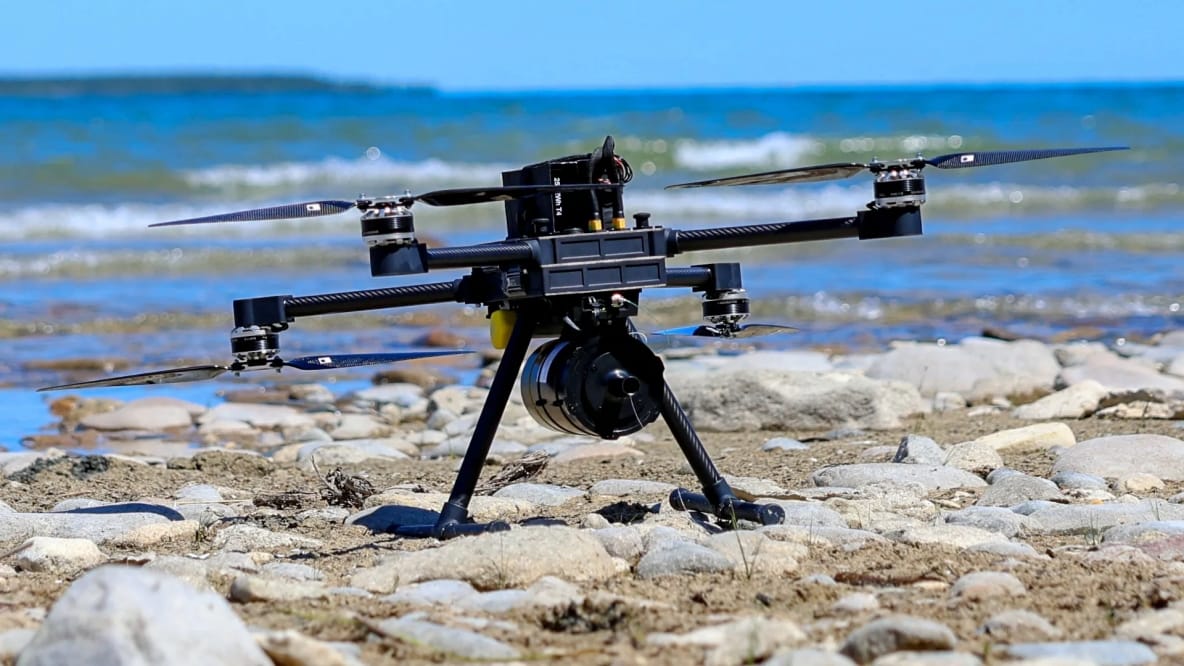
A first-person view (FPV) type quadcopter drone controlled via a fiber optic cable was among the participants in a U.S. Navy-led exercise earlier this year focused on exploring new distributed electronic warfare capabilities.
Fiber optic kamikaze FPVs, which Russia first began using in Ukraine last year and have now become a fixture on both sides of that conflict, are notably immune to jamming and many other forms of electronic warfare.
The Michigan National Guard released pictures of the fiber optic FPV and other uncrewed systems that took part in Exercise Silent Swarm 25. The event itself took place back in July at the Alpena Combat Readiness Training Center (CRTC) in Alpena, Michigan. The Navy’s Naval Surface Warfare Center, Crane Division (NSWC Crane) has been holding Silent Swarm events annually at the Alpena CRTC in cooperation with the Michigan National Guard and other elements of the U.S. military since 2022.
“The hypothesis for Silent Swarm is to identify those systems that can outmatch and have an impact in the most challenging environments,” Rob Gamberg, project lead for Silent Swarm at Naval Surface Warfare Center, Crane Division (NSWC Crane), also said in a statement. “We are learning from each other with every iteration, which is exactly what we hope to see.”
How many total fiber optic FPVs took part in Silent Swarm 25, and whether they were used as ‘attackers’ or ‘defenders,’ or both, is unclear. However, their inclusion in the exercise at all makes good sense. As noted, Russia first began using FPVs with this kind of control method last year, primarily in response to growing electronic warfare threats.
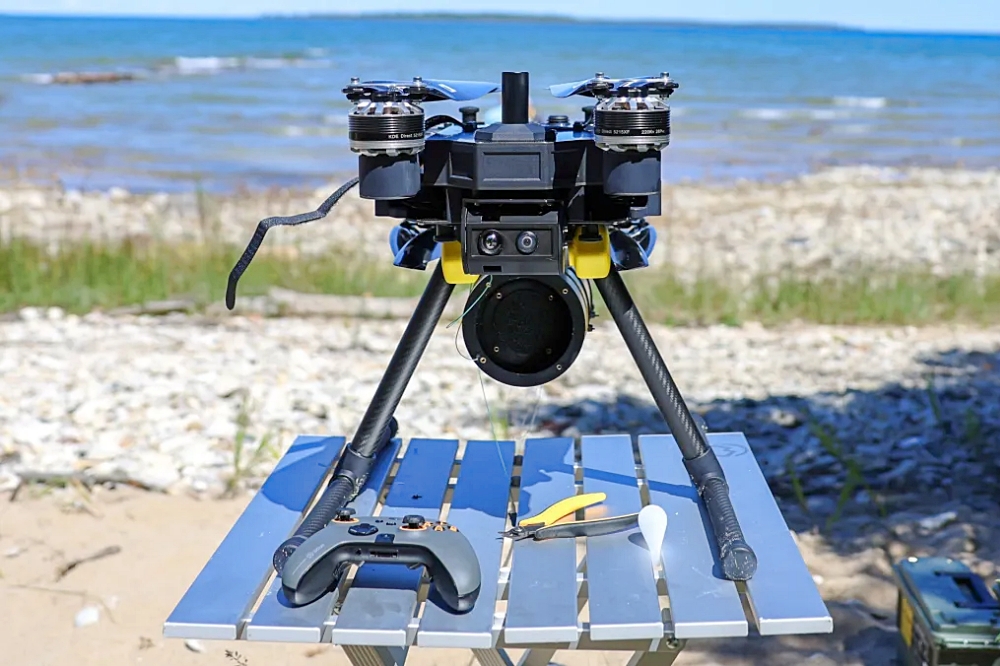
Fiber optic control offers additional benefits, including a more reliable, secure, and higher-speed link with lower latency (key for FPV operation) that is also immune to cyber intrusion. The hard link helps mitigate the effects of terrain that can interfere with radio control, something that is also a factor for operating drones inside buildings. Fiber optic drones also do not pump out radio frequency emissions that passive sensors can detect, making them harder to spot. The control scheme is not without its own disadvantages, including the potential for the cable to become tangled on or severed by various obstacles. The drones are also not invulnerable, including to laser and microwave directed energy weapons.
Still, Ukrainian forces followed suit in adopting fiber optic FPVs for the same general reasons. Fiber optic cables have also since emerged as a means to control small uncrewed ground vehicles.
“I would like to say that at the moment, Russian electronic warfare is undoubtedly one of the leading in the world,” he added. “So I do not want to underestimate the enemy. We need to accept, to acknowledge, the level of the enemy.”
The use of fiber optic FPV in Ukraine has become so commonplace that videos have begun to emerge showing dense, tangled webs of leftover cables littered on the ground.
There are also signs now that fiber optic FPVs may be starting to proliferate outside of Ukraine.
“We are so far behind,” U.S. Army Lt. Gen. Joseph Ryan, the service’s deputy chief of staff for operations, plans, and training, said in March about the U.S. military’s response to the impact fiber optic drones are already having. Ryan’s comments came during a panel discussion at an Association of the U.S. Army (AUSA) conference.
Source: The War Zone