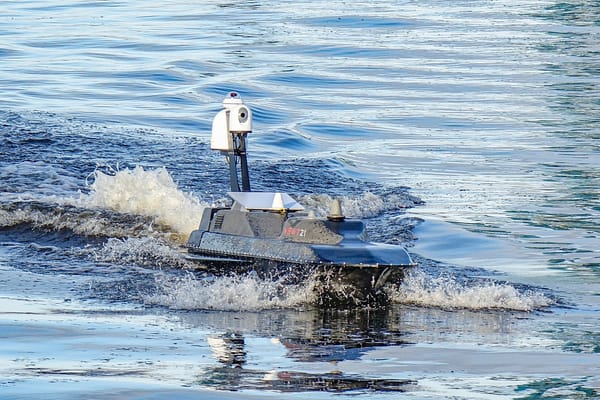
DIU to Fund Magnetic Navigation Tech
DIU expects to fund prototypes of multiple airborne platforms for magnetic navigation, including one that scans the ocean surface at 2,000 ft.
To circumvent ever-more pervasive jamming of GPS satellite signals, the Pentagon’s Defense Innovation Unit (DUI) is launching a program to mature magnetic navigation (magnav) systems.
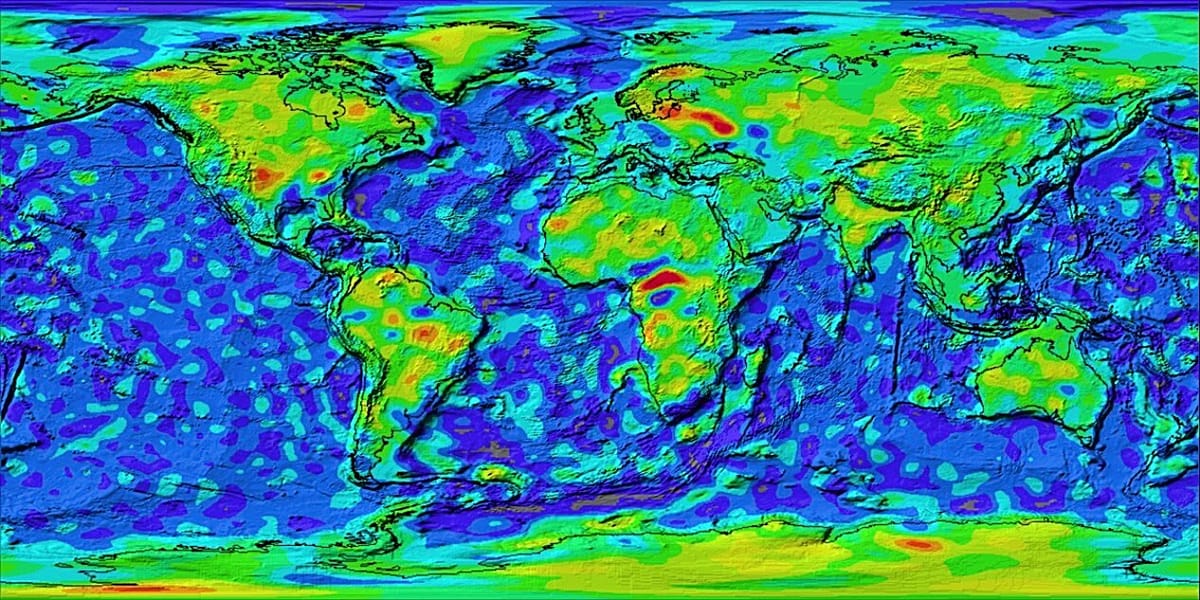
Such systems use instruments called magnetometers — essentially highly sensitive magnets — that detect changes in the Earth’s terrestrial magnetic field created by magnetic rocks in the outer crust. Magnav systems hold “the promise of resilient, unjammable navigation,” particularly over the oceans, according to a DIU solicitation to industry just issued.
Magnav also is a passive technology that does not broadcast radio frequency (RF) signals that can be detected and thus attacked by adversaries, unlike space-bases systems like GPS and China’s Beidou constellation.
While magnav tech is well understood and widely used by geophysicists, the problem blocking its widespread use is a lack of highly accurate and localized “maps” that match the strength of the planet’s geomagnetic field to specific coordinates, the DIU solicitation explains. This gap is particularly troublesome over the oceans and for ships sailing beyond the sight of land.
“The broad-scale utility of magnav is primarily limited by the availability and accuracy of reference data in specific regions of interest. Current commercial airborne platforms for magnetic data collection are optimized for geological surveys over land, and as a result do not have sufficient range to survey regions of open ocean,” DIU elaborates.
According to the solicitation, it is “essential” to modify existing airborne platforms currently used in geological surveys to undertake over ocean mapping — but also to reduce the costs of doing so “through the development of techniques that can scale rapidly.”
Further, DIU notes that “some regions” may require “more attritable aircraft due to the likelihood of loss, necessitating the need for both highly-accurate and low-cost systems.”
Thus, DIU’s new Geomagnetic Airborne Unmanned Survey System (GAUSS) program is looking to industry for prototypes of “magnetic data collection platforms that address warfighter needs for precision navigation capabilities beyond GPS.”
The solicitation says the program will be “a multi-year, multi-phase initiative” designed to demonstrate “mature technology” for magnetic mapping that can enable magnav across “trans-oceanic distances.” It did not, however, divulge the planned budget and duration of the program, and DIU did not respond by press time to an inquiry.
Compelling solutions will address the following:
- Support the rapid integration of COTS/GOTS magnetometers onto platforms, with validation that the magnetometer has limited platform interference
- Enable the deployment of subsequent copies of the platform with limited non-recurring engineering costs
- Ensure accurate navigation for collections, likely including resilient backup solutions such as mGNSS
- Survey platforms should be optimized for efficient collections through the following
- Enable rapid redeployment of the platform
- Ensure collections over a variety of over-water domains
- Validate rapid techniques for data processing to navigable products
Given the likelihood that no one aircraft can provide all the data needed, DIU expects to fund multiple types of aircraft and magnav systems, providing an example of at least two different types of aircraft: one capable of flying at about 30,000 feet and another scanning the ocean surface at about 2,000 feet.
Further, the solicitation notes that DIU is additionally interested in “novel” techniques that can correct for the day/night fluctuations of the magnetic field over the open ocean, such as using data from space weather monitoring systems and/or “loitering diurnal monitoring assets.”
Industry responses are due by Jan. 22.
Sources: DIU; Breaking Defense