De Havilland Mosquito - Plywood Bomber that the Luftwaffe Couldn't Catch
September 19th, 1942. Oberleutnant Wilhelm Johnen pushes his Messerschmitt Bf 109G to its absolute limit, engine screaming at maximum power, trying desperately to catch the British bomber ahead. But the wooden aircraft just pulls away, effortlessly maintaining a speed that shouldn't be possible.
This is the moment German fighter pilots realized they were facing something they had no answer for—the de Havilland Mosquito, a bomber built from plywood that could outrun every fighter the Luftwaffe could throw at it.
What followed was six years of humiliation. Hermann Göring formed specialized units to hunt Mosquitoes—they failed. German engineers rushed high-altitude fighters into development—they arrived too late. Even the Me 262 jet couldn't catch them reliably.
This is the story of how a wooden bomber mocked by German intelligence as "English furniture" became untouchable, how it interrupted Göring's radio speech by flying over Berlin in broad daylight, and how it proved that sometimes the greatest weapon isn't armour or guns—it's speed so absolute your enemy simply cannot reach you.
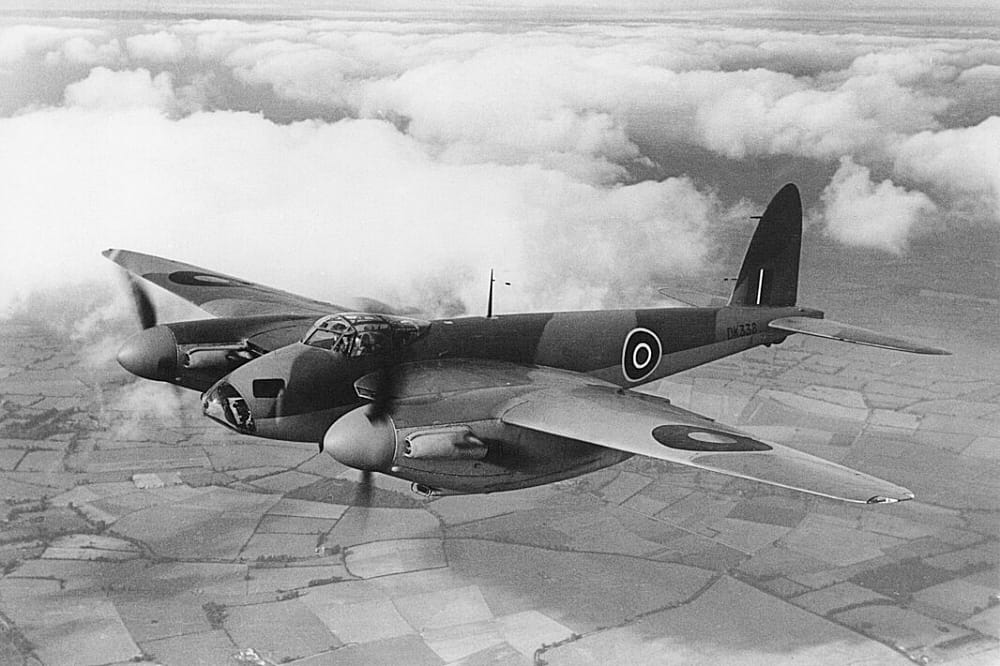
The de Havilland DH.98 Mosquito is a British twin-engined, multirole combat aircraft, introduced during the Second World War. Unusual in that its airframe was constructed mostly of wood, it was nicknamed the "Wooden Wonder", or "Mossie". In 1941, it was one of the fastest operational aircraft in the world.
Originally conceived as an unarmed fast bomber, the Mosquito's use evolved during the war into many roles, including low- to medium-altitude daytime tactical bomber, high-altitude night bomber, pathfinder, day or night fighter, fighter-bomber, intruder, maritime strike, and photo-reconnaissance aircraft. It was also used by the British Overseas Airways Corporation as a fast transport to carry small, high-value cargo to and from neutral countries through enemy-controlled airspace. The crew of two, pilot and navigator, sat side by side. A single passenger could ride in the aircraft's bomb bay when necessary.
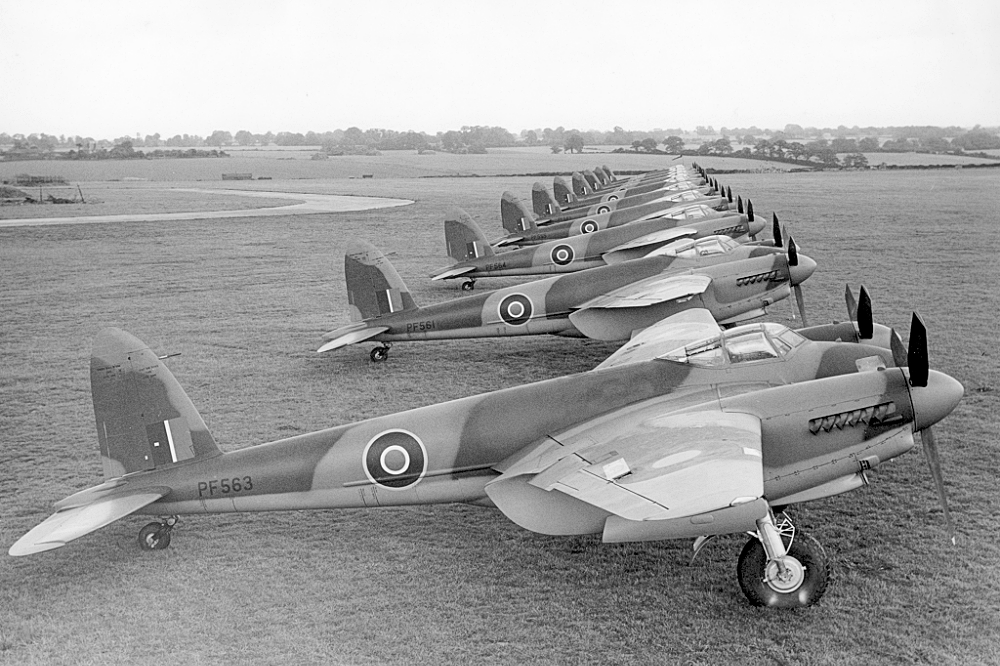
The Mosquito FB Mk. VI was often flown in special raids, such as Operation Jericho (an attack on Amiens Prison in early 1944), and precision attacks against military intelligence, security, and police facilities (such as Gestapo headquarters). On 30 January 1943, the 10th anniversary of Hitler being made chancellor and the Nazis gaining power, a morning Mosquito attack knocked out the main Berlin broadcasting station while Hermann Göring was speaking, taking his speech off the air.
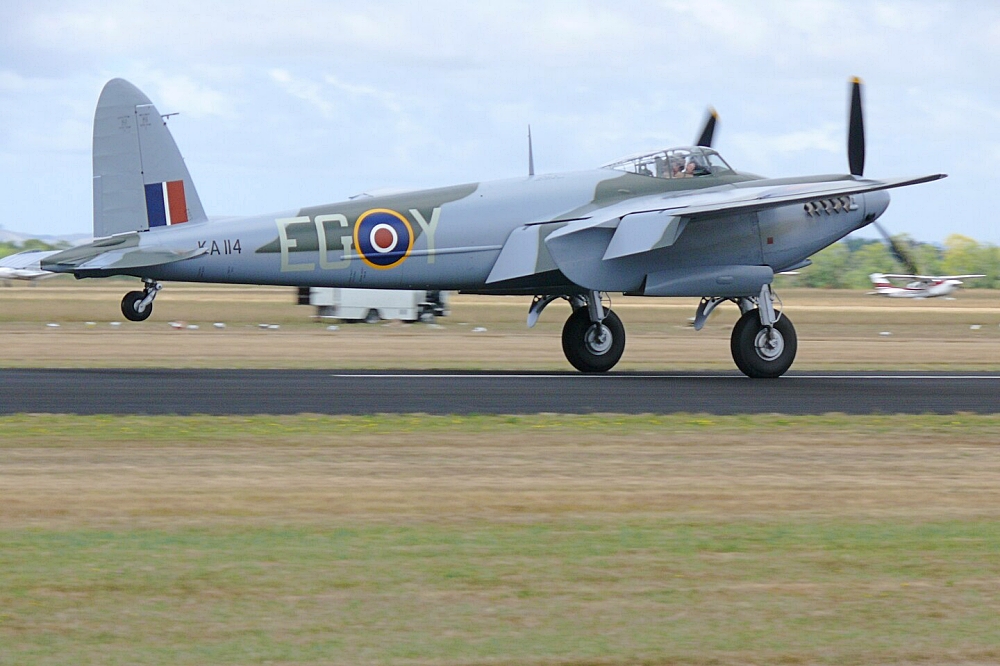
The Mosquito flew with the Royal Air Force (RAF) and other air forces in the European, Mediterranean, and Italian theatres. The Mosquito was also operated by the RAF in the Southeast Asian theatre and by the Royal Australian Air Force based in the Moluccas and Borneo during the Pacific War. During the 1950s, the RAF replaced the Mosquito with the jet-powered English Electric Canberra.
Top Photo: Air-to-air photograph of a De Havilland DH.98 Mosquito B Mk IV Series 2 bomber with No. 105 Squadron of the Royal Air Force in flight
Sources: YouTube; Wikipedia