Coyote Loitering Drone Interceptors Have Arrived on US Navy Destroyers
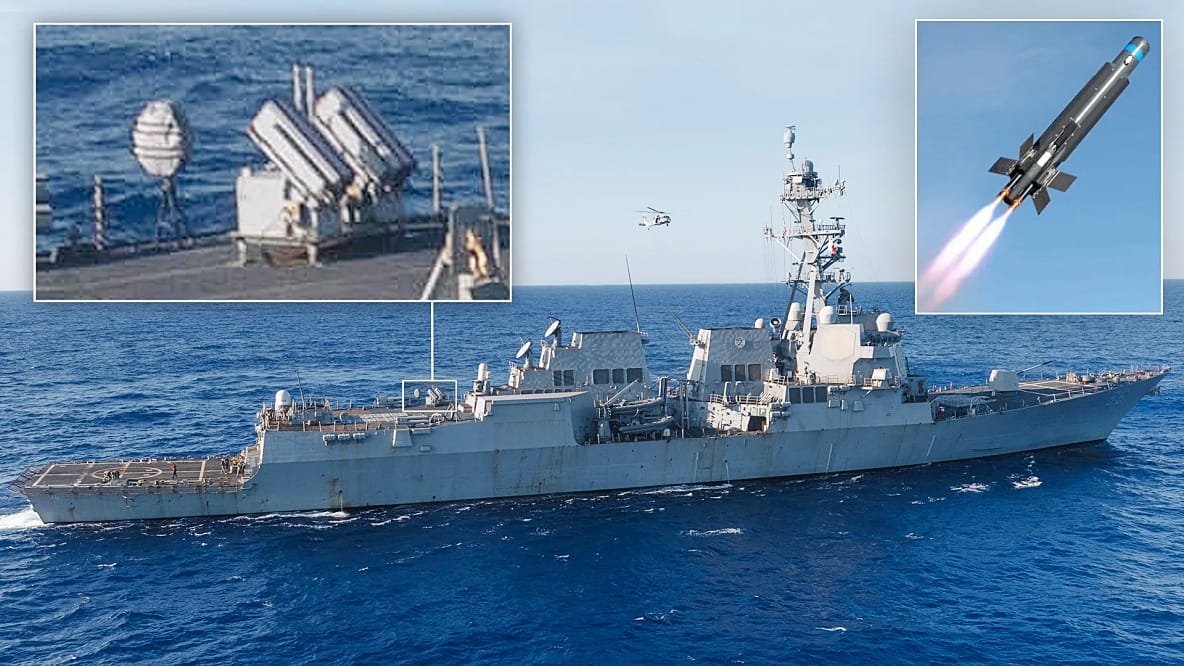
A recently released picture of the Arleigh Burke class destroyer USS Bainbridge offers a good look at new launchers for Coyote counter-drone interceptors installed on the ship. Earlier this year, the U.S. Navy announced that destroyers assigned to escort the supercarrier USS Gerald R. Ford would be armed with Raytheon Coyote and/or Anduril Roadrunner-M counter-drone systems.
In addition to being lower-cost than traditional surface-to-air missiles, Coyote and Roadrunner-M have loitering capabilities that allow them to be more dynamically employed against incoming uncrewed threats.
The Navy released the picture of Bainbridge sailing in the Ionian Sea between Italy and Greece over the weekend, but it was taken on July 27, 2025. It is one of three Arleigh Burke class destroyers currently assigned to the Gerald R. Ford Carrier Strike Group, the others being USS Winston S. Churchill and USS Mitscher. The Winston S. Churchill is serving as the strike group’s air defense commander, a role that certain Arleigh Burkes have increasingly been taking over from a dwindling fleet of aging Ticonderoga class cruisers.
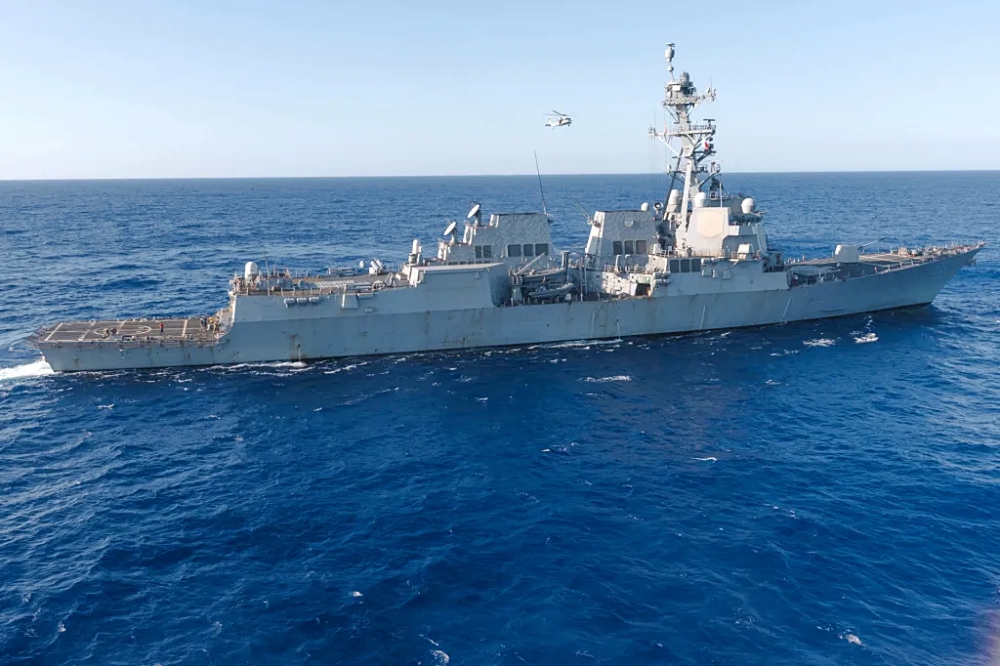
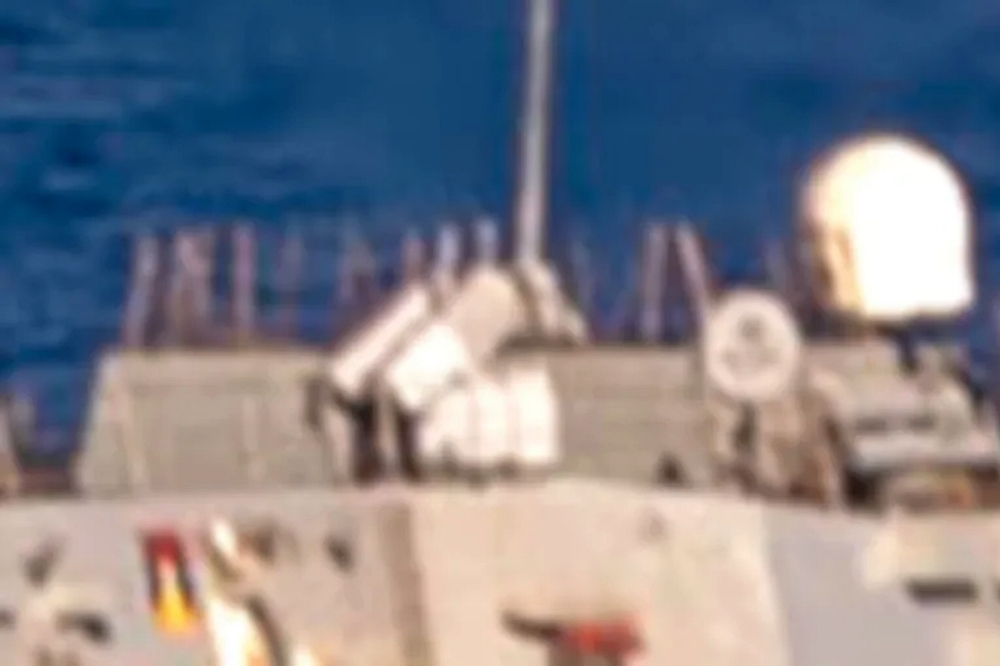
The new counter-drone interceptor launchers are installed on the port side of Bainbridge‘s aft superstructure near the ship’s rear Mk 41 Vertical Launch System (VLS) array.
A further review of other pictures the Navy has previously released of the Gerald R. Ford Carrier Strike Group since its current deployment began in June shows the same launcher installation onboard the Winston S. Churchill. Whether or not it is present on the Mitscher is unclear from the imagery available now. Mitscher is notably an older Flight I Arleigh Burke, while Bainbridge and Winston S. Churchill are both newer Flight IIA sub variants, but whether this has any bearing on the fielding of the new counter-drone capabilities is unknown.
All Arleigh Burke class destroyers feature Mk 41 VLS arrays, but with differing numbers of cells depending on the subvariant. These can be loaded with a variety of surface-to-air and surface-to-surface missiles, including Standard Missile (SM) series, Evolved Sea Sparrow Missiles (ESSM), and Tomahawk types. Some versions have additional launchers for Harpoon or Naval Strike Missile (NSM) anti-ship cruise missiles.
Depending on the particular version, Arleigh Burkes have RIM-116 Rolling Airframe Missile (RAM) launchers or 20mm Vulcan cannon-armed Mk 15 Phalanx Close-in Weapon Systems (CIWS), or both in some cases, for close-in defense against aerial threats, including drones.
The Navy is now moving to replace the Phalanxes on all of its destroyers with RAM launchers. The 5-inch main gun in a turret on the bow of each of the destroyers can also be employed against aerial, as well as surface targets.
Source: The War Zone