Chinese Engines Shipped as ‘Cooling Units’ Power Russian Drones Used in Ukraine
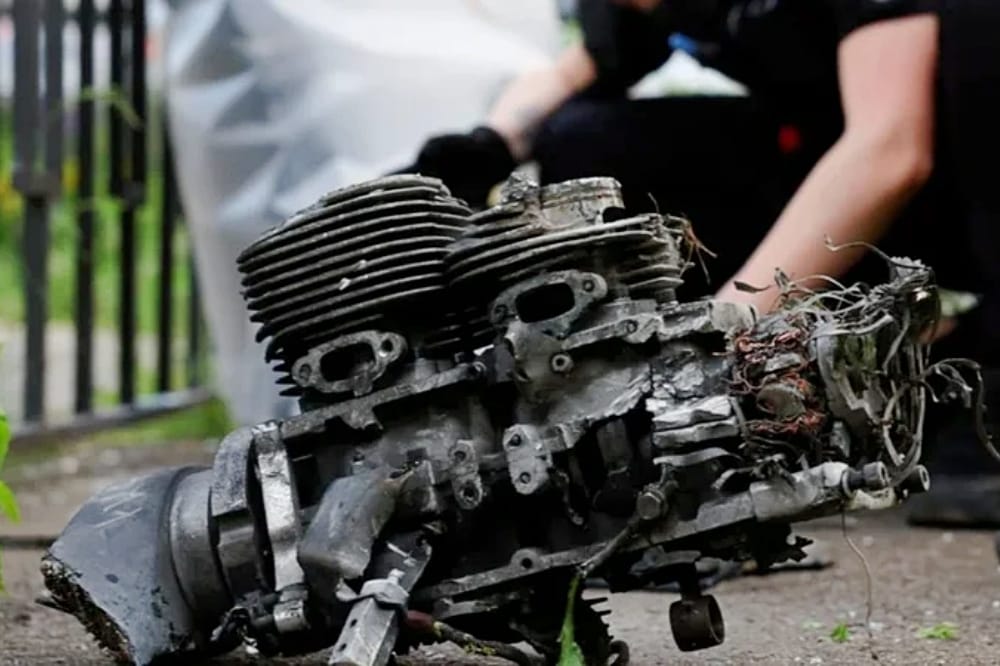
Chinese-made engines are being covertly shipped via front companies to a state-owned drone manufacturer in Russia, labeled as 'industrial refrigeration units' to avoid detection in the wake of Western sanctions, according to three European security officials and documents reviewed by Reuters.
The shipments have allowed Russian weapons-maker IEMZ Kupol to increase its production of the Garpiya-A1 attack drone, despite the U.S. and E.U. sanctions imposed in October designed to disrupt its supply chain, according to the sources and documents, which included contracts, invoices and customs paperwork.
An internal Kupol document, reviewed by Reuters, showed it signed a contract with the Russian defense ministry to produce more than 6,000 Garpiya this year, up from 2,000 in 2024. The document stated that more than 1,500 drones had already been delivered by April.
The long-range drone is being deployed to attack civilian and military targets deep within Ukrainian territory, with around 500 being used by Russia per month, the Ukrainian military intelligence agency said in a statement to Reuters.
The European security officials asked that neither they nor their organization be identified due to the sensitivity of the information. They also requested some specific details in the documents be withheld, such as their dates and the cost of contracts.
In September, Reuters reported that Kupol was producing the Garpiya using Chinese technology, including L550E engines made by Xiamen Limbach Aviation Engine Co. A month after the Reuters’ report, the European Union and the U.S. sanctioned several companies involved in producing the drones, including Xiamen.
In the wake of the sanctions, a new Chinese firm called Beijing Xichao International Technology and Trade has started supplying the L550E engines to Kupol, according to invoices, a Kupol internal letter and transportation documents reviewed by Reuters.
The increase in production of Garpiya as well as the new intermediaries supplying parts for the drones are reported by Reuters for the first time.
The news agency could not determine how Xichao obtained the engines from the maker Xiamen Limbach. Xiamen Limbach did not respond to a request for comment and Reuters was unable to reach Xichao.
IEMZ Kupol, Russia’s trade and industry ministry and the defense ministry also did not respond to a request for comment.
In a statement to Reuters, China’s foreign ministry said it was unaware of the export of parts for the Garpiya and it has controlled foreign sales of dual-use goods in line with China’s own laws and international obligations.
“China has always opposed unilateral sanctions that lack basis in international law and are not authorized by the U.N. Security Council,” the statement said.
The European Commission did not immediately respond to a request for comment.
Both the U.S. and E.U. have repeatedly imposed sanctions on companies in third-party countries, including China, alleged to have provided dual-use technology to Russia. Kupol has been sanctioned since December 2022 by the EU and December 2023 by the U.S. for its involvement in Russia’s defense sector.
Source: Insurance Journal