Chinese Engineers Design Missile-Dodging Drones that Survive 87% of Attacks
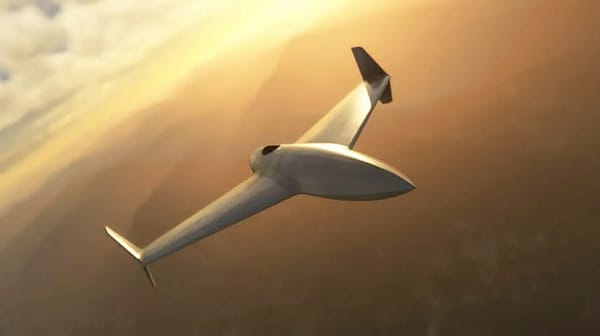
A team of aerospace engineers from China has proposed a new evasive maneuvering technology that would allow combat drones to increase their survivability rate to almost 90 percent.
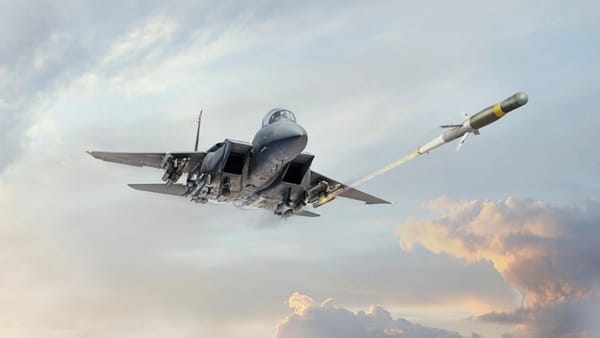
The concept involves fitting lightweight, side-mounted rocket booster to drones. This would allow them to perform high-speed evasive maneuvers, allowing them to avoid air defense missiles and projectiles.
A Missile-Evasion System for Drones
Key to the new technology would be its unpredictability. The team, who refer to their concept as a “terminal evasion” system, claim rocket boosters would allow abrupt course changes. This would prevent even the most advanced tracking missiles from hitting their mark.
According to a report from the South China Morning Post (SCMP), the team conducted extensive digital simulations to assess the efficiency of their system. They explain that the system enables a huge survival rate improvement.
According to the SCMP, drones in the Russia-Ukraine conflict have a 10 percent survival rate, as nine in ten are shot down by advanced air defense systems. The team’s new system would boost this survival rate to 87 percent.
To achieve this impressive boost in survival rate, the team prioritized evading missiles at the very last moment. The team’s paper explains that, in many cases, the evaded missiles would detonate harmlessly in mid-air.
The Rise of Drone Warfare
Despite their alleged low survival rate, drones have become ubiquitous in modern warfare. In May 2024, Ukrainian military officials claimed that “drones kill more soldiers on both sides than anything else.” An EU Institute for Security Studies report, meanwhile, recently noted that Russia procures 100,000 low-tier drones monthly from multiple sources.
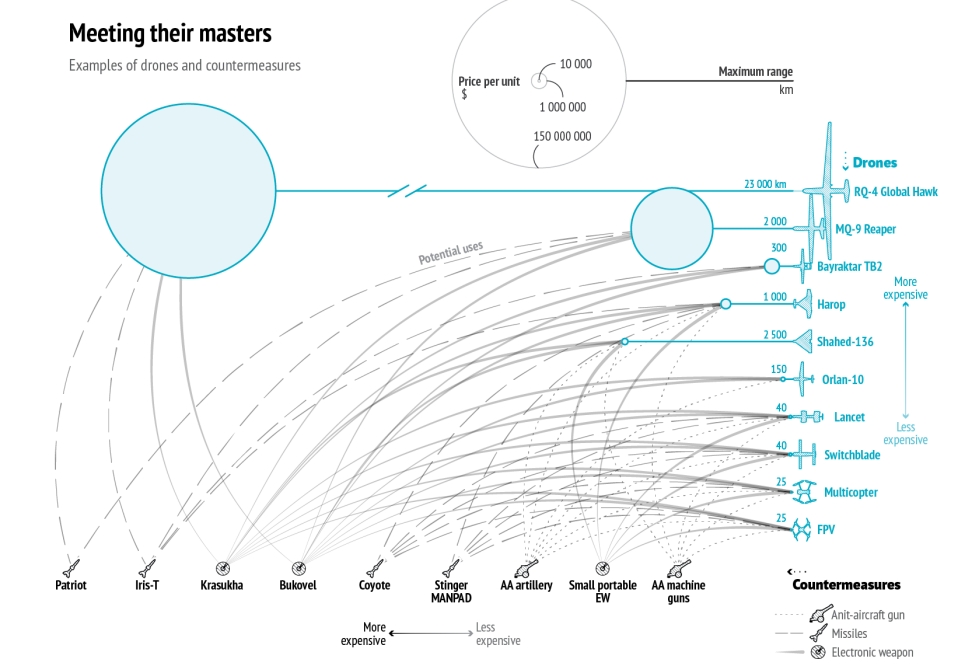
Still, the team of scientists, led by Bi Wenhao, an associate researcher with the National Key Laboratory of Aircraft Configuration Design in Northwestern Polytechnical University in Xian, believes their system will make drones even more lethal.
Their concept highlights three key principles: precise timing, directional intelligence, and thrust.
For precise timing, the booster system must ignite only one or two seconds before missile impact. This denies the missile time to correct its trajectory, while allowing just enough time for evasion.
When it comes to directional intelligence, the system has to rapidly determine whether to climb, dive, or boost in a lateral direction. Finally, for thrust, the system must generate at least 16Gs of acceleration. This causes a sudden, disorienting shift in the drone’s flight path, making it that much harder for the anti-drone missile to do its job.
The paper was published in the Chinese defence journal Acta Armamentarii.
Source: Interesting Engineering