Chinese Businessman Takes 5% Stake in Sanctioned Russian Drone Maker, then Russia Deletes the Evidence
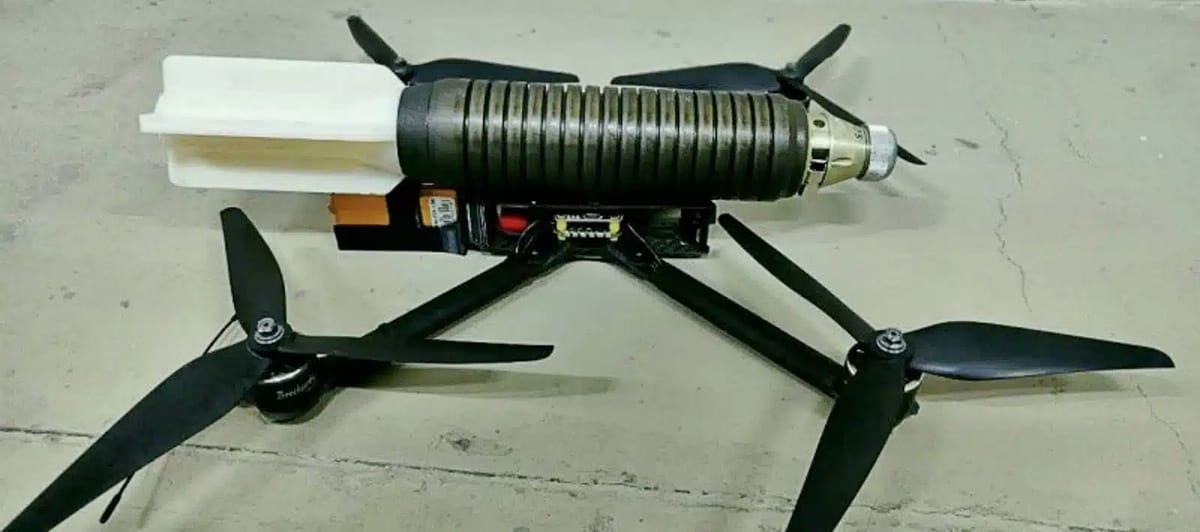
A Chinese drone parts supplier has taken an ownership stake in one of Russia’s most important military drone manufacturers, according to a bombshell Financial Times investigation just published. The revelation marks the first documented case of direct Chinese equity investment in a sanctioned Russian defence company.
Wang Dinghua, owner of Shenzhen-based drone parts company Minghuaxin, acquired a 5% stake in Rustakt, according to Russian company filings reviewed by the FT. Rustakt manufactures the VT-40 first-person-view drone, a mass-produced kamikaze drone deployed by Russian forces across the frontlines in Ukraine.
Here’s what makes this story explosive: Russia tried to cover it up.
Within one day of the FT accessing the ownership records, all of Rustakt’s shareholder data was deleted from official Russian corporate registries and private intelligence databases.
The Money Trail: $400 Million in Chinese Parts
The Financial Times investigation documents staggering sums flowing from Chinese suppliers to Russian drone production.
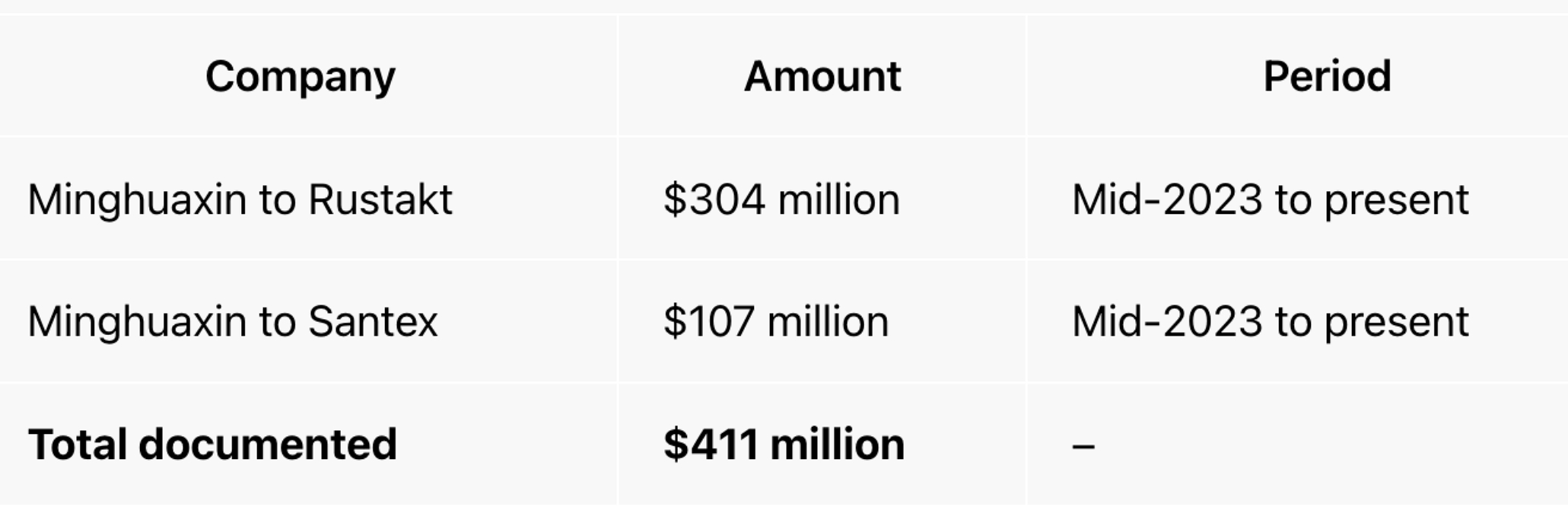
The breakdown is equally revealing. According to customs records analyzed by the FT, Rustakt purchased $110 million in lithium-ion batteries, $87 million in motors, and $64 million in controllers from Minghuaxin since mid-2023.
A related company, Santex, bought $66 million in controllers and $37 million in DC motors from the same Chinese supplier.
This aligns with data we reported in October, when intelligence firm Sayari documented $577 million in Chinese imports to Rustakt between July 2023 and December 2024. Today’s FT story adds the critical ownership dimension.
The VT-40: Russia’s Drone Workhorse
Rustakt is no ordinary company. The Centre for Defence Reforms, a Ukrainian think-tank, identified it as Russia’s largest importer of FPV drone components between July 2023 and February 2025. The company is sanctioned by both Ukraine and the EU for its role in Russia’s “Judgment Day” drone programme.
“Russia has moved to industrial-scale use of FPV drones,” said Oleksandr Danylyuk, head of the Centre for Defence Reforms. “We are talking about thousands of units per day and tens of thousands per month. These were produced through the ‘Russian Drone’ network in conjunction with Rustakt and other firms.”
The VT-40 drone, named after pro-war propagandist Vladlen Tatarsky who was killed in 2023, has become a battlefield workhorse. A former Ukrainian officer who operates the analytical group Frontelligence Insight told the FT the drone is “widely used by Russian forces along the frontline in Ukraine.”
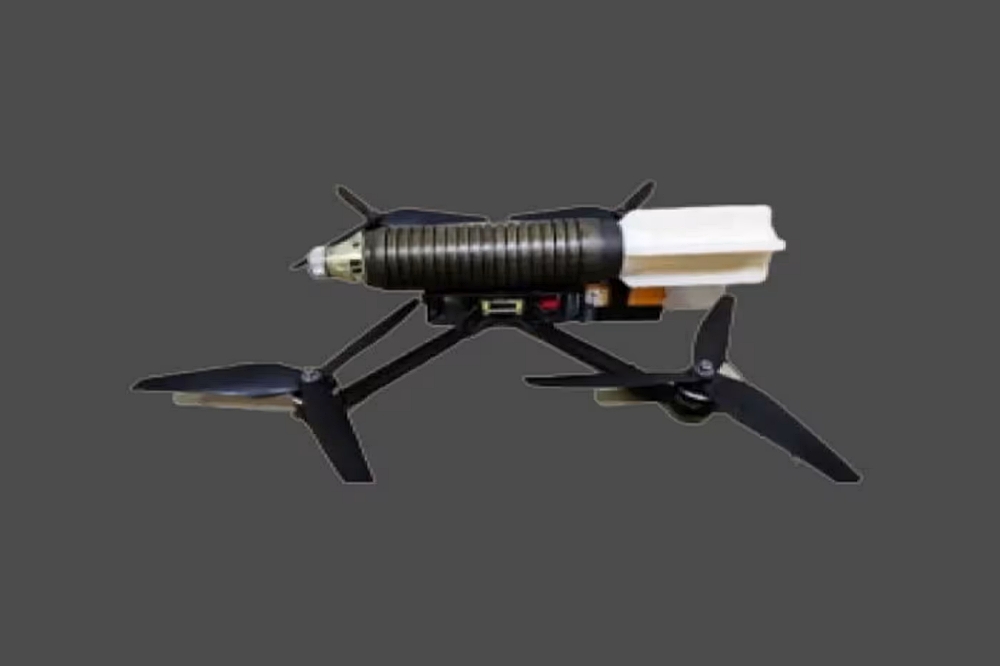
“Since first appearing on the battlefield in 2023, the drone has undergone several upgrades to enhance its electronic-warfare resilience and control systems,” he said. “While it isn’t exceptional in any single area, its mass production, low cost and availability make it a consistent workhorse for Russian forces.”
Shell Companies and Twin Brothers
The ownership structure is a masterclass in opacity. At the time Russia scrubbed the records, Rustakt was listed as 95% owned by Pavel Nikitin. Pavel previously worked at Santex before being replaced as head of that company by Egor Nikitin, a Belarusian national.
Here’s the kicker: according to Russian filings, Egor shares the same surname, patronymic name, and birthday as Pavel, suggesting the two may be twin brothers running parallel operations.
The Chinese side is equally murky. Wang Dinghua holds a 10% stake in Shenzhen Nasmin Investment, with Egor Nikitin holding the remaining 90%.
When the FT visited Minghuaxin’s registered address in Shenzhen, they found it occupied by a different company, Shenzhen Kiosk Electronic, also majority-owned by Wang.
A staff member at the office described Minghuaxin as a business partner of Shenzhen Kiosk’s boss. Asked if the boss was Wang Dinghua, she replied: “You can understand it this way.” She declined to provide further contact details.
China’s “Neutrality” Claim Crumbles
Beijing’s foreign ministry responded with its standard denial, claiming China “had never provided lethal weapons to either side of the conflict and strictly controls and manages civil-military dual-use technologies.”
But this story isn’t about parts sales. This is about ownership. A Chinese businessman now holds equity in a sanctioned Russian military supplier. That’s not neutrality. That’s investment in Russia’s war machine.
The Russian companies “all critically depend on Chinese brushless motors and electronics supplied via a network of intermediaries and importers,” Danylyuk told the FT.
Neither Rustakt, Santex, Shenzhen Kiosk, Minghuaxin, nor Nasmin responded to requests for comment.
Source: Drone XL
Source: