China’s Truck-Mounted Electromagnetic Catapult
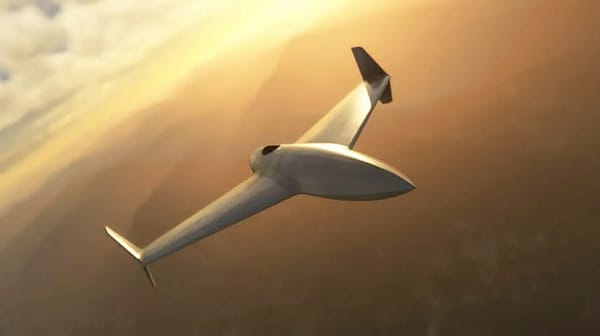
New imagery of Chinese catapult-capable low-observable combat drones, or possibly observable thereof, together with some unusual trucks, may point to plans to launch them from the ground, as well as ships.
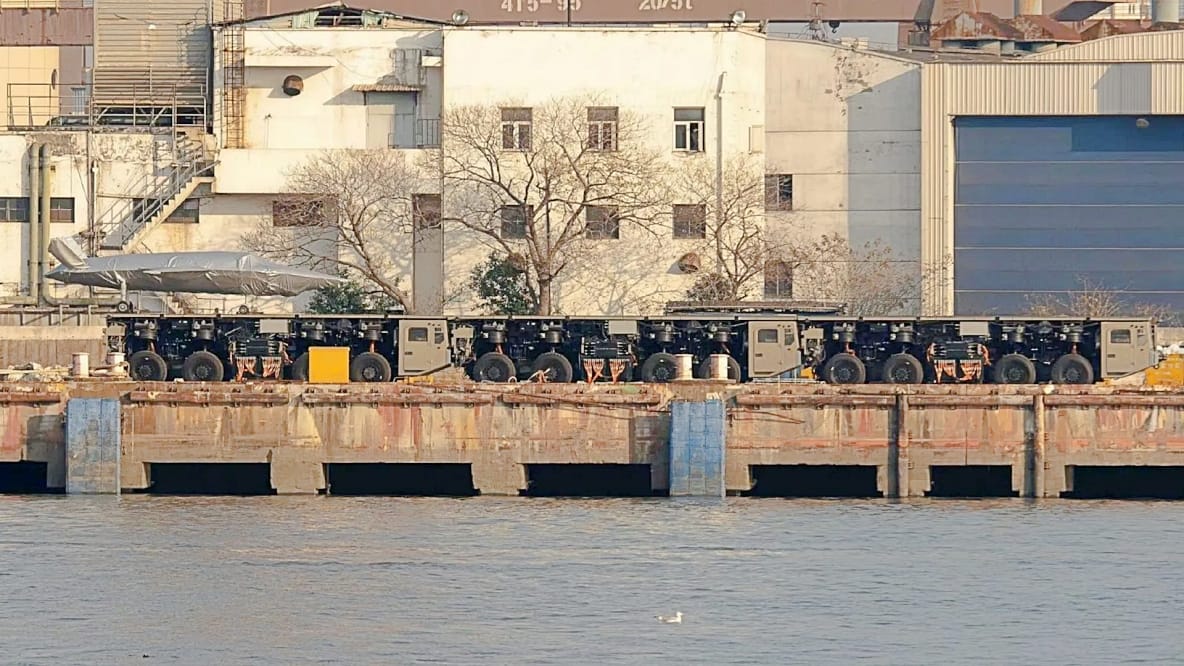
New imagery of Chinese catapult-capable low-observable combat drones, or possibly observable thereof, together with some unusual trucks, may point to plans to launch them from the ground, as well as ships. A modular, truck-mounted electromagnetic catapult system would offer a valuable additional way to launch larger drones, especially in areas with limited access to traditional runways.
General Atomics in the United States has proposed a roughly similar concept in the past, leveraging technology developed for the U.S. Navy’s Ford class aircraft carriers.
Pictures of the drones sitting dockside at Hudong-Zhonghua shipyard in Shanghai first began circulating online late last week. The presence of the super-sized Type 076 amphibious assault ship Sichuan in drydock nearby still raises the possibility of plans for trials aboard that ship, which features a single electromagnetic catapult, as was discussed in TWZ‘s initial reporting here. A medium-sized cargo ship loaded with containerized vertical launchers, as well as sensors and close-in defense systems, which emerged last week, has also been moored at this yard recently.
More interestingly, the new pictures from Hudong-Zhonghua shipyard show at least three eight-wheeled trucks that look designed to lock together seamlessly in a chain. Doing so also appears to form a continuous flat surface across the top. One of the drones is seen loaded at the rear of one of the trucks with its nose gear bar locked into what looks to be a catapult shuttle.
Besides the cabs in front, the sides of the trucks are largely open, showing elaborate electrical systems and large amounts of heavy exposed wiring. There is a cylindrical drum above each wheel, which could be part of an independent articulating suspension system capable of self-leveling. They might also serve another purpose, which we will come back to later on.
Altogether, there is the potential that these trucks could be part of a mobile ground-based electromagnetic catapult system. The cylinders and wiring seen on the trucks might be electromagnets and/or other supporting components. Any such system would also need to be self-leveling to help ensure a clean launch.

At the same time, they could still just be transporters, though the design looks far more elaborate than would be required for that purpose alone. The trucks could possibly be designed to serve both functions.
There is the additional question of why, if this is indeed a ground-based electromagnetic catapult system, it has been brought down to Hudong-Zhonghua shipyard at all. This is not the environment in which one would expect such a system to be employed, and there are no clear signs as of yet that it is there as part of a larger display.
At least one company in China, Tiantao Technology, has been openly talking about plans for a ground-based electromagnetic catapult system made up of modular wheeled segments since at least August of this year.
Renderings have shown 10-wheeled sections that do have some broad similarities to, but that also are distinctly different from the eight-wheeled trucks seen at Hudong-Zhonghua shipyard. The eight-wheeled trucks, if they are part of a mobile electromagnetic catapult system, could also reflect an early developmental iteration.

It is possible that the modular design of Tiantao Technology’s ground-based catapult system could allow for configurations capable of launching heavier designs. A core benefit of electromagnetic catapults over steam-powered ones, in general, is their ability to be more fine-tuned in terms of the forces they exert on any aircraft during launch. The capabilities of a modular system would also be dependent on its exact configuration, including how long the catapult track is overall.
Tiantao Technology has said the total length of its system could be scaled between roughly 65 and 196 feet (20 and 60 meters). What limitations there might be on simply adding more segments to increase launch capacity are unknown.
Source: The War Zone